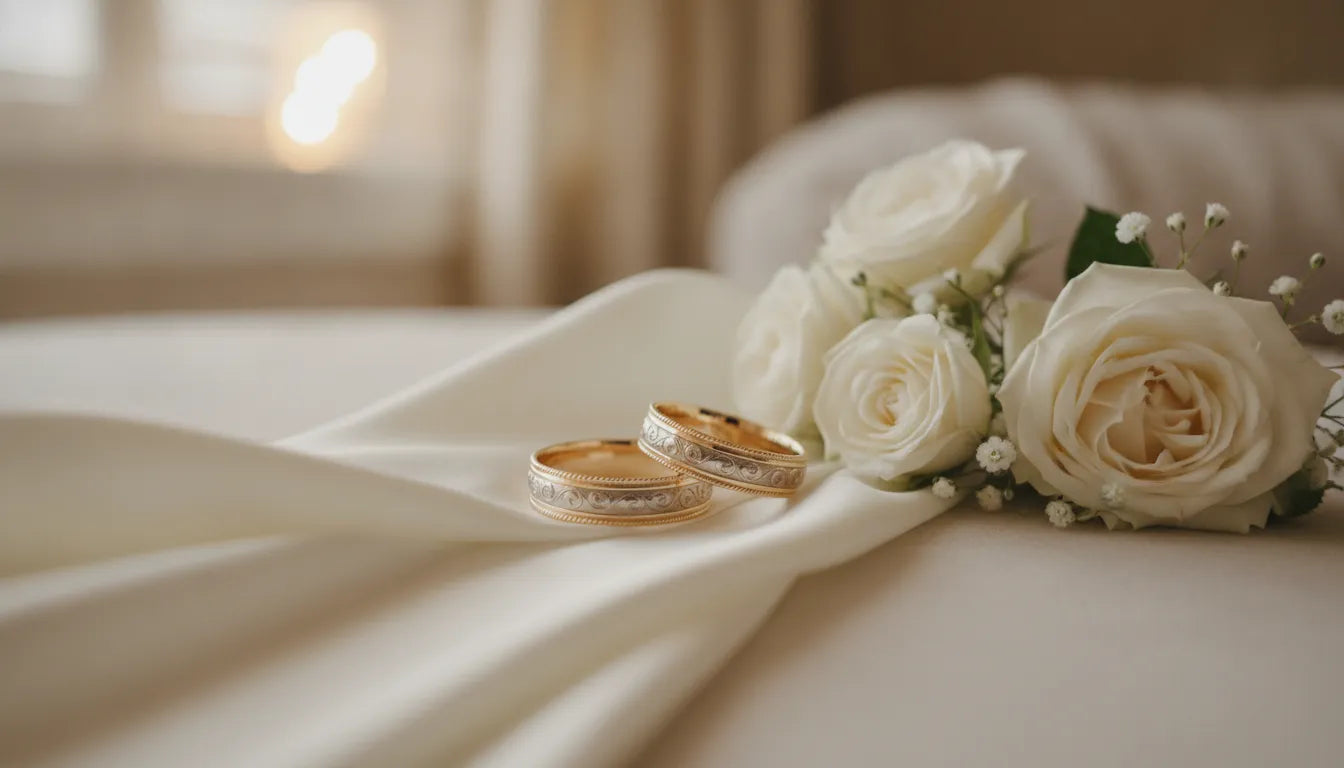
Vintage Wedding Bands for Women: Old-World Glamour
A wedding band can feel timeless without looking like every other ring in the case. Vintage-inspired details bring texture, history, and a sense of craftsmanship to a bridal set. Whether you choose an original period piece or a newly made band with an old-world character.
Vintage wedding bands for women are defined less by age than by design language: delicate milgrain beading. Fine filigree, engraved accents, warm metal tones, and the geometric symmetry associated with Art Deco. They can add heirloom character to a modern engagement ring while still feeling personal and wearable.
Schedule a consultation to see vintage and vintage-inspired bands in person.
The right choice begins with understanding which details create that vintage impression, how they relate to your engagement ring, and what care intricate metalwork may require. Start by exploring our complete guide to women's wedding bands, where you can compare every style and budget, then look closely at the features that give a band its distinct character.
What Defines a Vintage-Style Wedding Band?
A vintage-style wedding band is defined less by its age than by its design language. It may be an original period piece, or it may be newly made with the ornament, proportions, and hand-finished character associated with an earlier era. The result is a band that feels connected to jewelry history while still being selected for a modern bride's everyday life.
Look closely at the edges and surface of the band. Milgrain, a decorative technique made from fine beads of metal, adds a softly textured border that catches light without overwhelming the design. Filigree brings another kind of delicacy. It uses thin wires twisted and curled into intricate patterns, creating openwork that feels architectural and handcrafted. These decorative techniques have appeared in jewelry for centuries and remain the hallmarks of a vintage-style band.
Hand engraving can add flowing botanical lines, scrollwork, or precise geometric patterning. A band may combine several of these techniques, or use one restrained detail to give a simple silhouette more depth. That balance is part of the appeal. The design should be beautiful at first glance, but also rewarding to examine over time.
Which jewelry eras inspire vintage-style bands?
Choosing an era anchor can help narrow the field without limiting your options to a strict reproduction. Victorian-inspired bands often lean toward romantic ornament and warm yellow-gold character. Edwardian designs are known for graceful detail, delicate openwork, and an airy sense of refinement. Art Deco moved toward symmetry, sharp lines, and streamlined geometry. Emerging prominently in the 1920s, the style favored bold geometric forms and modern visual order. Mid-Century designs may feel cleaner and more sculptural, with confident lines and a less ornate profile.
These references are starting points rather than rules. A contemporary band can borrow Edwardian filigree and pair it with an Art Deco-inspired edge, or use Victorian-style engraving on a streamlined shape. What matters is that the details work together and suit the engagement ring, lifestyle, and personal sense of romance.
How wide can a vintage-style wedding band be?
Vintage wedding bands can be surprisingly versatile in scale. Slim bands around 2mm wide can slip neatly beside an engagement ring or form a delicate stack. Wider bands approaching 8mm create a stronger, more noticeable statement and give engraving, milgrain, or geometric work room to make an impression. Between those extremes, medium-width bands offer a balanced presence for daily wear.
For everyday use, consider more than appearance. Examine how the profile feels against neighboring rings, whether the details are protected along the edges, and how much visual weight feels natural on your hand. A vintage-style band should carry the romance of old-world craftsmanship without feeling precious or impractical. That combination of history, texture, and wearable proportion is what makes the style enduring.
Milgrain, Filigree, and Art Deco Details: A Style Guide
Vintage-inspired wedding bands often look distinctive because of the small design decisions worked into the metal, not simply because a ring appears old. When shopping, learning to recognize milgrain, filigree, and Art Deco geometry can help you describe what you like and compare bands with greater confidence. These details can appear on slim 2mm stacking bands, wider statement styles, or proportions between the two.
- Milgrain creates a softly textured edge. Milgrain is fine, beaded metalwork applied along the edge of a band or around a design element. The tiny beads create a subtle line of texture that can frame diamonds, define a border, or soften the outline of a polished ring. The effect is delicate rather than flashy, but it gives a plain metal surface more visual depth. Because the detail sits at the edge, look closely at the workmanship when trying on a band. The beads should read as intentional and even, especially if the ring will sit beside an engagement ring. The technique is strongly associated with vintage jewelry, yet it remains relevant in modern bridal design. When you try on bands in person, ask the jeweler to point out the milgrain workmanship up close.
- Filigree brings a lace-like, open pattern. Filigree is made from thin metal wires that are twisted, curled, and arranged into decorative forms. Instead of a solid, uninterrupted band, the wirework may create an airy pattern with open spaces and fine scrolls. This can give a wedding band a romantic, handcrafted appearance while keeping the design visually detailed. When shopping, examine whether the pattern feels balanced from the top and sides of the ring. Consider how much openwork you want in everyday wear, too. More intricate patterns may require closer attention when you clean or maintain the band. Filigree is fine wire shaped into delicate decorative patterns, a useful distinction from engraved lines or stamped motifs.
- Art Deco geometry adds structure and symmetry. Art Deco jewelry became prominent in the 1920s and is recognized for bold geometric forms and streamlined design. Rather than relying on curling ornament alone, an Art Deco-inspired band may use symmetry, sharp lines, stepped edges, or repeated geometric shapes. The result feels orderly, graphic, and polished. That contrast is part of its appeal: Art Deco moved away from the complexity of earlier ornamentation toward a more streamlined aesthetic. These motifs also continue to influence contemporary vintage-style wedding bands, so you can find the look in both period pieces and newly made designs.
| Detail | Look | Best for |
|---|---|---|
| Milgrain | Fine beaded texture along the edge | Quiet, softly framed borders on plain or diamond-set bands |
| Filigree | Open, lace-like wirework | Romantic, handcrafted detail and airy, delicate profile |
| Art Deco | Geometric, symmetrical, streamlined | Graphic, polished looks with sharp edges and clean lines |
Use these terms as a starting point rather than a checklist. A band may combine milgrain borders with filigree panels, or pair geometric Art Deco lines with a softer decorative edge. Decide whether you prefer quiet texture, openwork detail, or strong symmetry, then compare the band width and profile against the rest of your bridal set. The best choice is the one whose details feel intentional from every angle and suit how you want to wear it.
How to Pair Vintage Wedding Bands for Women with a Modern Engagement Ring
The right pairing allows an older design language and a contemporary setting to feel intentional together. Start by looking at the engagement ring as a whole, including its metal color, profile, center stone shape, and the amount of detail already present. Then choose whether the wedding band should echo one of those elements or provide a measured contrast. This approach keeps the bridal set cohesive without making both rings look identical.
Which metal color works best?
Yellow gold brings warmth and works naturally with vintage-inspired details, especially milgrain, engraving, and softly rounded silhouettes. Rose gold creates a romantic tone and can make an heirloom-style band feel especially distinctive beside a modern solitaire. White gold and platinum, meanwhile, offer a cooler foundation that pairs easily with contemporary settings and crisp diamond details. Platinum was also widely used for intricate early twentieth-century jewelry because it could support fine detail, making it a thoughtful choice for a period-inspired look.
Matching metals is the most seamless option. A yellow-gold engagement ring with a yellow-gold band creates a continuous line, while white gold or platinum pieces can give a modern setting a polished, unified appearance. Mixing metals can be just as elegant when the contrast is deliberate. For example, a warm gold band may soften the clean lines of a white-metal engagement ring, while a white-metal vintage band can add definition beside yellow gold. Keep one visual element consistent, such as the band width, finish, or diamond shape, so the combination feels curated rather than accidental.
For more guidance on proportion, finish, and metal choices, explore our women's wedding bands buyer's guide and this guide to choosing a band to match your engagement ring.
How should the band sit against the setting?
Profile matters as much as color. A low-set engagement ring may need a contoured, curved, or gently notched band to sit flush without pressing against the center setting. A higher setting may allow a straight band to rest comfortably beside it. Before choosing from the many vintage wedding bands for women available, check whether the band has a rounded interior. A raised center, or decorative edges that could rub against the engagement ring. The band profile should complement the setting to improve comfort and minimize wear over time.
Width also changes the balance. A slim band can preserve the visual focus on a substantial center stone, while a wider, more detailed band can hold its own beside a minimal solitaire. If the engagement ring already has ornate shoulders, consider a simpler vintage band with one or two carefully chosen details. If the engagement ring is clean-lined, milgrain, engraved borders, or delicate filigree can supply texture without overwhelming it.
Can vintage bands work in a stacked look?
Absolutely. Layering a vintage band above or below a modern engagement ring creates dimension and gives each piece room to contribute. Begin with two rings that share at least one anchor, such as a similar metal, a repeating geometric motif, or a compatible diamond shape. A plain band can separate two detailed rings, while two narrow vintage bands can frame a modern engagement ring with a more collected, heirloom-like effect.
When building upward, test the stack for movement and comfort rather than judging it only from the top. Uneven edges, raised settings, and delicate filigree may catch on neighboring rings or clothing. Add one piece at a time, and consider the practical demands of daily wear before committing to a crowded arrangement. Our guide to stackable wedding bands offers additional ways to layer proportions and textures.
The best pairing is the one that feels connected to your engagement ring while still expressing its own history and character. Try the pieces together in person whenever possible, viewing the set from the side as well as above. That simple check can reveal whether the profile, spacing, and metal combination will remain comfortable beyond the first impression.
Vintage vs Antique: What Is the Difference When Buying a Band?
The terms vintage and antique are often used interchangeably, but they can describe different histories. In a commonly used jewelry-industry convention, an antique piece is at least 100 years old, while a vintage piece generally dates from about 20 to 100 years ago. These labels are helpful starting points, not substitutes for examining the individual band. Age, craftsmanship, condition, and the quality of any restoration all affect whether a ring is the right choice for your wedding.
How should you evaluate age and provenance?
Ask how the band was dated and what is known about its history. A reputable description should identify the approximate era and explain whether the design, metal, and construction support that attribution. Documentation, estate records, previous appraisals, or a traceable family history can add confidence, although not every genuine older band will have a complete paper trail. Look closely at the construction as well. Hand-finished details, period-appropriate proportions, engraving, and wear patterns may help distinguish an older piece from a newer band made to suggest an earlier style.
Provenance is not only about collecting value. It helps you understand what you are buying and how the band may need to be cared for. If a seller cannot explain the age, materials, repairs, or stone settings, ask for an independent assessment before committing. A jeweler familiar with vintage and antique jewelry can inspect the piece, discuss its history, and identify concerns that are difficult to see in photographs.
Why do condition and originality matter?
Condition is central to both wearability and character. An original, well-cared-for band generally retains more historical value than one that has been heavily repaired or substantially altered. That does not make every repaired ring a poor choice. A thoughtful restoration may preserve a beautiful piece, but you should know what was changed. Why it was changed, and whether the repair affects the band's structure or appearance. Ask whether the shank has been thinned, whether engraving remains crisp, and whether the metal shows deep wear around the underside.
Examine every setting for security. Loose prongs, worn bezels, open areas in filigree, or weakened shoulders can require attention before the band is worn regularly. Historical settings may not provide the same security as many modern construction methods, so regular inspection is especially important. Delicate filigree can also make repairs or resizing more complex, and adjustments should be handled by a jeweler with appropriate vintage-jewelry experience.
Can the band be resized for everyday wear?
Before purchasing, confirm the current size and ask whether the band can be resized without damaging its design. Plain, substantial bands are often more straightforward to adjust, while bands with continuous engraving, intricate filigree, milgrain, or stones around the full circumference may have limited flexibility. A jeweler should assess the metal thickness, pattern, seams, and setting before promising a size change.
The best choice is one whose history appeals to you and whose structure supports your plans. Whether you choose an antique band with a century of character or a vintage piece from a more recent era. An informed inspection helps preserve its beauty and keeps the focus on a meaningful ring you can wear with confidence.
How to Care for a Vintage or Vintage-Inspired Wedding Band
A vintage or vintage-inspired wedding band deserves a gentler routine than a ring designed for rough daily wear. Fine details such as filigree, milgrain, engraved edges, and older stone settings can collect residue or become vulnerable to impact over time. Thoughtful care helps preserve both the band's appearance and the character that makes it feel personal.
When should you remove your wedding band?
Take the band off before swimming, doing heavy housework, gardening, or participating in rigorous activities. Repeated impact, friction, and pulling can bend delicate metalwork or place stress on a setting. Chlorinated or treated water may also expose the ring to chemicals that are best avoided. Keep a designated ring dish in a secure location so removing the band becomes part of your routine rather than an invitation to misplace it.
Household cleaners deserve particular caution. Bleach, ammonia, abrasive powders, and other harsh chemicals can react with vintage metal settings, weaken delicate areas, or alter the patina that contributes to the band's old-world appeal. Like all fine jewelry, the band is best handled with clean, dry hands and kept away from harsh chemical cleaners.
How can you clean a vintage wedding band safely?
For routine cleaning, use lukewarm water, a small amount of mild soap, and a soft toothbrush or lint-free cloth. Work carefully around the band instead of scrubbing aggressively, especially where milgrain beads or filigree create narrow crevices. Rinse thoroughly, then pat the ring dry with a soft cloth. Avoid paper towels, stiff brushes, and abrasive polishing products, which can scratch the surface or catch on fragile details.
Do not assume that every vintage ring is suitable for an ultrasonic cleaner or steam treatment. Intricate filigree, older solder joints, and stone settings may require a different approach. When in doubt, ask a jeweler to recommend a cleaning method after examining the ring. Professional cleaning is particularly useful for removing buildup from areas that are difficult to reach safely at home.
How should you store the band between wears?
Store the ring by itself in a padded or lined compartment rather than loose with other jewelry. Separate storage helps prevent scratching and mechanical damage, especially when pieces have different metal hardnesses or textured details. A clean, dry container with a secure closure is preferable to a damp bathroom counter or an open jewelry tray. If the band is part of a bridal stack, separate the pieces before storing them so their edges do not rub together.
When does a vintage band need professional inspection?
Schedule periodic professional cleaning and inspection with a jeweler familiar with delicate vintage construction. An inspection can identify a thinning shank, loose prongs, worn edges. Or a setting that needs attention before a small concern becomes a lost stone or a larger repair. This is especially important for filigree and milgrain, which require a skilled touch for resizing or repairs. Regular assessment helps keep a meaningful band wearable for years while respecting its original character.
Book an appointment with a Buchroeders jeweler to compare vintage and vintage-inspired bands side by side before you decide.
Frequently Asked Questions
Where can I find vintage wedding bands for women?
Look for them in a jeweler's estate and vintage collection, where you can compare period pieces with vintage-inspired designs. A knowledgeable jeweler can explain the band's construction, assess its condition, confirm sizing options, and help you evaluate how it will sit beside your engagement ring.
What is the difference between a vintage and an antique wedding band?
In the commonly used jewelry-trade convention, antique describes a piece at least 100 years old. While vintage generally refers to a piece from roughly 20 to 100 years ago. The label is only part of the decision. Ask about the band's age, provenance, original details, repairs, and current structural condition.
What metals work best for vintage wedding bands?
The best metal depends on the look you want and how the band will be worn. Yellow gold suits the warm, romantic character associated with many Victorian and Edwardian designs. While platinum complements intricate Art Deco detail and is known for its durability and resistance to tarnish. Mixing metal colors can also create a deliberate, collected look.
Can I wear a vintage band with a modern engagement ring?
Yes. Start by comparing the two rings' metal colors, widths, profiles, and setting heights. A jeweler can check that the bands sit comfortably together and do not rub against one another or place unnecessary pressure on delicate details. Matching is not required, but the proportions should feel balanced.
How should I care for a vintage wedding band?
Handle it with clean, dry hands, store it separately in a padded or lined container, and keep it away from harsh household chemicals. Remove it for swimming or heavy housework. Filigree and milgrain details benefit from gentle cleaning and periodic professional inspection, especially when the band shows a thin shank or loose setting. A jeweler familiar with vintage construction can recommend a care routine that fits your band.
Ready to Find Your Vintage Wedding Band?
The right band can bring together the details you love, from delicate milgrain and filigree to bold Art Deco geometry, while complementing your engagement ring. Schedule a consultation to explore vintage and vintage-inspired wedding bands with a Buchroeders jeweler and consider the proportions, metals, and details that suit your ring.