



Choosing a Wedding Band to Match Engagement Ring Guide
Choosing a wedding band is less about finding an identical match and more about creating a balanced pair. Your engagement ring's setting, metal, profile, and diamond coverage all affect how the two rings look and wear together. Start with the broader guidance in our women's wedding bands buyer's guide, then consider how your specific ring sits on your finger.
The best wedding band to match engagement ring styles complements the center stone and setting while fitting comfortably beside it. A straight band may suit a solitaire, while a curved or shaped design can follow a lower-profile setting. Matching metals is classic, but thoughtfully mixed metals can also create contrast.
Schedule a consultation to explore wedding band styles that pair well with your engagement ring.
The right pairing should feel intentional from every angle, whether you prefer a quiet, seamless stack or a layered look with more sparkle. Before comparing widths and profiles, it helps to understand why this small design decision matters to the meaning, comfort, and longevity of your bridal set.
Why the Right Wedding Band to Match Your Engagement Ring Matters
Your engagement ring and wedding band will likely share the same small space on your hand through ordinary days, celebrations, and everything in between. Choosing a wedding band to match your engagement ring is therefore about more than creating a coordinated photograph. The pairing should feel comfortable against your neighboring fingers, sit naturally beneath or beside the center stone, and express a deliberate sense of proportion that you will appreciate for years.
There is also the quiet meaning behind it. Engagement rings and wedding bands are traditionally worn on the fourth finger of the left hand, often called the ring finger. Wearing both together has long symbolized the transition from the promise of an engagement to the commitment of marriage. When the two rings work as a set, that meaning is reinforced every time you look down at your hand.
Beyond sentiment, fit matters. A band that is too wide can crowd slim fingers, while a band that does not sit flush against a high or low setting can spin, snag, or leave an awkward gap. Visiting a jeweler to try proportions together is the most reliable way to find a balance that looks right and feels right. You can then explore the women's wedding bands collection with that guidance in hand. This article in the women's wedding bands buyer's guide walks through the most common engagement ring styles and how to pair a band with each.
How to Pair a Wedding Band with a Solitaire Engagement Ring
A solitaire engagement ring centers on a single diamond, usually raised in a prong or cathedral setting. Because there is no surrounding band of stones, the wedding band you choose has more room to make a statement, and pairing becomes a straightforward exercise in proportion and fit.
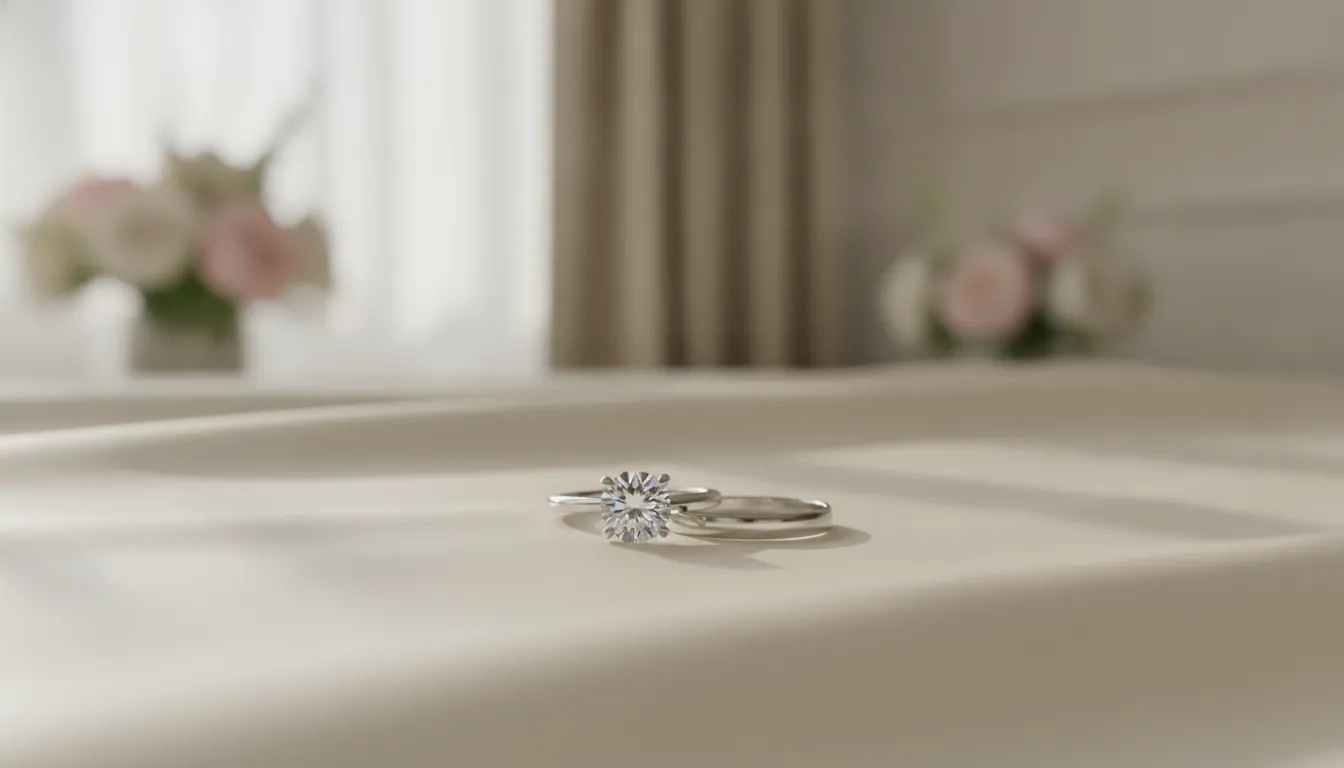
If your solitaire is set low and sits against the base of your finger, a straight, classic band will usually sit flush and look beautifully balanced. Many brides choose a simple metal band in the same color to let the engagement diamond remain the clear focus. If your solitaire is raised on a taller setting, consider a curved or notched band that contours around the base of the center stone, allowing the two rings to tuck together without a gap.
Width plays a surprisingly large role. A slender band, around two millimeters, keeps the total profile delicate and suits smaller or more minimal diamonds. A wider four-millimeter band gives a more substantial, confident presence and can help balance a larger center stone. Comfort is the deciding factor when you plan to wear the set daily. Trying both a straight and a curved option beside your exact ring is the surest path to the right call.
How to Pair a Wedding Band with a Halo Engagement Ring
A halo engagement ring frames the center stone with a ring of smaller diamonds, adding a layer of brilliance and visual weight. Because the halo already delivers that sparkle, the best wedding band for this style is usually one that complements the light rather than competing with it.
A thinner, cleaner band in the same metal often reads as elegant and lets the halo remain the focal point. If you want to add even more brilliance, a band with melee diamonds can extend the halo's sparkle down the finger for a continuous, luminous line. As gemologists at the Gemological Institute of America note, a wedding band can beautifully complement an engagement ring, whether through a contrasting metal tone or the sparkle of small diamonds. The choice ultimately comes down to the look you want the set to create.
Because the halo widens the ring's top, a slightly curved band can help the pair hug the finger comfortably rather than rocking against the halo's edge. Revisit our engagement ring collection to see the halo styles we carry, then bring yours in to test band options side by side.
How to Pair a Wedding Band with a Pavé or Eternity Band
A pavé engagement ring features small diamonds set closely along the band, extending some of the ring's sparkle toward your knuckle. When you add a wedding band to a pavé ring, the goal is to keep the two strands of light in harmony rather than letting them compete for attention.
A metal band in the same tone often creates the cleanest, most cohesive pair, especially if your engagement ring already carries considerable diamond coverage. If you want more brilliance, an eternity band, where diamonds circle the entire circumference, continues the pavé's sparkle beautifully. A half eternity band, with stones along the top half only, is often more comfortable for daily wear and can be set lower on the finger with your engagement ring above it.
Matching the diamond sizes and metal finish between the pavé ring and the band helps both pieces look like part of one intentional design. Comfort is especially important here, since two diamond-set rings worn together can feel heavier and catch slightly differently on neighboring fingers. Trying the stack together and checking how it moves through a full day will tell you what feels right.
Does Your Wedding Band Have to Match Your Engagement Ring Metal?
No, it does not. Matching your wedding band to your engagement ring metal creates a classic, seamless look, but mixing metals can produce a deliberate, modern contrast that many couples love. A platinum band paired with a rose-gold or yellow-gold engagement ring, for example, lets the warm and cool tones balance each other and can make the set feel more personal.
If you mix metals, think about how they will wear together over time. Softer metals like yellow and rose gold are warm and malleable and develop a patina with daily wear, while white metals offer different durability profiles. Genuine sterling silver, for instance, is soft and prone to scratching and can tarnish, which is why it is rarely chosen for engagement rings or wedding bands meant for daily wear. Platinum is dense and durable but can develop a soft satin finish, an aesthetic many collectors appreciate. Knowing how each metal ages helps you pick a pair that still looks balanced after years on your finger.
| Metal. | Look. | Durability. | Best for. |
|---|---|---|---|
| Platinum. | Bright white, dense, naturally hypoallergenic. | Very durable; develops a soft satin patina. | Brides who want a strong, natural white tone. |
| 14k Yellow Gold. | Warm, classic yellow tone. | Durable enough for daily wear; ages gracefully. | Traditional, warm pairings. |
| 18k Yellow Gold. | Richer, softer yellow. | Softer than 14k; more malleable. | Softer, luxury-feel stacks. |
| White Gold. | Silvery white, usually rhodium-plated. | Hard-wearing; may need periodic re-plating. | A white bridge between mixed tones. |
| Rose Gold. | Pink-copper warmth. | Softer; develops a gentle patina. | Romantic two-tone contrast. |
Whether you stay in one metal or mix, the band and the engagement ring should feel luxurious and intentional together. Our team can guide you on how different metals will wear and finish side by side. If you are designing from a clean slate, our custom engagement ring design process can help you coordinate the pair from the start.
How Do You Stack Multiple Bands with an Engagement Ring?
Stacking lets you build a bridal set that grows with you, whether your wedding band is a single piece or you add anniversary, spacer, or other meaningful bands over time. The key to a comfortable, beautiful stack is making sure each ring sits in relation to the one beside it rather than competing for space.
When you stack, start with the engagement ring and build outward, placing the wedding band first so it lands exactly where you want it on your finger. If your engagement ring's center stone sits high or wide, a curved or shaped band may be needed to let the rings sit flush, reducing the gap and keeping the stack from tipping. A spacer band can also protect a diamond-set engagement ring from rubbing against harder neighboring bands, which helps preserve the fine diamonds and metal finish over the long term.
Keep widths and metal tones in balance as the stack grows.
- Start with your engagement ring and decide which finger it will rest on.
- Add the wedding band next so it lands exactly where you want it.
- Layer anniversary or spacer bands outward, checking each for a flush fit.
- Try the full stack through a normal day to confirm comfort and balance.
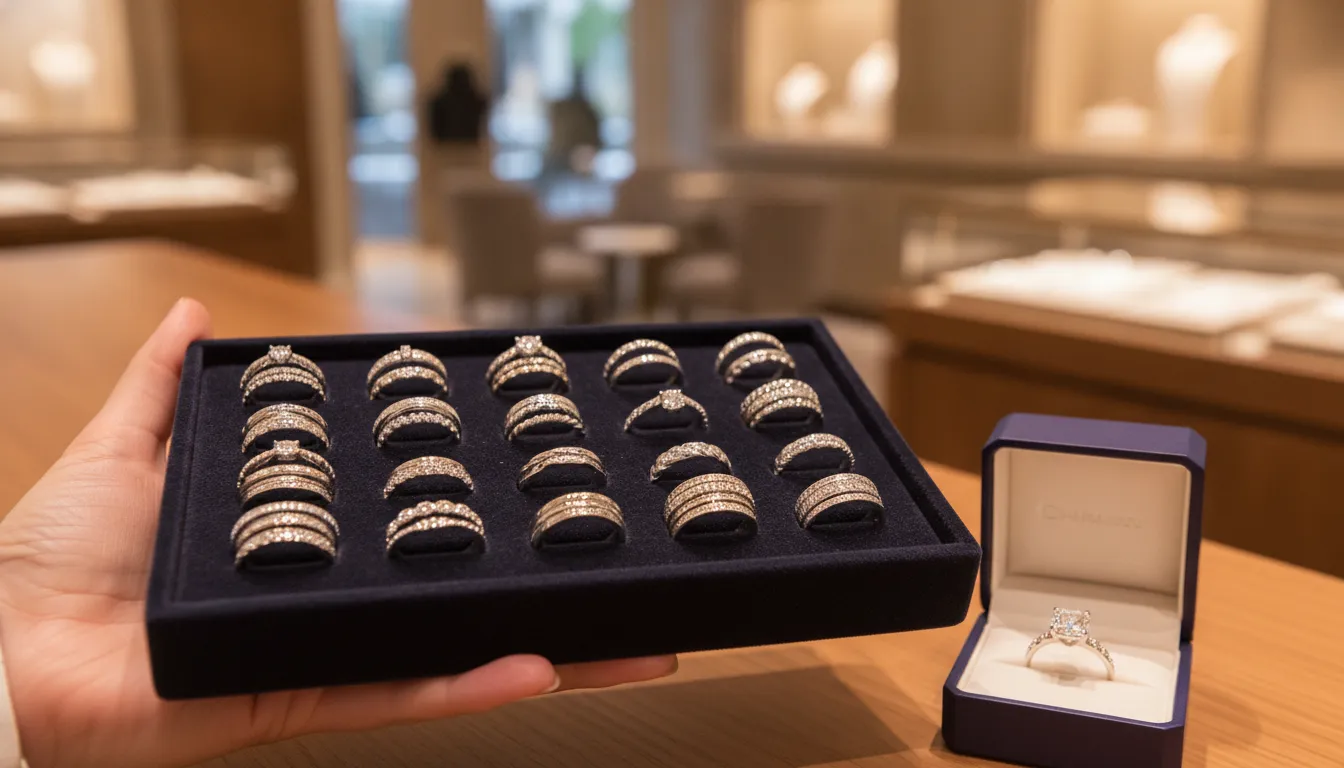
A set of two or three thinner bands can read as refined, while one wide band can hold its own and anchor the ring. Because every finger and every setting is different, trying the entire stack on together is the only way to be sure it sits exactly where you want it. A jeweler can then assess the fit of every piece and help you refine the look.
Schedule a consultation to try your band options beside your engagement ring and build a stack that fits comfortably.
Frequently Asked Questions
Are wedding bands supposed to match an engagement ring?
No. A wedding band can coordinate with your engagement ring through its metal, width, shape, or level of detail without being an exact match. Some couples prefer a seamless, traditional pair, while others like the contrast of mixed metals or different textures. Start with the look you want your rings to create together.
What wedding band will match my engagement ring?
The best choice depends on your setting, proportions, and preferred fit. A straight band often suits a solitaire, while a curved or notched band can follow a setting that extends lower or wider around the center stone. Compare band widths with the engagement ring, and try both polished and diamond-accented styles to see which feels balanced.
Can I mix metal types for my wedding band and engagement ring?
Yes. Mixing metal types can create intentional contrast while still looking cohesive. Repeat the secondary metal elsewhere in the stack, or choose a band with details that visually connect both rings. Your jeweler can also help assess how the metals will wear together and whether their profiles sit comfortably side by side.
Should my wedding band have diamonds?
Choose diamond accents if you want additional sparkle or a more visibly connected bridal set. A plain band may be the better choice when your engagement ring already has substantial detail, or when you prefer a quieter contrast. Consider how the band will look alone as well as when it is paired with the engagement ring.
What is a curved wedding band?
A curved wedding band is shaped to contour around the engagement ring, helping the two rings sit closer together and reducing a visible gap. It can be useful when the center stone or setting prevents a straight band from fitting flush. Try the band with your actual ring before choosing it, since each setting's height and shape affect the fit.
Ready to Find the Right Wedding Band?
Choosing a wedding band becomes easier when you can compare proportions, metal tones, and how each style sits beside your engagement ring. A personal conversation can help you narrow the options while keeping the pair comfortable and cohesive.
Schedule a consultation to find the right wedding band for your engagement ring.
