



Women's Wedding Bands: The Complete Buyer's Guide for Every Style and Budget
A wedding band is more than the finishing touch to an engagement ring. It is a piece you may wear every day, so the right choice should balance proportion, comfort, durability, and the way you want your bridal set to feel over time. Start by considering how the band will sit beside your engagement ring, then narrow the options by metal, width, diamond setting, and budget.
The best womens wedding bands complement your engagement ring while fitting your lifestyle and daily routine. Compare the band's shape, metal, width, and setting with your existing ring, and choose a design that feels comfortable enough for years of wear.
There is no single correct style. A slender pavé band can add light and sparkle, while a clean metal band may create a more understated contrast. Understanding how these choices work together makes it easier to explore the women's wedding bands collection with confidence. Begin by looking at the relationship between your engagement ring and the band you plan to wear beside it.
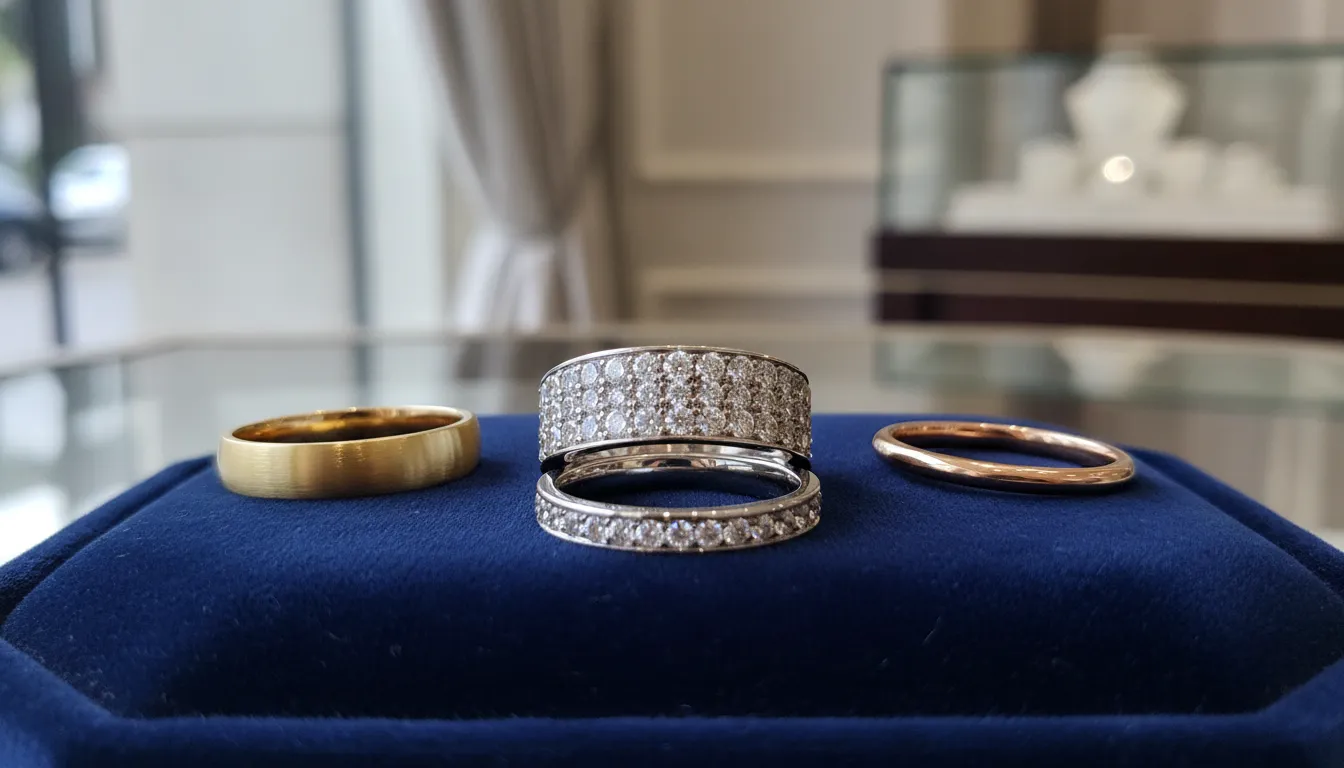
How to Choose a Women's Wedding Band That Complements Your Engagement Ring
The right wedding band should feel intentional beside your engagement ring, whether you are building a bridal set from the beginning or adding a band to a ring you already wear. Many women choose a band that complements the engagement ring's style, contour, or profile rather than selecting a design in isolation. Start by looking at the complete hand view, not only the individual rings. The goal is a pairing that feels balanced, comfortable, and true to your personal style.
Begin with the metal and the center stone
Matching the metal is the most straightforward way to create a cohesive look. Platinum with platinum and white gold with white gold offer a clean, seamless appearance, while yellow gold or rose gold can bring warmth and contrast. White metals are especially popular in bridal jewelry because they can complement the brilliance of a diamond, according to the Gemological Institute of America.
That does not mean both rings must use the same metal. A two-tone pairing can highlight details in the engagement ring or coordinate with your everyday jewelry. Repeat one element, such as the warm metal, a shared finish, or a similar diamond shape, so the combination feels considered rather than accidental.
Coordinate the band with the ring silhouette
The engagement ring's profile affects both appearance and fit. A classic solitaire often provides the most flexibility. A slim pavé band can add sparkle, while a polished metal band keeps the center stone as the focal point. For a halo ring, consider the outline created by the halo and choose a band with a proportion that supports it without competing with the additional detail.
Three-stone rings have a stronger horizontal presence, so a band with similar visual weight can create balance. If the setting has a low profile, a contoured or notched band may nestle around it more naturally. Bring the engagement ring when trying on options, since two designs that look compatible online may sit differently when worn together.
Consider a wedding band set or a thoughtfully contrasting pair
A wedding band set pairs an engagement ring with a coordinating band, making it easier to achieve a seamless profile and consistent proportions. It can be a practical choice when you want a unified look and prefer to make both selections together. If you are choosing separately, matching exactly is not required. A plain band beside a diamond-set engagement ring can create an elegant pause, while a textured or mixed-metal band can add dimension.
Think about how you want the rings to look on their own as well as together. The best pairing reflects your lifestyle and taste, with enough harmony to feel connected and enough distinction to give each ring its own character. For more detailed guidance on fit, metals, and proportions, read our wedding band buying guide.
When you are ready to compare silhouettes and finishes, explore the women's wedding bands collection or work with the Buchroeders Jewelers team to evaluate how each option complements your engagement ring.
Women's Diamond Wedding Bands: Settings, Cuts, and Styles
Diamond wedding bands bring light and dimension to a bridal set. But the setting determines how that brilliance appears from across the room and how the ring feels in daily wear. As you compare diamond wedding band styles, consider the relationship between the diamonds, the metal, and the engagement ring beside it.
Pavé settings for a delicate, continuous sparkle
In a pavé setting, small diamonds are set closely together along the surface of the band. The surrounding metal is kept visually subtle, creating the impression of a bright ribbon of diamonds. Pavé is an elegant choice when you want sparkle without the heavier visual presence of larger individual stones. It can complement a diamond engagement ring while keeping the overall profile refined.
Channel-set bands for a clean, structured look
Channel-set diamonds sit between parallel rows of metal, giving the band a smooth exterior and an orderly appearance. The metal borders protect the sides of the stones and create a streamlined look that pairs especially well with modern or geometric engagement rings. Because the diamonds follow a defined channel, this style feels polished and uninterrupted rather than openly decorative.
Prong-set bands to emphasize individual diamonds
Prong-set bands hold each diamond, or a small group of diamonds, with raised metal claws. More of each stone remains visible, so the diamonds can appear brighter and more distinct. This setting is well suited to someone who prefers noticeable individual stones or wants a wedding band that echoes the construction of a prong-set engagement ring. The raised profile is worth trying on with your engagement ring to confirm that the two rings sit comfortably together.
Eternity bands for brilliance around the finger
An eternity band features diamonds set continuously around the band, creating sparkle from nearly every angle. This high-impact style has a luxurious, symmetrical presence and works beautifully as part of a bridal stack or as a meaningful standalone ring. Since diamonds encircle the band, try on an eternity style before choosing a size and discuss fit and long-term care with a professional.
White metals, including white gold and platinum, often complement diamond brilliance by creating a bright, cohesive backdrop for the stones. Yellow or rose gold can create more contrast and warmth, making the diamonds stand out in a different way. Both natural and lab-grown diamonds are available options for a wedding band. Lab-grown diamonds have the same chemical composition and crystal structure as natural diamonds, so the choice between them may reflect your preferences, priorities, and the story you want your ring to represent. Explore lab-grown diamond wedding bands alongside natural diamond designs, then compare the setting, cut, metal, and fit as a complete piece..
Platinum vs White Gold vs Rose Gold vs Yellow Gold: Which Wedding Band Metal Fits Your Lifestyle?
White metals, including white gold and platinum, often complement diamond brilliance by creating a bright, cohesive backdrop for the stones. Yellow or rose gold can create more contrast and warmth, making the diamonds stand out in a different way. Both natural and lab-grown diamonds are available options for a wedding band. Lab-grown diamonds have the same chemical composition and crystal structure as natural diamonds, so the choice between them may reflect your preferences, priorities, and the story you want your ring to represent. Explore lab-grown diamond wedding bands alongside natural diamond designs, then compare the setting, cut, metal, and fit as a complete piece.
The best metal for a wedding band is the one that suits your lifestyle, preferred maintenance, and daily look. Consider your work, hobbies, handwashing habits, sensitivity to upkeep, and how the band will sit beside your engagement ring. GIA recommends balancing durability, maintenance, and personal style when choosing a ring metal.
| Metal | Durability | Maintenance | Appearance and style | Resizing |
|---|---|---|---|---|
| Platinum | Highly durable and well suited to everyday wear. | Develops a natural patina over time. Polishing can restore a brighter finish if preferred. | Naturally white, substantial, and refined. Its cool tone complements diamond brilliance. | Often resizable, but the design, construction, and presence of gemstones must be evaluated by a jeweler. |
| White gold | A practical choice for daily wear. Select 14k or 18k according to your priorities for durability and gold content. | Many white gold rings use plating that may need to be renewed every few years to maintain a bright white appearance. | Cool and bright, with a look that pairs naturally with white diamonds and contemporary settings. | Commonly resizable, although the ring's design and any gemstones affect the process. |
| Rose gold | Available in 14k and 18k options. Karat level affects the balance of gold purity and durability for everyday wear. | Can develop a warm patina over time. Polishing may be appropriate when you want to refresh the original finish. | Warm, romantic, and distinctive. The blush tone brings a vintage-inspired quality to both simple and detailed bands. | Often resizable, with the exact approach depending on the ring's construction and whether it includes gemstones. |
| Yellow gold | 14k and 18k are popular everyday choices. Higher gold purity changes the metal's durability and care needs. | Requires very little maintenance beyond regular cleaning. Occasional polishing can reduce the appearance of scratches. | Timeless and familiar, with a rich color that works beautifully in traditional, vintage, and mixed-metal bridal looks. | Often straightforward to resize, though gemstone settings and the amount of adjustment needed must be considered. |
Match the metal to your routine
Platinum may appeal to someone who wants a durable, naturally white metal and does not mind its evolving patina. White gold offers a similar cool-toned appearance, but it is a better fit for someone comfortable scheduling periodic replating as part of its care. White metals can complement the brilliance of a diamond, particularly when your engagement ring already has a bright, contemporary profile.
Rose gold is a thoughtful choice when warmth matters more than matching every piece of jewelry. Its changing patina can add character rather than signal a need for restoration. Yellow gold appeals to those who want classic color and a low-maintenance routine, and it can create contrast with a white gold or platinum engagement ring.
Think ahead about care and resizing
Gold purity matters. GIA notes that 14k and 18k gold are popular choices, while 24k gold is generally too soft for most everyday ring wear. The metal is only one part of a ring's long-term practicality. A pavé or intricate setting may require more attention than a plain band, and a ring with gemstones can limit how much it can be resized.
Because finger size can change over time, ask about resizing before choosing a style. GIA explains that resizability depends on the metal and ring construction. Discuss the expected fit, future adjustments, and maintenance schedule with a jeweler before making your final selection.
There is no universally correct metal. The right choice balances the appearance you love with the care your life can support.
Sources: GIA guide to ring materials and GIA guide to white metals for engagement and wedding rings.
Understanding Wedding Band Width and Comfort Fit
Width is one of the simplest ways to change the character of a wedding band. Women's wedding bands typically range from delicate 1.4mm styles to bolder bands measuring 4.5mm or 5mm. The right choice depends on your engagement ring, your everyday preferences, and the visual balance you want when the rings are worn together.
How width changes the look
A thinner band creates a refined, delicate appearance and can keep the engagement ring as the focal point. It may be especially appealing with a petite center stone, a slim setting, or a stack of several understated rings. A wider band has more visual presence and makes a bolder statement. It can provide a stronger counterpoint to a substantial engagement ring or stand beautifully on its own.
Consider the profile as well as the measurement across the top. A band with a curved or contoured shape may sit more closely around the engagement ring's setting, while a straight band offers a clean, classic line. Try both rings together before deciding. A width that looks balanced by itself may feel different beside a high-profile setting or a detailed halo.
What comfort fit means
Comfort-fit bands have a gently rounded interior rather than a completely flat inside edge. That curved design allows the ring to move more smoothly over the finger and can feel particularly pleasant during all-day wear. It does not determine the ring's exterior style, so you can pair a comfort-fit interior with a plain metal band, a polished finish, or a design with diamonds.
Comfort is personal. A wider ring covers more of the finger, while a narrow ring may feel lighter and less noticeable. Compare several widths and pay attention to how each feels when your fingers bend. Your jeweler can help assess how the band will sit beside your engagement ring.
Plan ahead for resizing
Ask about future sizing before choosing a metal or a design. Resizing depends on the metal type and the construction of the ring, and bands with gemstones or intricate details may have additional limitations. This is worth discussing if your finger size may change over time. A careful fitting today, followed by professional guidance on the specific band, can help protect both its comfort and its design.
Explore browse our women's wedding bands to compare widths, profiles, and finishes, then visit Buchroeders for help finding a proportion that feels right with your engagement ring.
Eternity Bands, Pave Bands, and Stackable Wedding Bands for Women
Eternity, pave, and stackable styles each create a different balance of sparkle, structure, and everyday practicality.
Full and half-eternity bands
An eternity band has diamonds set continuously around the entire band, creating uninterrupted sparkle from every angle. It is a striking choice for a wedding set, anniversary ring, or standalone band. Because diamonds continue around the circumference, however, a full-eternity ring generally offers less flexibility if your finger size changes. Resizing can be limited by the continuous stone setting.
A half-eternity band places diamonds across the visible upper portion while leaving the lower part in metal. This design preserves much of the brilliance of an eternity band and provides greater flexibility for future resizing. It can also be practical when worn beside an engagement ring.
Pavé and channel settings
In a pavé setting, small diamonds are placed closely along the band's surface and held by tiny beads or prongs. The closely spaced stones create a bright, continuous surface of light. Pavé bands are elegant and detailed, but the small settings require attentive care. Remove a pavé ring for activities that could catch or strike the stones, and include regular inspections in your jewelry care routine.
Channel settings hold diamonds between two parallel walls of metal. With fewer exposed prongs, this style has a smooth profile that can be comfortable for daily wear and less likely to snag on fabric. The channel also protects the sides of the stones, although a hard impact can still affect the metal or loosen a diamond. Setting choice should reflect how you use your hands as well as the look you prefer.
Building a stackable wedding band look
Stackable bands make it possible to create a combination that changes with your style and milestones. Start with one slim band, then add a second in a complementary shape, metal, or diamond pattern. Two or three delicate bands can create a refined layered effect, while mixing a polished metal band with a diamond band adds contrast without overwhelming the engagement ring.
When planning a stack, consider how the bands meet at the engagement ring and how the combined height feels between your fingers. Bands with similar proportions create a clean, coordinated look; varied textures feel more collected and individual. A custom design can help create a stack that follows the shape of your engagement ring. Explore diamond wedding bands to compare styles, then try combinations in person.
How Much Does a Women's Wedding Band Cost? What to Budget
There is no single price for a women's wedding band. A simple polished band and a diamond-set eternity style serve different design goals, use different amounts of material, and require different levels of craftsmanship. The most useful budget is one that accounts for how you want the ring to look, feel, and perform through years of daily wear.
Metal is one of the first cost variables. Platinum generally costs more than gold due to its density. Gold offers 14k and 18k options, while tungsten and titanium are very affordable and durable. Their limited resizing potential is important to consider before choosing them for a lifetime ring. GIA recommends weighing budget alongside durability, maintenance, and design. Learn more about choosing a ring material for everyday wear.
Diamond content and setting style
Adding diamonds changes the budget quickly, but the total depends on more than the presence of stones. An eternity band, with diamonds set continuously around the ring, typically uses more gemstones than a half-eternity or a band with a smaller accent row. Pavé, channel, and prong settings also create different looks and require different construction. A plain band may be the right choice for a clean, understated stack, while a diamond band can add continuous sparkle beside an engagement ring.
Lab-grown diamonds are another way to prioritize diamond coverage while managing the overall budget. They have the same chemical and physical properties as natural diamonds, so the decision can focus on your preferred origin. Appearance, size, and setting rather than treating one option as universally better. A knowledgeable jeweler can show how those choices affect the finished ring.
Width and design complexity
Width matters because a wider band uses more metal. It can also accommodate more diamonds or a more substantial design. Delicate bands may have a lighter visual presence, while wider styles create a bolder look and may be especially meaningful when worn alone. Hand engraving, milgrain, contoured profiles, mixed metals, and intricate pavé work add design and labor considerations as well.
As you set your range, reserve room for quality construction, a comfortable fit, and a style you will be happy to wear every day. This is a value investment in a piece intended to last a lifetime, not simply a line item for the wedding day. To compare shapes, metals, and diamond details, browse our women's wedding bands collection.
Designing a Custom Women's Wedding Band at Buchroeders Jewelers
-
Begin with a consultation and inspiration
Custom design starts with listening. During your consultation, share the engagement ring you plan to wear. Photographs or heirloom details that inspire you, and the kind of daily life your band needs to support. You may prefer a slender, understated profile, a vintage-inspired contour, or a band designed to stand beautifully on its own. The conversation is an opportunity to define what feels personal before any design decisions are made.
This first stage reflects the bridal process: We Listen First, followed by Selection & Design, then Ring Creation. Explore ideas with the custom engagement rings design process and the Custom Ring Builder tool.
-
Select the metal and design details
Next, consider the metal, finish, profile, width, and relationship between the band and your engagement ring. Platinum, white gold, yellow gold, and rose gold each create a different visual impression and have different maintenance considerations. The band may be straight, softly curved, textured, milgrain-edged, or shaped to sit closely beside the engagement ring.
Personal details can make a simple silhouette distinctly yours. Engraved options may add a decorative pattern or meaningful personalization, creating contrast with a plain metal band. Discuss the desired level of detail, how the surface should feel, and whether the design should echo an element already present in your bridal jewelry.
-
Choose diamonds or keep the band plain
A custom band does not need diamonds to feel special. A polished or brushed metal design can offer quiet elegance and may be especially practical for frequent hand use. If you want additional sparkle, choose the placement and scale of the diamonds with your lifestyle and engagement ring in mind. A few accent stones, a half-band of diamonds, or a more continuous design can each create a different balance of brilliance and wearability.
-
Confirm sizing and comfort-fit details
Fit is part of the design, not an afterthought. The ring should sit securely without feeling restrictive, especially when worn beside an engagement ring. Ask about interior shaping, band width, and how the two rings will move together. A comfort-fit interior, with a gently rounded inside edge, can create a smoother feel against the finger.
Metal choice also affects future resizing. Some rings can be adjusted more readily than others, and designs with stones or intricate details may require additional care. Confirm the sizing plan and potential future options before approving the final design.
-
Bring the design to life through creation and finishing
Once the design, materials, stones, engraving, and fit are confirmed, the ring moves into creation. Skilled finishing brings the selected profile and surface details together, followed by inspection and final fitting. The result is a women's wedding band made around your proportions, preferences, and story rather than selected from a single standard template.
When to Start Shopping for Your Women's Wedding Band
Begin exploring your wedding band as soon as your wedding date and engagement ring plans are reasonably clear. You do not need to choose the final ring immediately. But an early start gives you time to compare profiles, metals, widths, and diamond settings without making the decision feel rushed.
A wedding band selected from an in-stock style may be available sooner, while a custom band typically requires additional time for design approval, fabrication, finishing, and any adjustments. Ask about the expected timeline before placing an order, then build in room for sizing and final inspection. If your wedding date is approaching, share it at your first appointment so the design and ordering plan can be tailored to your schedule.
Plan around your engagement ring
If the wedding band will be worn with an engagement ring, bring the ring to your appointment whenever possible. The height, shape, setting, and gallery can affect whether a straight band sits flush or whether a contoured design will create a more comfortable pairing. Trying the rings together also lets you assess the look from every angle rather than choosing a band from a photograph alone.
For a proposal, coordinate the wedding band conversation while selecting the engagement ring, even if the band is ordered later. This is especially helpful when the engagement ring is custom or has an unusual profile. A coordinated plan keeps the proposal personal while leaving the final band choice open for both partners.
Leave time for sizing and daily comfort
Finger size can vary with temperature, activity, and time of day. A professional fitting, followed by a comfortable trial period when possible, helps confirm the right size and width. Metal choice can also affect future resizing, so ask about that before committing to a design. Since a wedding band is intended for a lifetime of daily wear, the right fit and feel matter as much as its appearance. For more detail on styles, fit, and coordination, read our comprehensive wedding band buying guide.
Starting early does not mean you must decide early. It gives you the freedom to make a thoughtful choice, confirm the timeline, and have your women's wedding bands ready for the ceremony and the years that follow.
Frequently Asked Questions
Should a women's wedding band match the engagement ring?
It does not have to match exactly. Choose a band that complements the engagement ring's metal, profile, stone shape, or overall design. A contoured band can follow the engagement ring's outline, while a contrasting metal or simpler style can create a deliberate, modern look. A matching bridal set is another option when you want the two rings to sit together seamlessly.
How should I choose the right width for a women's wedding band?
Start with the proportions of your engagement ring, finger, and preferred level of presence. A narrow band feels delicate and leaves more visual emphasis on the engagement ring, while a wider band creates a bolder look. Width also affects comfort, so try on several sizes and consider how the band feels during everyday activities.
Which metals are best for everyday wear?
Fourteen-karat and 18-karat gold are popular choices, while platinum offers strong durability and can develop a patina over time. White gold may require replating every few years to maintain its bright appearance. Yellow gold generally needs little maintenance beyond cleaning, and your lifestyle should guide the final choice. See GIA's guidance on ring materials for everyday wear.
Can a women's wedding band be resized?
Resizing depends on the metal, construction, and whether the band contains diamonds or other gemstones. Plain gold bands are often more straightforward to adjust, while eternity designs and some alternative metals may have limited resizing options. Confirm the fit and future resizing considerations before ordering, especially if you are choosing a detailed or stone-set band.
Ready to Find Your Women's Wedding Band?
Browse our women's wedding bands collection to explore styles, metals, and diamond details, then contact us to book a consultation. Our team can help you compare options and choose a band that feels right for your style.
