



Eternity Band vs Half Eternity Band: Which to Choose?
Choosing the right wedding band is not only about how much sparkle you want. When you weigh an eternity band vs half eternity band, diamond placement drives appearance, comfort, maintenance, and resizing flexibility. Those details matter even more when the band will sit beside an engagement ring. Start with the broader guidance in Women's Wedding Bands: The Complete Buyer's Guide for Every Style and Budget, then compare the details that matter most to your daily life.
Schedule an appointment to explore your wedding band options.An eternity band vs half eternity band comparison comes down to diamond coverage: a full eternity band has stones around the entire circumference. While a half eternity band places them across the visible top portion and leaves a plain-metal shank.
Both styles can create a refined, meaningful finish, but they make different tradeoffs in sparkle, wearability, cost, and resizing. Understanding those distinctions starts with the design of a full eternity band.
What is a full eternity band?
A full eternity band is a ring with diamonds set continuously around the entire circumference. Creating a complete circle of sparkle rather than a diamond-set front with a plain-metal back. The design gives the band a balanced, finished appearance from every angle and makes it a meaningful choice for a wedding band or anniversary ring.
The symbolism is equally enduring. The Gemological Institute of America explains that ancient Egyptians used rings to represent eternity because a circle has no beginning and no end. That enduring shape remains part of what makes an eternity band feel especially significant.
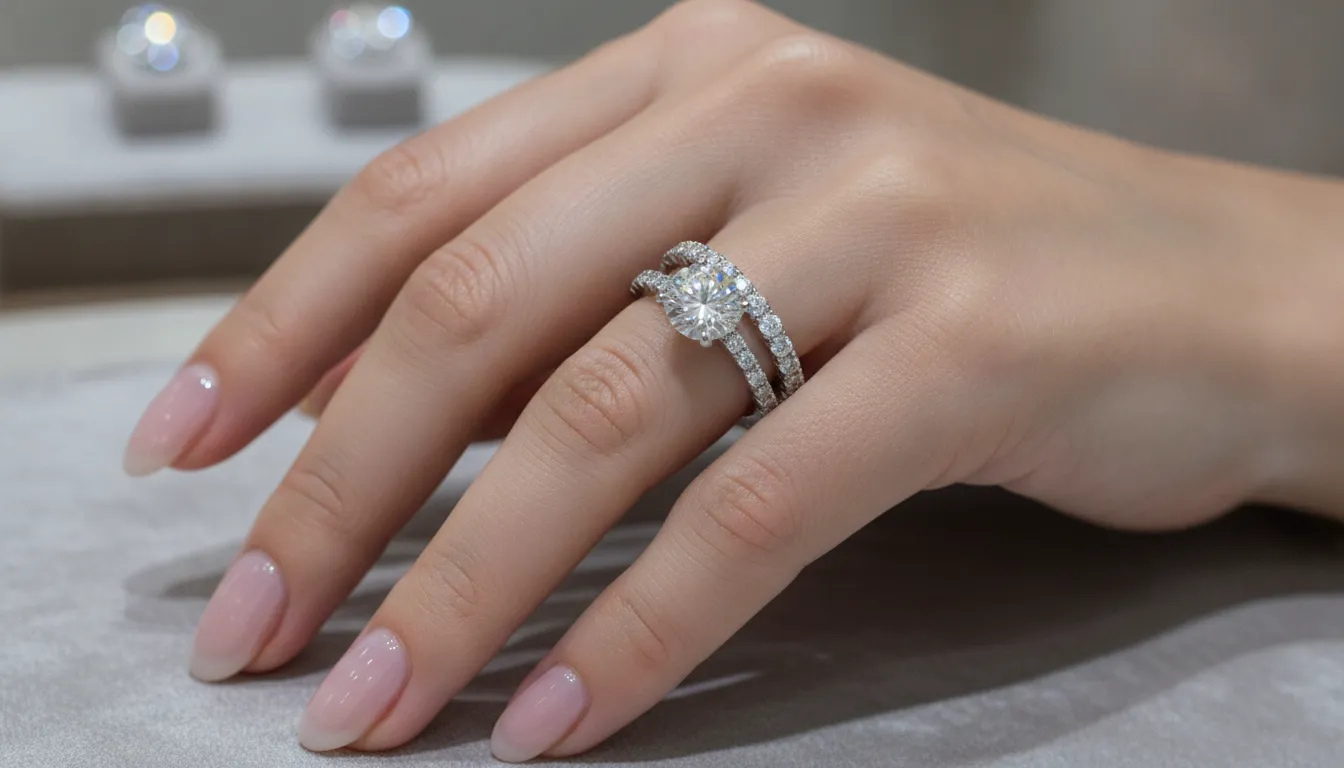
What makes a full eternity band distinctive?
- Continuous diamond coverage: Diamonds encircle the band rather than stopping at the sides or back.
- All-angle sparkle: The ring can catch the light as your hand moves, whether the palm is facing up or down.
- A classic symbol: The uninterrupted circle can represent lasting commitment and love without end.
- A substantial design: Because diamonds cover the full circumference, the band may feel more structured on the finger than a style with a plain shank.
When considering the eternity band vs half eternity band, the most important distinction is where the diamonds are placed. Full eternity offers the fullest visual effect and uninterrupted sparkle. It also requires thoughtful sizing before purchase. A full band is generally difficult or impossible to resize later because diamonds extend around the entire shank, so accurate measurements and a careful fit matter.
For a broader look at proportions, pairing, and shopping considerations, explore our Women's Wedding Bands: The Complete Buyer's Guide for Every Style and Budget.
For additional design context, our guide to eternity bands can help you compare the details that affect appearance and wear.
What is a half eternity band?
A half eternity band has diamonds set across the top half of the ring, while the lower portion remains a plain metal shank. This design creates a bright, diamond-forward look from above while keeping the underside smooth and practical for everyday wear.
The diamonds may be set in rose gold, white gold, yellow gold, or platinum, allowing the band to coordinate with an engagement ring or create a considered contrast. Because the stones do not continue around the entire circumference, the plain-metal portion rests against the palm and between the fingers.
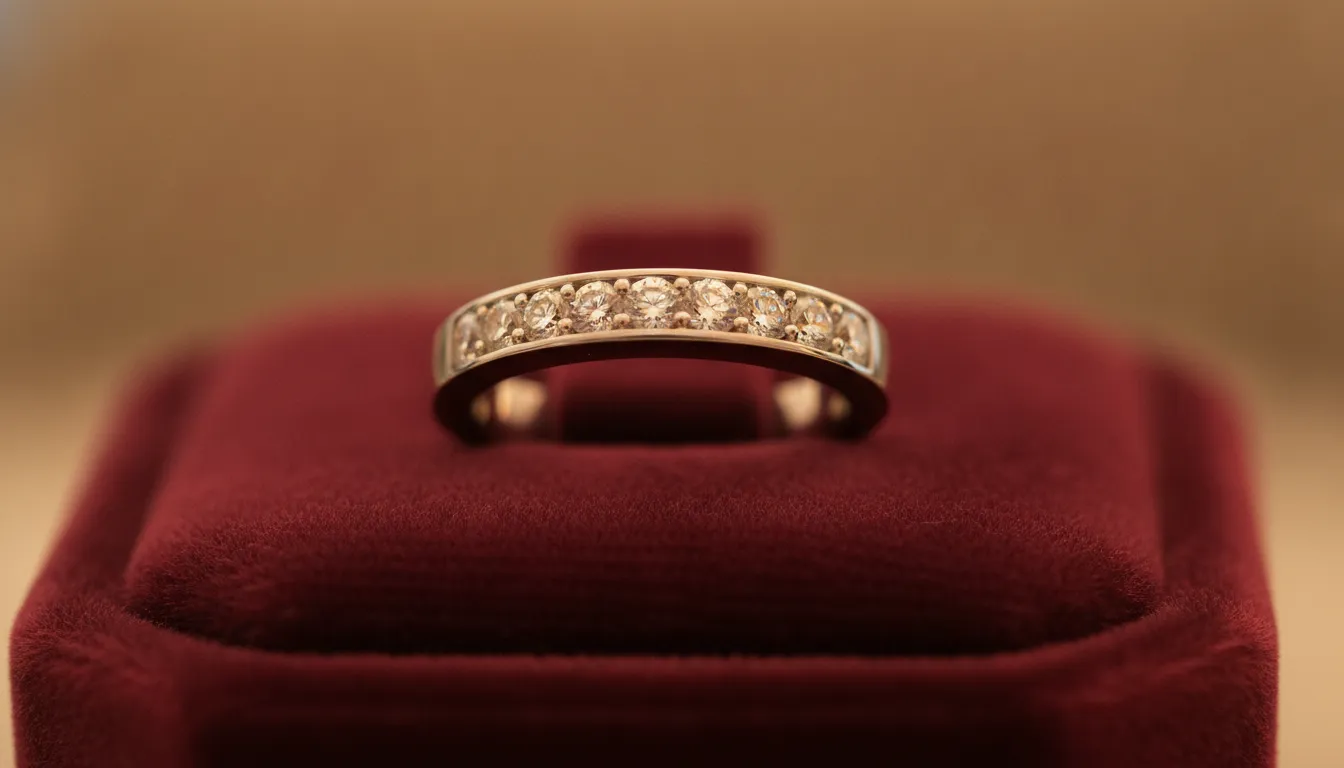
Why choose a plain-metal shank?
- Comfort: A smooth underside can feel less busy against the skin, especially when worn beside another ring.
- Practicality: The metal-only section is easier to handle during daily activities and can reduce the chance of diamonds contacting neighboring fingers.
- Future flexibility: A plain shank gives a jeweler more workable metal if the ring ever needs professional resizing.
- Balanced sparkle: The diamonds remain visible from the top and sides most people see, without requiring stones around the full circumference.
When considering eternity band vs half eternity band, the half style is often a thoughtful choice if you want a diamond band with a more practical underside. It can also be a natural fit for an engagement ring that already has substantial detail, since the plain portion helps keep the overall stack comfortable and composed.
Look closely at the setting style, diamond coverage, metal color, and how the band sits beside your engagement ring. Trying on both proportions can make the difference in sparkle, comfort, and balance much easier to judge.
Can you resize an eternity or half eternity band?
Usually, a half eternity band can be resized, while a full eternity band generally cannot. The difference comes down to where the diamonds are set. A half eternity band has diamonds across the top or front portion of the ring, leaving a plain metal section along the bottom of the shank. That uninterrupted metal gives a jeweler room to adjust the ring's circumference more predictably.
With a full eternity band, diamonds continue around the entire circumference. Because there is no plain metal section to cut and reshape. Making the ring larger or smaller can disturb the setting pattern, affect the spacing between stones, or compromise the ring's structure. For that reason, a full eternity band is typically made in the exact size needed rather than resized later.
Why accurate sizing matters
Precise sizing is especially important when choosing a full eternity band. Finger size can change with temperature, time of day, and other ordinary conditions, so try on a similar ring and discuss the fit before ordering.
- Confirm your exact ring size with a professional measurement near the end of the day, when fingers are slightly larger.
- Try on a band and wear it briefly to check comfort across your knuckle.
- Account for how the wedding band will sit beside your engagement ring, then place your order in the precise size you need.
The band should slide over the knuckle with gentle resistance but feel secure once in place. A professional fitting can also help you account for the way the wedding band will sit beside an engagement ring.
If you are still weighing the eternity band vs half eternity band decision, resizing flexibility may be an important part of the comparison. A half eternity band can offer more practical room for future fit changes, while a full eternity band prioritizes uninterrupted sparkle. For broader guidance on proportions, metals, and pairing options, explore Women's Wedding Bands: The Complete Buyer's Guide for Every Style and Budget.
Which style is more comfortable for daily wear?
For everyday comfort, a half eternity band is often the easier choice. Its diamonds sit across the visible top of the ring, while the lower portion has a smooth metal shank. That plain metal creates a more comfortable surface against neighboring fingers and makes the band easier to wear through ordinary routines.
A full eternity band offers diamond coverage around the entire circumference, so it delivers sparkle from every angle. However, that design means stones also extend beneath the finger and along the areas between your fingers. Depending on the setting, the extra texture can feel less comfortable, especially if you are not accustomed to wearing a substantial band.
- Full eternity band: Provides continuous sparkle around the finger, but the diamonds can create more contact between the fingers. Some wearers find that the setting feels bulky or causes irritation during daily activities.
- Half eternity band: Keeps the underside smooth and offers a more discreet feel between the fingers. The plain metal section is often more comfortable for typing, working with your hands, or wearing the band beside an engagement ring.
- Fit matters for both: A ring that is too tight, too loose, or poorly matched to an adjacent ring can feel uncomfortable regardless of its design. Finger size can also change throughout the day and across seasons.
The best way to decide in the eternity band vs half eternity band comparison is to try both styles on in person. Wear each for several minutes, move your fingers naturally, and notice whether the setting catches, presses, or rubs. Pay attention to how the band feels next to your engagement ring, since the two rings will share space every day. A knowledgeable jeweler can also help you compare profiles, stone settings, and proportions for a secure, comfortable fit.
Which is better value: eternity or half eternity?
When comparing an eternity band vs half eternity band, value depends on whether you define it by diamond coverage. Long-term flexibility, or the amount of sparkle you want to see. A half eternity band is generally the more cost-effective choice because it uses fewer diamonds while keeping the stones visible across the top of the ring. A full eternity band costs more because diamonds continue around the entire circumference.
That difference is most noticeable when you look at the ring from the side or while wearing it. Full eternity bands offer continuous sparkle from every angle, which can make them especially appealing as a statement wedding band or anniversary ring. With a half eternity band, the plain-metal shank keeps the underside simpler and can make the ring easier to resize later. For more guidance on choosing a style, see our Women's Wedding Bands: The Complete Buyer's Guide for Every Style and Budget.
| Consideration | Full eternity band | Half eternity band |
|---|---|---|
| Diamonds used | Diamonds are set around the full circumference. | Diamonds cover the top half, with plain metal underneath. |
| Sparkle | Continuous sparkle from every angle. | Bright, visible sparkle from the top and sides when worn. |
| Resizing | Generally difficult or not possible because diamonds surround the band. | Typically more practical because the plain-metal shank allows adjustment. |
| Comfort | May feel bulkier against the finger depending on the setting. | Often feels simpler against the palm, with no stones underneath. |
| Cost | Higher, reflecting the additional diamonds and coverage. | More cost-effective because fewer diamonds are required. |
Choose the full style if uninterrupted sparkle is the defining feature you want. Choose half eternity if you prefer to direct your budget toward diamond quality, a coordinated engagement ring, or everyday practicality. A personal review of proportions, setting, and fit can help you make the right choice for your hand.
Ready to compare both bands in person? Schedule a consultation.
Frequently Asked Questions
What is the difference between a full and half eternity band?
A full eternity band has diamonds set around the entire circumference, creating sparkle from every angle. A half eternity band places diamonds across the visible top half, while the lower shank remains plain metal. The choice comes down to how much continuous sparkle, flexibility, and practicality you want from your wedding band.
Are full eternity bands comfortable for daily wear?
They can be comfortable, but the fit depends on the setting, width, finger shape, and your daily routine. Because diamonds extend around the entire band, a full eternity style may feel less smooth or slightly bulkier between the fingers. A half eternity band leaves plain metal against the palm, which many wearers prefer for everyday comfort.
Can half eternity bands be resized?
Usually, yes. The plain-metal portion of a half eternity band gives a jeweler room to adjust the ring more easily as your finger size changes. A full eternity band is generally difficult or impossible to resize because diamonds encircle the entire shank. Confirm the sizing and fit before purchase, especially when choosing a full band.
Which style is more durable for everyday wear?
Neither style is automatically more durable. Both require secure settings, appropriate care, and periodic professional inspection. A half eternity band may be easier to maintain because the underside is plain metal. While a full eternity band offers stones around the entire circumference but exposes more settings to contact during wear.
How do you choose between a full or half eternity band?
Consider your priorities first. Choose a full eternity band if uninterrupted sparkle and a diamond-forward look matter most. Choose a half eternity band if you value easier resizing, a smoother underside, or a more focused budget. Your engagement ring, lifestyle, preferred metal, and long-term fit should all guide the final decision.
Ready to Choose Your Wedding Band?
Seeing full and half eternity bands in person can make the differences in sparkle, coverage, comfort, and everyday wear easier to understand. Schedule a private consultation to compare both styles and talk through which one fits your preferences.
