



Lab Grown Diamonds vs Natural: The Complete Education Guide
Choosing an engagement diamond is not simply a question of size or sparkle. The most meaningful decision often begins with understanding how the diamond was formed, what its grading report confirms, and which qualities matter most to your future together.
When comparing lab grown diamonds vs natural diamonds, both are real diamonds with essentially the same optical, physical, and chemical properties. The key distinctions are their origin, price, and potential long-term value. Neither is universally right for every couple, so the best choice depends on your priorities, budget, and vision for the ring.
To make that choice with confidence, it helps to separate what you can see from what you cannot: brilliance and durability are shared, while formation, rarity, and market considerations tell different stories. The following guide begins with those essential distinctions, then moves through certification, pricing, and the details that shape an informed engagement-ring decision.
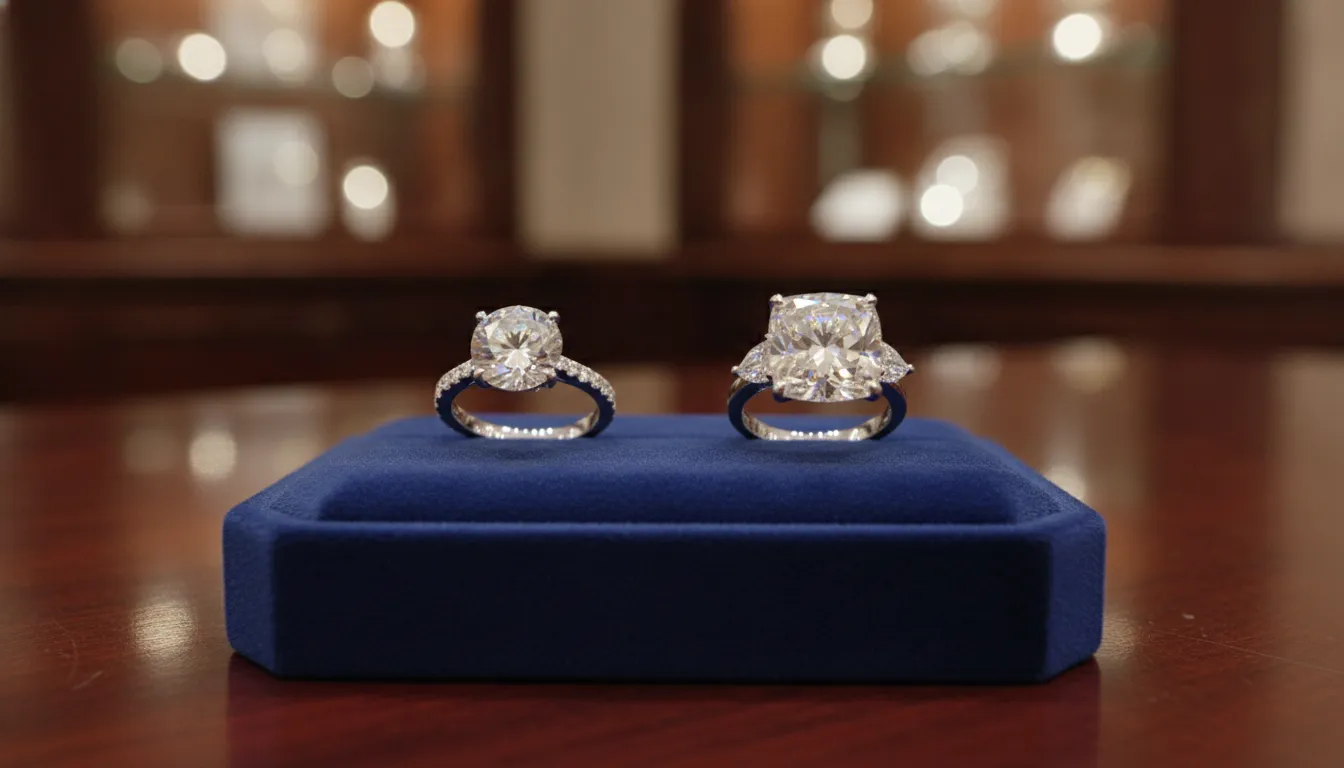
What Makes Lab Grown Diamonds Different from Natural Diamonds?
At first glance, a lab-grown diamond and a natural diamond can appear indistinguishable. That is not a marketing distinction. Laboratory-grown diamonds are real diamonds with essentially the same crystal structure, chemical composition, physical durability, and optical properties as diamonds formed in the Earth. The Gemological Institute of America explains the scientific differences and similarities in its overview of natural and laboratory-grown diamonds.
Even an experienced observer generally cannot identify the origin of a diamond by looking at it with the naked eye. Gemologists use specialized equipment to distinguish natural growth features from the characteristics created during laboratory growth. Both types also have a 10 on the Mohs scale of hardness, making either suitable for the demands of an engagement ring worn every day.
What the FTC recognition means
The Federal Trade Commission recognizes laboratory-grown diamonds as diamonds, while requiring clear disclosure of their origin. In other words, "lab-grown" does not mean imitation or a diamond simulant. It identifies how the diamond was created. The distinction matters because shoppers deserve accurate information about whether a stone was grown in a laboratory or recovered from the Earth.
The meaningful differences are origin, price, and value expectations
The clearest difference is the origin story. Natural diamonds formed deep within the Earth over millions or billions of years. Laboratory-grown diamonds are produced in controlled environments using advanced processes that recreate the conditions needed for diamond crystal growth. That difference in origin does not create a visible difference in brilliance, but it can shape what the stone represents to the person choosing it.
Price is another important consideration. Lab-grown diamonds generally cost less than natural diamonds of equivalent quality, although the exact difference varies by carat weight, cut, color, clarity, certification, and current market conditions. A lower purchase price may allow a buyer to prioritize size or a particular design feature. A natural diamond may appeal to someone who places greater importance on geological rarity and a longstanding heirloom tradition.
Resale expectations should also be discussed honestly. Natural diamonds are often viewed as rarer and may hold value better over time, while lab-grown diamonds typically have limited resale value. Neither choice is universally right. The best decision depends on the role the diamond will play in your engagement ring, your priorities, and the story you want the piece to carry. For a closer look at the considerations, explore this lab-grown versus natural diamond comparison.
The Science Behind a Diamond's Brilliance
When comparing lab-grown diamonds with natural diamonds, the way a stone handles light is not a deciding point. Both are diamonds with the same carbon crystal lattice, the ordered atomic structure that gives diamond its remarkable optical and physical properties. That shared structure produces the same refractive index, dispersion, and capacity for scintillation when the cut and proportions are comparable. As the Gemological Institute of America explains, laboratory-grown diamonds have essentially the same optical, physical, and chemical properties as natural diamonds: GIA's comparison of natural and laboratory-grown diamonds.
How light creates brilliance, fire, and scintillation
Diamond appearance is often described with three related terms:
- Brilliance is the amount of white light returned to the viewer. A well-cut diamond directs light through its facets and back toward the eye, creating a bright overall appearance.
- Fire, also called dispersion, is the separation of white light into spectral colors. Those flashes of red, blue, yellow, and other hues become visible as the diamond moves or the lighting changes.
- Scintillation is the pattern of bright and dark flashes created by movement, changing light, and the interaction between the diamond's facets and the viewer.
These effects depend heavily on cut quality, facet arrangement, symmetry, polish, and viewing conditions. They do not depend on whether the crystal was formed naturally or grown in a controlled environment. Two stones with different cuts can appear noticeably different, while a well-cut lab-grown diamond and a well-cut natural diamond can display comparable brightness and colorful flashes.
One crystal structure, two formation methods
Natural diamonds form deep within the Earth under extreme heat and pressure over geological periods. Lab-grown diamonds are made using high-pressure high-temperature, or HPHT, methods, or chemical vapor deposition, known as CVD. These processes recreate the conditions needed for diamond crystal growth in a controlled setting. The resulting stone is not a look-alike material with a diamond coating. Its carbon atoms are arranged in a diamond crystal lattice, which is why its optical performance and durability can match that of a natural diamond.
Specialized gemological equipment can identify a diamond's origin, but the distinction is not visible to the naked eye. Both types also rank 10 on the Mohs scale of hardness, making them suitable for the daily wear expected of an engagement ring. Origin remains important to an informed purchase, but it should not be confused with brilliance. For a useful buying decision, evaluate the cut, proportions, clarity, color, grading report, and the way the individual stone performs in person.
The science behind lab grown diamonds vs natural is therefore less about choosing between two levels of sparkle and more about understanding two origins for the same crystal material. A trusted jeweler can help you compare the actual stones, their reports, and their design possibilities with clarity.
From the Earth and the Laboratory: Two Creation Stories
The story behind a diamond is one of the clearest differences when comparing lab grown diamonds vs natural stones. Natural diamonds begin deep within the Earth, where intense heat and pressure transform carbon over millions to billions of years. Geological movement eventually carries some of these crystals closer to the surface through volcanic activity. The result is a gem shaped by an immense, unpredictable span of natural history.
Lab-grown diamonds follow a much shorter, carefully controlled path. A diamond seed is placed in a specialized facility, where scientists recreate conditions that allow carbon to crystallize. Depending on the method, a finished crystal can develop in weeks or months rather than geological ages. The origin is different, but the resulting material is still diamond, with the same fundamental crystal structure and durability. The Gemological Institute of America explains the distinction between natural and laboratory-grown diamonds in greater detail.
HPHT: Recreating Heat and Pressure
High-pressure high-temperature, or HPHT, is designed to imitate the environment in which natural diamonds form below the Earth's surface. A small diamond seed is exposed to a carbon source under extremely high pressure and temperature. As the carbon dissolves and crystallizes around the seed, the diamond grows layer by layer.
HPHT growth is a controlled process, so manufacturers can monitor variables such as temperature, pressure, and the chemistry of the growth environment. These conditions influence how the crystal develops and help produce diamonds suitable for cutting and polishing. The method is not an attempt to reproduce a particular mined diamond. Instead, it provides a different route to the same crystalline material.
CVD: Growing Diamond in a Controlled Chamber
Chemical vapor deposition, or CVD, uses a chamber filled with a carbon-containing gas. The gas is energized until its carbon atoms separate and settle onto a diamond seed. Over time, those atoms bond and form additional layers of diamond crystal.
CVD gives technicians precise control over the growth atmosphere and the conditions at the surface of the seed. Research into diamond synthesis examines factors including temperature, pressure, gas composition, and surface conditions, all of which affect crystal growth. The published research on CVD diamond synthesis describes how these growth parameters can be adjusted in a controlled setting.
Neither creation story makes one diamond universally better. A natural diamond may appeal to someone who values geological rarity and a connection to the Earth's history. A lab-grown diamond may suit someone who prefers a modern manufacturing process and a shorter origin timeline. In both cases, the cut, color, clarity, and craftsmanship remain important parts of the finished engagement ring.
Understanding Diamond Certification and the 4Cs
A diamond grading report gives you a consistent way to evaluate what you are considering, whether the stone is lab-grown or natural. Reputable laboratories such as the Gemological Institute of America (GIA) and the International Gemological Institute (IGI) document a diamond's identity and quality characteristics. Certification is important in any conversation about lab grown diamonds vs natural because it supports an informed comparison rather than relying on appearance alone.
The 4Cs are cut, color, clarity, and carat weight. Together, they describe a diamond's visual performance, rarity characteristics, and size. They do not determine whether a diamond is right for your engagement ring by themselves. Your setting, preferred shape, lifestyle, and budget all matter as well.
Cut: the factor behind brilliance
Cut refers to how well a diamond's facets interact with light. It is different from shape, which describes the outline, such as round, oval, emerald, or pear. Look for the cut grade on a report when one is provided, and review the stone's proportions and finish with an experienced professional. A well-cut diamond can appear lively and bright, while a larger stone with weaker light performance may not have the same presence.
Color and clarity: choosing the look you prefer
Color grades describe how much body color a diamond shows, while clarity grades describe the presence of internal characteristics and surface features. Neither category is simply a pass-or-fail measure. The right choice depends on the diamond's shape, size, setting, and how it looks to your eye. A knowledgeable jeweler can help you identify where an adjustment in one grade may preserve the appearance you want without paying for characteristics you will not notice.
Carat weight: size is not the whole story
Carat is a measure of weight, not a direct measurement of face-up size. Two diamonds with the same carat weight can appear different in proportion and spread, especially when they have different shapes or cuts. Compare carat alongside the report's measurements, then view the actual diamond before making a decision. You can explore engagement rings while considering how the center stone and setting work together.
What to check on a GIA report
For a natural diamond, confirm that the report identifies it as natural and review the listed shape, measurements, carat weight, color, clarity, cut, polish, and symmetry. The report number should correspond to the stone and its documentation. For a lab-grown diamond, look for the same core 4Cs information, along with the report's clear identification that the diamond is laboratory-grown. Lab-grown diamonds receive the same fundamental grading considerations for cut, color, clarity, and carat, but their laboratory origin is specifically disclosed.
GIA explains that lab-grown and natural diamonds share essentially the same optical, physical, and chemical properties. So specialized equipment is used to identify their origin rather than the naked eye. Both are also rated 10 on the Mohs scale of hardness. A report does not make the decision for you, but it gives you a reliable foundation for comparing the qualities and origins that matter most to you.
Lab-Grown Diamond Prices vs Natural: The 2026 Reality
Price is one of the clearest practical differences when comparing lab-grown diamonds vs natural diamonds. The two types share the same essential optical, physical, and chemical properties, but their origins create very different market dynamics. In general, a lab-grown diamond costs about 40% to 70% less than a natural diamond of comparable quality.
| Feature | Natural Diamond | Lab-Grown Diamond |
|---|---|---|
| 1ct price | Approximately $4,000 to $10,000 for a comparable quality range | Approximately $1,000 to $3,000 for a comparable quality range |
| 2ct price | Approximately $29,500 in the cited market example | Approximately $2,800 in the cited market example |
| Resale value | Often retains more value, with some market estimates placing resale around 25% to 50% of the original price | Generally has minimal resale value in the current market |
| Rarity | Limited by natural formation and finite mined supply | Produced in a controlled environment, so availability is not limited by geological rarity |
These figures are useful for establishing scale, not for predicting an exact quote. The final price depends on the 4Cs, shape, fluorescence, proportions, certification, and current inventory. A two-carat diamond with excellent cut quality and a sought-after shape can price very differently from another two-carat stone with lower grades. Comparing diamonds by carat weight alone can therefore make a meaningful price difference look larger or smaller than it really is.
How resale value fits into the decision
Natural diamonds are often viewed as rarer and more suitable for heirloom ownership, and they generally hold value better than lab-grown diamonds. That does not make either option a guaranteed investment. Jewelry resale prices depend on market demand, condition, documentation, the original purchase price, and the buyer's preferences. A lab-grown diamond's lower initial cost may be the more relevant financial consideration for someone focused on enjoying the ring rather than preserving future resale value.
What the market is showing
Lab-grown diamonds are no longer a niche choice. They represented 52% of engagement ring center stones in 2024, according to the market data reviewed for this guide. Their wider adoption reflects the appeal of allocating more of a fixed budget to size. Cut, or the setting while still choosing a diamond with the durability needed for daily wear.
Budget can be a helpful starting point, but it should not make the decision for you. If geological rarity, origin, and long-term heirloom value matter most, a natural diamond may align more closely with your priorities. If upfront cost, visual size, and design flexibility carry more weight, a lab-grown diamond may offer a comfortable path. Reviewing both options side by side with a trusted jeweler lets you decide where your budget creates the most meaning for your ring.
Choosing the Right Diamond for Your Engagement Ring
Once you understand that both diamond types can deliver exceptional beauty and daily durability, the decision becomes personal. In the ongoing conversation about lab grown diamonds vs natural, there is no universal right answer. The best choice depends on what you want your engagement ring to represent. How you prefer to allocate your budget, and which aspects of a diamond's story matter most to you.
Start with your budget and priorities
Lab-grown diamonds are often chosen as a sustainable, cost-effective alternative to natural diamonds. They generally cost less than a natural diamond with comparable quality. Which may allow you to consider a larger center stone, a more intricate setting, or additional design details within the same budget. Explore the lab-grown engagement ring collection to see how that option fits your preferences.
Market demand also reflects this flexibility. In 2024, lab-grown diamonds accounted for 52% of engagement ring center stones. That figure does not make them better or more meaningful than natural diamonds, but it does show how widely couples are incorporating them into modern proposals.
Consider symbolism and origin
For some couples, a natural diamond's geological origin and extraordinarily long formation story are central to its symbolism. Natural diamonds formed deep within the Earth over millions or billions of years, giving the stone a connection to natural history and rarity. For others, a lab-grown diamond represents a contemporary approach. With its creation in a controlled environment and its potential to make more of the budget available for the ring's design.
Origin is a meaningful distinction, and it should always be disclosed clearly. The Federal Trade Commission recognizes laboratory-grown diamonds as diamonds while requiring their laboratory-grown origin to be represented accurately. Whether you choose natural or lab-grown, a reputable grading report can help confirm the stone's characteristics and origin.
Think about longevity and future value
Both lab-grown and natural diamonds have a 10 rating on the Mohs scale of hardness, making either suitable for an engagement ring intended for daily wear. Their durability should not be the deciding factor between the two. With routine care and periodic professional inspections, both can remain part of a couple's story for decades.
The more significant long-term distinction may be potential resale or heirloom value. Natural diamonds are often viewed as rarer and may hold value better, while lab-grown diamonds typically appeal as lower-cost, contemporary choices and may have more limited resale value. If passing the ring through generations or preserving potential future value is especially important, discuss that consideration before selecting a center stone.
Choose the setting and experience together
The diamond is only one part of the ring. Shape, cut quality, metal, setting style, and craftsmanship all influence the finished piece. Begin with the priorities that matter most to you, then compare stones using consistent grading information rather than relying on origin alone. Browse the engagement rings collection for inspiration, or speak with a bridal specialist about a design tailored to your relationship.
A thoughtful choice is one that feels right both when you receive the ring and years after the proposal. Natural and lab-grown diamonds can each carry lasting meaning. The important step is understanding the differences in origin, price, and potential resale value, then selecting the stone that aligns with your values and your future together.
Common Diamond Buying Mistakes to Avoid
A thoughtful diamond purchase is about more than finding the largest stone within a budget. Avoiding a few common missteps can make it easier to compare options, understand what you are paying for. And choose a diamond that suits the ring and the person who will wear it.
-
Skipping an independent grading report
Do not rely on a seller's description alone. Look for a report from a respected gemological laboratory, such as GIA or IGI, that documents the diamond's origin, grading, and quality. Certification is important for both lab-grown and natural diamonds because it gives you a consistent reference when comparing stones. GIA explains why laboratory-grown origin and diamond quality should be clearly identified for consumers: review its diamond research before making a decision.
-
Comparing only one type of diamond
When weighing lab grown diamonds vs natural, do not assume that one category automatically offers the better choice. Compare diamonds with similar shape, cut, color, clarity, carat weight, and grading documentation across both categories. That side-by-side view helps you understand how origin and pricing affect your available options without turning the decision into a winner-versus-loser argument.
-
Choosing carat weight before cut quality
A larger diamond is not necessarily the more beautiful diamond. Cut quality has a major effect on how effectively a stone returns light. So a well-cut diamond with a balanced proportion may appear more lively than a heavier stone with weaker performance. Consider the overall visual impression first, then decide where carat weight fits your priorities.
-
Overlooking fluorescence
Fluorescence is a diamond characteristic that describes how it reacts to ultraviolet light. It can influence a stone's appearance in certain lighting conditions and may matter differently depending on the diamond's color and clarity. Ask to view the stone under more than one lighting environment, and have an expert explain whether its fluorescence supports or distracts from the look you want.
-
Focusing on a single part of the 4Cs
Carat, color, clarity, and cut work together. Improving one grade can affect size, brightness, rarity, and price elsewhere in the report. Rather than chasing a single specification, decide which visual qualities matter most to you and compare complete grading information before choosing.
-
Trying to make the decision without trusted guidance
Online research is useful, but it cannot replace seeing diamonds in person and asking questions about their reports, appearance, setting, and long-term wear. A jeweler who listens first can help you compare options clearly and avoid pressure-driven decisions. For a ring designed around your priorities, explore custom engagement rings and work with a team that can guide you from selection through creation.
Making an Informed Diamond Decision
The right diamond decision begins with clarity about what matters most to you. When comparing lab-grown diamonds vs natural, focus on the differences that affect your priorities: origin. Budget, long-term meaning, and the kind of story you want your engagement ring to carry. Both options are real diamonds with the beauty and durability expected for daily wear, but each offers a distinct path to the finished ring.
Some couples are drawn to a natural diamond because of its geological origin, rarity, and connection to a story that began deep within the earth. Others appreciate the modern creation process and accessible pricing of a lab-grown diamond. Neither choice is universally better. The most meaningful selection is the one that aligns with your values, design preferences, and plans for the ring.
Start with the questions that matter to you
Before comparing individual stones, decide which factors deserve the most weight. Consider whether origin is central to your choice, how you want to allocate your budget across the 4Cs and the setting. And whether you are designing a classic ring or a more personal custom piece. Ask to review certification details, compare stones in person, and discuss how each option performs within the setting you prefer.
For additional context, explore our lab-grown diamond education and our guide to engagement ring styles. These resources can help you arrive at a consultation with clearer questions and a stronger sense of direction.
Choose guidance that begins with listening
Buchroeders Jewelers has served generations of families as a family-owned luxury jeweler since 1896. That heritage informs a process built around education rather than pressure. We Listen First, then Selection & Design, and finally Ring Creation. In practice, that means your priorities come before a recommendation, and the conversation remains focused on helping you understand your options.
Whether you are considering a natural diamond or a lab-grown center stone, expert guidance can make the process more confident and personal. A careful review of the diamond, certification, setting, and overall design helps ensure that the finished ring reflects both your relationship and your intentions.
Frequently Asked Questions
Are lab-grown diamonds real diamonds?
Yes. Lab-grown diamonds are real diamonds with essentially the same crystal structure, optical properties, chemical composition, brilliance, and durability as natural diamonds. The Federal Trade Commission recognizes them as diamonds and requires their laboratory-grown origin to be clearly disclosed, so buyers can understand what they are purchasing. GIA explains the similarities and differences.
Can you tell the difference between a lab-grown and natural diamond?
Not by looking at the diamond with the naked eye. Because the two types share the same fundamental properties, even experienced professionals need specialized gemological equipment to identify a diamond's origin. A reputable grading report can document whether the stone is natural or laboratory-grown, along with its 4Cs and other quality details.
How do prices compare?
Lab-grown diamonds generally cost less than natural diamonds of comparable quality. Which can allow a buyer to consider a larger size or different combination of cut, color, and clarity. Price is only one part of the decision, however. Compare the grading report, proportions, setting, and long-term priorities rather than relying on carat weight alone.
Do lab-grown diamonds work for everyday engagement ring wear?
Yes. Lab-grown diamonds have a hardness of 10 on the Mohs scale, the same as natural diamonds, making either suitable for an engagement ring worn daily. Hardness does not make a diamond impossible to damage, so regular cleaning, thoughtful wear, and professional inspections still matter.
Which option is better for an engagement ring?
Neither is universally better. A lab-grown diamond may suit someone prioritizing size or budget, while a natural diamond may appeal to someone who values geological rarity and traditional heirloom considerations. The right choice depends on your priorities, and a clear comparison of origin, quality, budget, and future intentions can make the decision feel straightforward.
Ready to Explore Your Diamond Options?
Choosing between lab-grown and natural diamonds is a personal decision, and a conversation with an expert gemologist can help you compare each option with clarity and confidence. Schedule a personal consultation at Buchroeders Jewelers to explore diamonds for your engagement ring and discuss the qualities that matter most to you.
