



Lab-Grown Diamond Engagement Rings: Complete Guide
Shopping for a diamond engagement ring no longer requires giving up size and quality to fit a budget. Modern couples can now choose spectacular jewelry with complete confidence and total peace of mind.
Lab-grown diamond engagement rings feature real, genuine diamonds that are chemically, physically, and optically identical to traditional, natural mined diamonds. According to the Gemological Institute of America (GIA), these certified stones have the exact same crystal structure and carbon-atom composition as those natural diamonds. Because these gorgeous gems are grown in controlled laboratory environments in weeks, they do not require the expensive mining and sourcing of natural stones. At Buchroeders Jewelers, this modern process makes them priced fifty to seventy percent lower than comparable natural diamonds of the same quality and size. This incredible cost advantage allows you to choose a much larger and higher-grade center diamond while staying completely within your own planned shopping budget.
While this choice brings exciting options, you may still wonder how these modern stones are created and graded. Before you browse our lab-grown diamond engagement rings, it helps to understand what makes them so special. We will address these essential questions in our first section, What Are Lab-Grown Diamond Engagement Rings? The journey begins with
What Are Lab-Grown Diamond Engagement Rings?
Many couples now choose lab-grown diamond engagement rings for their big day. These rings look gorgeous, shine bright, and last for a lifetime. They feature real gemstones made in controlled labs instead of stones dug from deep in the earth. Knowing the science behind these fine stones helps you make a wise choice for your future.
The atomic identity of lab diamonds
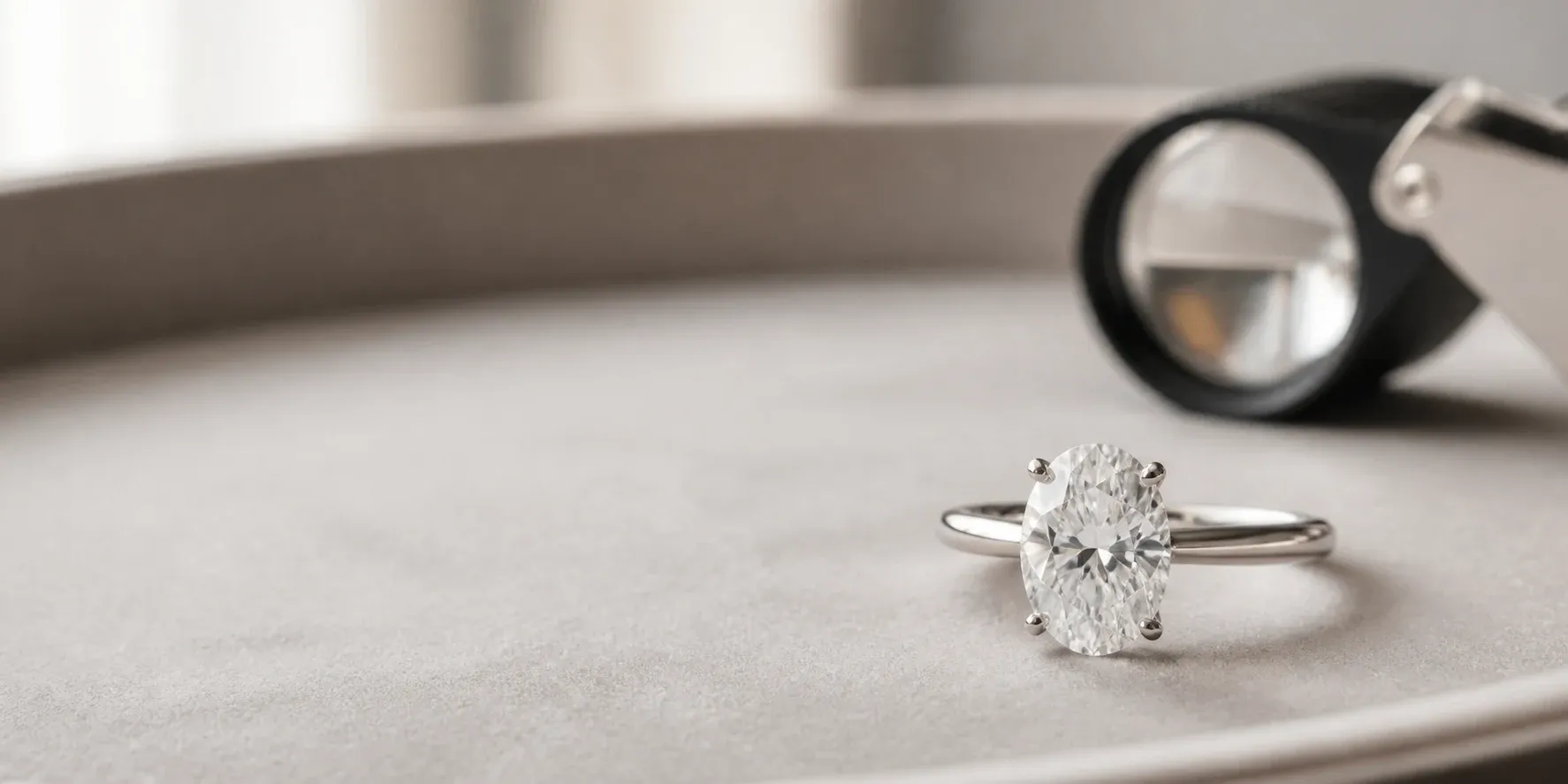
It is a common myth that lab diamonds are fake or cheap. Experts at the Gemological Institute of America show that lab-grown diamonds are real diamonds and not fake copies. At the atomic level, they possess the same chemical composition, crystal structure, and physical properties as natural diamonds. Under a jeweler's lens, they look the same because they are the same stone.
How modern science grows diamonds
How do these stones form? Deep in the earth, natural diamonds take millions or billions of years to grow under high heat. In contrast, scientists can make a lab-grown diamond in a few weeks. They use smart machines to mimic the intense heat and deep pressure found in nature. This speed allows for a steady supply of fine gemstones.
Scientists use two paths to grow these gems. As GIA studies show, the two major methods of lab-grown diamond production are HPHT and CVD. The first path uses high heat and heavy weight to press carbon into diamond. The second path uses a special gas mix to build the stone layer by layer in a vacuum. Both methods yield bright, clear crystals.
Choosing lab diamonds in Columbia
It is also key to know that lab diamonds are not the same as simulants. Many people mistake cubic zirconia or moissanite for lab diamonds. However, these simulants are far different from diamonds at the atomic level. They do not have the same hardness, sparkle, or strength as a real diamond. A lab-grown diamond is a true diamond, while a simulant is just a cheap look-alike.
If you are shopping in Columbia, Missouri, you have great choices. At Buchroeders, we believe in giving you the clear facts so you can find the best fit. That is why Buchroeders offers both natural and IGI-certified lab-grown diamonds in our showroom. You can learn more about these options by reading our complete guide to lab-grown diamonds. Our team is always ready to show you both types of gems in person.
Lab-Grown vs. Natural: Cost and Value Compared
Price Differences and Sourcing
When you shop for a ring, price is often a main point to think about. You can explore diamond engagement rings of all types at our store to see these differences in person. At Buchroeders, lab-grown diamonds cost 50% to 70% less than natural stones of the same grade. This price gap lets you get a larger stone for your budget and makes lab-grown options appealing to many modern couples.
To help you get the best deal, we offer a unique price match guarantee on our lab-grown options. We promise to beat any rival's price by 20% on the same stones with IGI grades. This guarantee applies to loose diamonds and makes sure you get the lowest price in the area. Our team will check the details of the stone to confirm it matches ours.
Rarity and Long-Term Value
The main difference between these two options is how they are sourced and how they hold value. Natural diamonds are a finite resource that, according to the GIA, take millions of years to form under high heat. In contrast, lab-grown diamonds can be made in a few weeks. This means lab stones have a limitless supply, which leads to lower resale value over time.
Because of this value gap, natural diamond buys at Buchroeders come with a special plus. Our Diamond Upgrade Privilege lets you trade in your natural stone later for full dollar-for-dollar credit. This trade-in program applies only to natural stones and does not cover lab-grown diamonds. If you want a ring that keeps its worth for a lifetime, a natural stone is a great choice.
Protection and Guarantees
To help you compare these options, we have created a simple guide below. This table covers the main points to consider when making your choice. It looks at price, rarity, and how each diamond type holds its value over time.
| Feature | Lab-Grown Diamonds | Natural Diamonds |
|---|---|---|
| Price | Costs 50% to 70% less than natural stones | Higher cost due to rarity and mining costs |
| Formation Time | Grown in days or weeks in a lab | Formed over millions to billions of years |
| Rarity | Unlimited supply as more can be made | Finite resource with a limited global supply |
| Certification | Commonly certified by IGI | Commonly certified by GIA or IGI |
| Value Retention | Lower trade-in or resale value over time | Holds value well and qualifies for upgrades |
No matter which diamond type you select, keeping your jewelry safe is key. Both diamond options can be covered by our in-house plans, and you can protect your purchase with our Assurance Jewelry Protection plan. This plan offers full coverage with no deductible on repairs and center-stone replacement. We also offer a thirty-day guarantee that lets you return or exchange any piece with no questions asked.
How the 4 Cs Apply to Lab-Grown Diamonds
Mined and lab stones share the same traits. Lab-grown diamonds possess the same chemical composition, crystal structure, and physical properties as natural diamonds. Because of this, gem labs use the exact same standards to grade both options. This means jewelers grade lab stones on cut, color, clarity, and carat weight.
The four quality factors
The four factors, often called the 4 Cs, tell you how well a diamond looks and shines. Cut is the most important factor because it dictates how light bounces through the stone. A poor cut makes a stone look dull, while an excellent cut gives it maximum brilliance. Because lab stones grow under controlled conditions, growers can craft them to achieve better cuts more often.
Next is color, which scales from colorless to light yellow. While mined diamonds often pick up tints during growth, lab diamonds can be grown with high purity. Clarity also measures internal flaws called inclusions. Even though lab stones have tiny growth marks, many are very clean.
Better specs for your budget
The biggest perk of choosing lab-grown diamond engagement rings is the value you get. When you buy a mined stone, higher grades in color and clarity cost a massive premium. Lab stones cost much less to produce, which lowers the retail price by a large amount. This means you do not have to settle for lower quality to stay within your price limit.
With a lab stone, your budget goes much further. You can buy a stone with top color and clarity grades for less money. You can also get a much larger carat weight. This freedom helps you focus on what matters most to you, whether that is a perfect cut or a bigger size.
The importance of diamond certification
Even though lab diamonds grow in a lab, they still need third-party grading. A report proves the stone's exact specs and value. Without it, you cannot be sure of the quality you are buying. Trusted gem labs test each stone to confirm its traits, giving you peace of mind before you make your final choice.
At Buchroeders, we believe in full honesty when you shop. That is why our complete guide to lab-grown diamonds highlights the need for clear grading. Buchroeders offers both natural and IGI-certified lab-grown diamonds so every customer gets exactly what they pay for. While the GIA is the leading name for mined stones, the International Gemological Institute, or IGI, is the trusted standard for lab-grown stones.
Popular Lab-Grown Diamond Engagement Ring Styles
Choosing a ring is a major milestone for any couple. Modern settings allow you to show your style in unique ways. Because lab-grown diamonds look and feel like natural stones, they shine bright in any layout.
In fact, they are real diamonds. According to the GIA, lab-grown diamonds have the same chemical makeup and crystal structure as natural diamonds. When you are ready to shop, you can browse our lab-grown diamond engagement rings to find the best fit for your budget.
Classic Solitaire and Cathedral Settings
The solitaire style remains the most popular choice for a classic ring. It uses a single stone on a plain metal band to put all the focus on your diamond. This elegant look works best with round brilliant, oval, or cushion-cut stones.
If you want more height, a cathedral setting is a great choice. This style has graceful metal arches that raise the stone high above the band for a bold profile. These arches look beautiful with emerald-cut or princess-cut diamonds.
Modern Halo, Bezel, and Pave Styles
For extra sparkle, you can choose a halo or pave setting. A halo ring has a circle of small stones around the center diamond. A hidden halo sits just below the main stone to add detail from the side. Halo settings make oval, round, and pear-cut diamonds look larger.
If you like a smooth look, a bezel setting wraps the stone in a thin metal rim. This holds the diamond tight and keeps it safe from snags. It is a smart choice for emerald and radiant cuts.
You can also choose three-stone or vintage-inspired settings to express your taste. Three-stone rings use two side stones to frame the center diamond, which stands for your past, present, and future. Vintage rings feature fine metal work like scrolls and milgrain beads. These styles look stunning with marquise and pear shapes.
The Buchroeders Custom Design Experience
If you have a clear vision in mind, you can build your own ring. We want to help you make a unique piece that tells your love story. Our custom engagement ring design experience makes this process simple and stress-free.
You can start online with our custom ring builder tool to explore different styles, metals, and shapes. From there, we guide you through each step of the journey to bring your ideas to life.
Our team relies on our proven three-stage process to craft your piece. We call these stages We Listen First, Selection & Design, and Ring Creation. First, we listen to your ideas to learn what matters most to you.
Next, we help you select the perfect diamond and design the mounting. Finally, our master jewelers build your ring in our shop. This process keeps you in control from start to finish. You will get a high-quality ring that fits your style and your budget.
How to Choose the Perfect Lab-Grown Diamond Engagement Ring
Buying an engagement ring is a big step. When you shop for lab-grown diamond engagement rings, you can get a lovely ring that fits your style and your budget. Having a simple plan helps you find the right match without stress.
Your Diamond Purchasing Plan
Before you buy, it helps to know how these gems are priced. Lab-grown diamonds at Buchroeders are priced 50-70% lower than similar natural diamonds. These gems have the same chemical traits as mined gems, as noted by the Gemological Institute of America. This means you get a real diamond for much less.
- Set a clear budget: Decide what you want to spend before you look at rings. Since lab-grown diamonds cost less, you can get 50% to 70% more diamond for the same amount of money. This lets you focus on getting a larger stone or a more detailed band.
- Choose a diamond shape: Pick a shape that matches your partner's style. You can choose from classic round, oval, cushion, princess, emerald, pear, marquise, or radiant shapes. Each shape looks special on the finger and can make a simple band stand out.
- Balance the four Cs: Learn how cut, color, clarity, and carat weight affect the stone. Focus on cut first, as a great cut makes the stone sparkle. Since lab-grown diamonds are grown in a lab, you can get higher grades in color and clarity for less money.
- Select a ring setting: The setting holds the diamond and defines the style of the ring. Popular choices include classic solitaire, glowing halo, bezel, or pavé bands. Each setting provides a unique level of safety and shine.
- Pick your metal: Choose a metal that matches other jewelry they wear. Good choices include 14K or 18K white gold, yellow gold, rose gold, or strong platinum. Warm yellow gold is trendy now, while platinum is the most durable choice.
- Custom build or ready to wear: Decide if you want a ready-made ring or a custom piece. A custom engagement ring at Buchroeders uses a three-stage 'We Listen First, Selection and Design, and Ring Creation' process. This ensures you get a piece that is truly one of a kind.
- Review the grading report: Always make sure your diamond has a grading report. Look for stones with IGI certification to verify their quality and value. This report proves the exact grade of your diamond.
Showroom Visits and Financing
We make it easy to buy your dream ring with flexible terms. You can use financing options through Wells Fargo or Affirm, including 0% interest options for buyers with good credit. Our team in Columbia, Missouri is ready to help you choose the best stone and setting for your needs.
Frequently Asked Questions
Are lab-grown diamonds real diamonds?
Yes, they are real diamonds. According to the Gemological Institute of America, they have the exact same chemical makeup and crystal structure as natural diamonds. They look and sparkle just like mined gems. They are not fakes or cheap imitations like moissanite.
How do lab-grown diamonds compare to natural diamonds?
Lab diamonds are grown by scientists in a lab over a few weeks. Natural diamonds formed deep in the earth billions of years ago. Both share the exact same physical traits, but lab gems cost much less. This price gap lets couples buy a larger or higher quality stone for their budget.
Do lab-grown diamonds hold their value?
No, lab diamonds do not hold their resale value well. Because technology keeps improving, the cost to make them continues to drop. Mined diamonds hold their value better over time because they are rare. If you want a gem that keeps its worth for a future trade, a natural diamond is the safer option.
Why do jewelers not like lab diamonds?
Some jewelers do not like lab diamonds because the price of these gems has dropped very fast. It can make their old mined inventory look too expensive. However, other stores sell them because they offer great value. They let buyers get the size and look they want without a high price tag.
Ready to Design Your Lab-Grown Engagement Ring?
Waiting too long to start your search can make your ring design process stressful. If you delay, you may miss the chance to get the exact lab-grown stone you want. Setting up a talk with us now gives our team time to source the best gems for your style and budget. You can explore all our settings and compare stones side-by-side with zero pressure. This early step keeps you on track for your timeline. Our team is here to make your choice simple and clear. You will leave with peace of mind and a beautiful custom plan for your big day.
Ready to design your ring? Call (573) 443-1457 to schedule a consultation at our Columbia, Missouri showroom.
