



Lab Grown Diamond Long-Term Value: What Every Buyer Should Know
A diamond purchase deserves clear expectations, especially when long-term value is part of the conversation. Lab-grown diamonds can offer impressive beauty and design flexibility at a lower initial price. But their long-term outlook is shaped by abundant supply, changing production costs, and shifting market prices.
Lab grown diamond long-term value is generally lower than the original purchase price. At Buchroeders, buyers should weigh a stone's present-day cut, beauty, design, documentation, and meaning more heavily than an assumed future amount. Long-term value is one planning consideration, not a given.
Explore your custom engagement ring options
Understanding what long-term value actually measures makes it easier to compare options thoughtfully. The distinction between what a diamond is worth at purchase and what a future buyer may pay begins with the forces shaping the secondary market.
What Does Lab Grown Diamond Long-Term Value Really Mean?
Answer: Lab grown diamond long-term value is the amount a future buyer or market participant may reasonably pay for the stone, not the amount originally paid at retail. Those figures are often different because retail pricing includes the diamond, setting, craftsmanship, service, and selection experience. While the secondary market reflects current demand, supply, condition, documentation, and comparable stones available at that time.
A purchase price includes the diamond's quality, cutting, setting, retail expertise, and the experience of selecting an engagement ring. Long-term value reflects current demand, available supply, documentation, condition, and what comparable stones are commanding when the evaluation occurs.
That distinction matters because lab-grown diamonds share many physical, chemical, and optical properties with natural diamonds, as the Gemological Institute of America explains. Their lower long-term expectations are not a statement about whether the stone is a diamond. They are primarily a reflection of market structure. Lab-grown diamonds can be produced at scale, and increased production has contributed to falling prices in parts of the market.
When comparable stones are readily available at lower current prices, a previously purchased stone may bring substantially less than its original retail cost. A lab-grown diamond may still have value. Its cut, color, clarity, carat weight, craftsmanship, condition, and documentation all matter. A well-made stone with a respected grading report can be easier to understand and evaluate than one without clear records.
However, a report documents characteristics and identity. It does not lock in a particular future price or mean a buyer will be waiting. For a fuller foundation, review Buchroeders' diamond education resources before comparing individual stones. The goal is to understand what you are purchasing today, rather than treating a long-term value estimate as a firm estimate.
Q: Does a lower long-term value mean a lab-grown diamond is lower quality?
A: No. Long-term value and gemological quality answer different questions. A lab-grown diamond can be beautifully cut and visually striking, while its secondary-market value remains more limited because supply is broad and prices can move downward. Quality influences desirability, but it does not erase the wider market conditions affecting long-term value amounts.
Q: Should long-term value determine whether I buy a lab-grown diamond?
A: It should be one consideration, not the only one. Consider your priorities for size, design, craftsmanship, budget, present-day beauty, and emotional meaning. Buchroeders offers both natural diamond engagement rings and lab-grown options, allowing the decision to reflect your values and plans. If long-term value is especially important, discuss that priority before choosing a stone.
How Does Lab Grown Diamond Long-Term Value Compare With Natural Diamonds?
Answer: Lab-grown and natural diamonds can share the same physical, chemical, and optical properties, but they have different origins and supply dynamics. Lab-grown production can expand as technology and capacity develop, while natural diamonds formed over geological time. That distinction can lead buyers to have different expectations about rarity, market recognition, and long-term value, although neither type means a specific amount.
The two diamond types can share the same physical, chemical, and optical properties, but their origins create different market narratives. Natural diamonds formed in the Earth's mantle over millions to billions of years, while lab-grown diamonds are created in a controlled laboratory environment. That difference does not determine which choice is more beautiful or meaningful. It does help explain why buyers often encounter different expectations around rarity and future market value.
| Consideration | Lab-grown diamond | Natural diamond |
|---|---|---|
| Origin | Created through a laboratory growth process. | Formed naturally within the Earth's mantle over geological time. |
| Supply | Can be produced at scale, increasing availability. | Limited by natural formation and the supply of stones meeting specific criteria. |
| Upfront pricing | Often priced substantially below a comparable natural diamond; Buchroeders broadly describes a 30% to 70% difference. | Typically carries a higher initial price when comparable quality and size are considered. |
| Rarity narrative | Value is generally centered on present beauty, quality, and design rather than geological rarity. | Geological age and relative rarity can contribute to stronger market recognition. |
| Long-term expectations | Generally weaker, with mass-produced supply contributing to lower expected long-term amounts. | Often stronger than lab-grown diamonds, although no diamond means a particular future amount. |
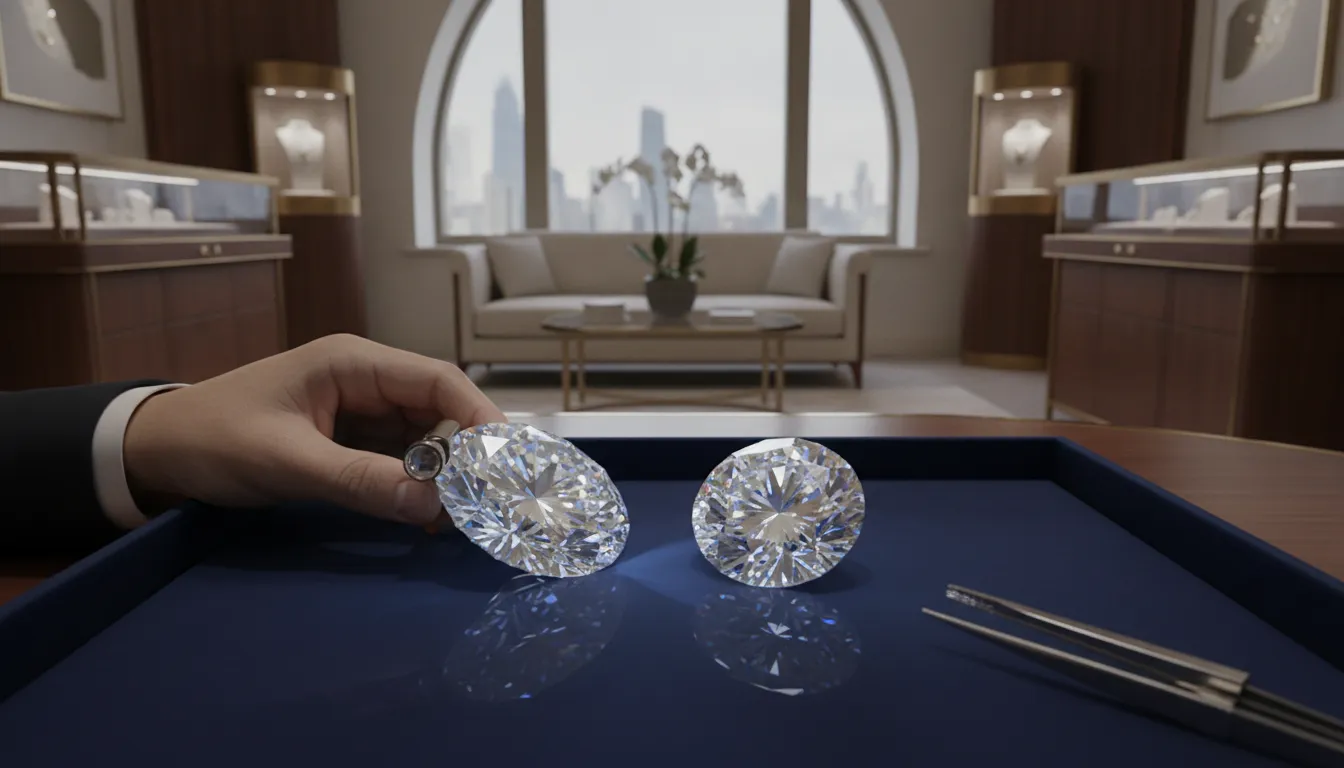
For buyers focused on lab grown diamond long-term value, the most important distinction is the relationship between supply and rarity. Lab-grown production has expanded the variety and availability of diamonds in the consumer market. Rapid production increases and falling costs can make it harder for a previously purchased stone to retain a large share of its original price.
Natural diamonds are commonly associated with a finite geological origin, and that rarity can support greater long-term recognition for certain high-quality stones. It still does not mean every natural diamond will grow in value. A lower initial price can change the practical decision. If a lab-grown diamond allows you to choose a larger size, a preferred cut. Or a more distinctive setting within your budget, that present-day value may be the reason it is the right choice.
If geological history, rarity, and longer-term market recognition matter more, a natural diamond may better match your priorities. Review the differences in lab-grown and natural diamond characteristics, then judge each option by the experience and meaning you want from the purchase, not long-term value alone.
What Market Forces Affect Lab-Grown Diamond Long-Term Value?
Answer: Production scale, current replacement prices, technology, consumer demand, and the availability of comparable stones are the main market forces affecting lab-grown diamond long-term value. Because laboratory-grown supply can expand, a future buyer may compare an older stone with newer diamonds offered at a lower current price. That comparison can reduce the expected long-term amount.
Several connected forces shape long-term value, and most begin with the way these stones enter the market. Advances in growth technology have made lab-grown diamonds an important part of the gem diamond sector. As production has expanded, the market has gained a broader range of available sizes and qualities. The result is more choice for today's buyer, but also a secondary-market environment where future availability can be difficult to estimate.
How Do Production Scale and Supply Affect Value?
Lab-grown diamonds can be produced in a controlled setting, which allows manufacturers to increase output as technology and capacity develop. The Gemological Institute of America notes that increased quantity, size, and quality have made these diamonds viable for commercialization on a larger scale. That commercial availability distinguishes them from a naturally limited resource and can reduce the scarcity premium that often supports long-term demand for rare goods.
Expanded supply also gives buyers more alternatives. When a similar stone is readily available through the current market, a future buyer may have less reason to pay a premium for an older stone. This does not mean every lab-grown diamond loses all value. It means abundance can limit the price a secondary-market buyer is willing to offer.
Why Do Falling Costs Matter?
Mass production and increases in output have contributed to declining costs, according to the International Gem Society. When the price of comparable new stones moves lower, an older purchase may be judged against that lower replacement cost. This is one reason the amount received later can be substantially below the original retail price, even when the diamond remains beautiful and physically durable.
For a buyer, the practical distinction is between receiving strong value at the time of purchase and expecting the stone to behave like a market-traded item. A lab-grown diamond may offer size, quality, and design flexibility within a chosen budget, while its future market price remains exposed to production economics.
What Does Technology Evolution Add to the Uncertainty?
Laboratory-grown diamond technology has evolved rapidly over the past two decades. GIA has also reported relatively few changes in the last five years, suggesting that development has stabilized for now. That observation describes the recent period, not an outlook about what will happen next. Future advances, shifts in manufacturing costs, or changes in consumer preferences could influence pricing and demand in ways that are difficult to anticipate.
The clearest conclusion is buyer-focused: evaluate the diamond for its present beauty, quality, craftsmanship, and meaning. Treat any long-term value amount as uncertain rather than as a definite figure.
Read Buchroeders' diamond education guide before comparing stones.
Which Details Matter When Assessing a Lab-Grown Diamond's Future Value?
Answer: A future evaluation is easier when the diamond can be independently identified and its cut, color, clarity, condition, setting, purchase records, and grading report are clear. These details help a professional understand the piece and establish a useful baseline. They support confidence in the assessment, but they cannot establish a particular later selling price.
A thoughtful assessment starts with knowing exactly what you are buying. The stone's identity, documented characteristics, condition, and presentation all help establish a clear baseline for future evaluation. They can support confidence in the purchase, but they cannot establish a particular later outcome.
Can the diamond be independently identified?
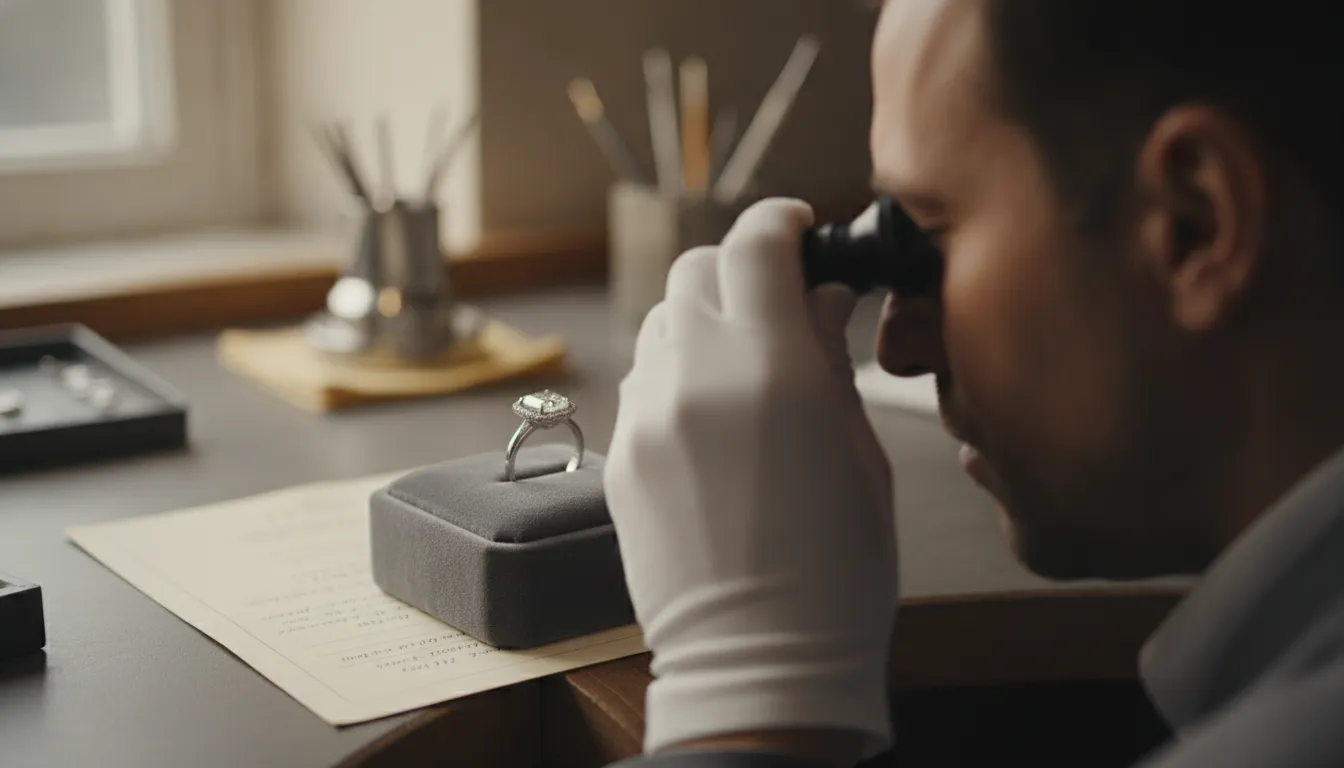
Documentation matters because laboratory-grown diamonds can be difficult for independent gemologists and specialists to distinguish from natural diamonds without powerful analytical equipment. The GIA explains how reports document a diamond's identity. Keep the original report with the diamond, and make sure the report number corresponds to the inscription or other identifying information associated with the stone.
A report is useful evidence, not an indicator of future amount. It helps a qualified professional understand the stone being evaluated, especially as laboratory-grown diamonds have made identification more complex across the trade. It does not lock in a future market price or mean that a later buyer will offer a specific amount.
What does the report reveal about the stone?
Review the report's documented grading details, including cut, color, and clarity. These characteristics describe the diamond's appearance and quality, while the shape and proportions influence how it performs in the finished design. A well-cut stone with attractive visual presence may be easier for a future buyer to appreciate than one selected only for size, although market demand can change.
The growth method also provides useful context. CVD, or Chemical Vapor Deposition, currently dominates the supply of laboratory-grown diamonds submitted for GIA grading reports. GIA also reports that many of these CVD stones undergo post-growth HPHT treatment to remove color. These details belong in an informed comparison, but they should not be treated as a standalone indicator of long-term value.
How do condition, setting, and records affect the picture?
Inspect the diamond for chips, abrasions, or other damage, and preserve records for any professional care. The setting deserves attention as well. A secure, well-maintained mounting protects the stone and contributes to the piece's current wearability, while the design's style, craftsmanship, and condition shape its overall appeal. Store the report, receipt, valuation documents, and service records together. Complete documentation supports clarity and confidence when the jewelry is evaluated later, but it does not mean that the purchase price will be received back.
Is Long-Term Value the Right Way to Judge a Lab-Grown Diamond Purchase?
Answer: Long-term value deserves an honest place in your decision, but it should not be the only measure of whether a lab-grown diamond is right for your engagement ring. Compare present beauty, cut quality, design, craftsmanship, budget, documentation, and personal meaning. If long-term value matters strongly, include that priority in the conversation before you select a stone.
Laboratory-grown diamonds share many of the physical, chemical, and optical properties of natural diamonds, while their different origin and market supply shape how future value is understood. GIA's research on laboratory-grown diamonds provides useful context for that distinction.
- Set your priorities first. Decide what matters most before comparing stones: the size and appearance you want, the quality of the cut. The design of the ring, the meaning of its origin, or the possibility of selling it later. A lab-grown diamond may suit a buyer who places greater weight on present-day beauty, flexibility, and budget. A natural diamond may suit someone who values geological age and rarity as part of the purchase. Neither choice is universally better.
- Compare present value, not just a future price. Lab-grown diamonds are typically priced 30% to 70% below natural diamond prices, according to Buchroeders' customer education materials. That difference can affect the size, quality, or custom design available within your budget. At the same time, mass-manufactured supply generally leads to weaker long-term amounts for lab-grown diamonds. Treat the upfront price and potential future value as separate questions.
- Consider your time horizon. Ask how long you expect the ring to serve its intended purpose and whether long-term value is a realistic priority or simply a general concern. If you are choosing a ring to wear and enjoy for decades, fit, durability, craftsmanship, and design may matter more to your satisfaction than an assumed future amount. If future flexibility is important, acknowledge that market conditions can change.
- Evaluate the documentation. Keep the diamond report, purchase records, and details of the setting together. A qualified report supports accurate identification and gives future professionals important information about the stone. Documentation supports informed evaluation, but it does not establish a later selling price.
- Choose design and quality for the life you intend to live. Prioritize a well-cut stone, an appropriate setting, secure construction, and a style you will genuinely enjoy wearing. Buchroeders offers both natural diamond engagement rings and lab-grown options, along with guidance for buyers developing a custom design. Browse lab-grown engagement ring options or compare engagement ring collections as you refine your priorities.
Explore the Custom Ring Builder to design a ring around what matters most to you.
The most useful question is not simply whether a lab-grown diamond has long-term value. It is whether the stone, setting, budget, and story make sense for the future you are choosing to celebrate. Buchroeders' frequently asked questions can help with additional buying considerations.
Frequently Asked Questions
Is it worth buying a lab-grown diamond?
It can be, especially when your priorities are beauty, design flexibility, and a lower initial purchase price. Lab-grown diamonds share many physical, chemical, and optical properties with natural diamonds. The decision should reflect what matters most to you today, not an assumption of future price increases. Consider the stone's cut, color, clarity, documentation, and how well the finished ring suits your personal style.
What is the long-term amount of a lab-grown diamond?
There is no universal long-term figure or reliable calculator that can estimate a specific outcome. Because lab-grown diamonds can be produced at scale and prices can change with increased production, buyers are generally unlikely to receive most of the original purchase price later. The International Gem Society explains why this cost trend can weaken secondary-market long-term amounts.
How does lab-grown diamond long-term value compare with natural diamonds?
Lab-grown diamonds generally have weaker long-term prospects than high-quality natural diamonds because natural-diamond value is more closely associated with rarity. Their origins also differ: lab-grown diamonds are created in a laboratory, while natural diamonds formed in the Earth's mantle over geological time. This comparison of lab-grown and natural diamond characteristics can help you weigh those distinctions.
Are lab-grown diamonds a smart purchase?
They are best considered a purchase for present enjoyment rather than a traditional long-term holding. A lab-grown diamond can be an excellent choice when its appearance, design, and price align with your priorities, but its future market value is uncertain. Preserve the grading documentation and choose quality thoughtfully, while treating any long-term value as secondary to the meaning and use of the piece.
Ready to Choose With Confidence?
Understanding lab grown diamond long-term value is one part of a thoughtful purchase. Your priorities for beauty, design, quality, and meaning matter just as much when selecting a diamond for an engagement ring or another lasting piece. Schedule an appointment to discuss diamond options and choose with confidence.
