



Jewelry Sets: How to Choose a Coordinated Look
.
Choosing a coordinated gift can feel more personal than selecting one piece alone. Jewelry sets bring together details such as a necklace, earrings, bracelet, or ring so the finished look feels intentional while still fitting the recipient's style. They can mark a birthday, anniversary, holiday, or milestone, yet many thoughtfully selected combinations are easy to wear well beyond one occasion.
Schedule a private jewelry consultation.
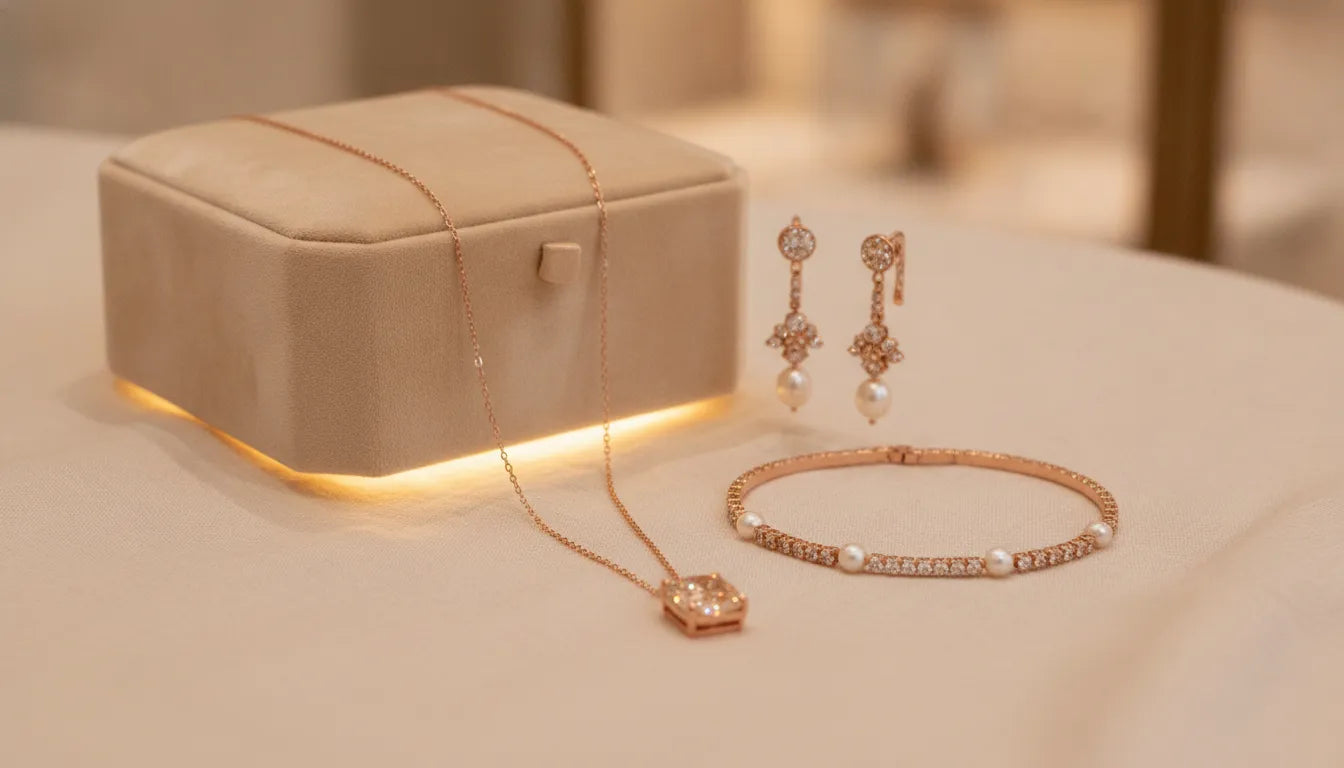
Jewelry sets are coordinated pieces designed to complement one another through shared details such as metal, color, shape, or design. The best choice balances that visual connection with the recipient's lifestyle, wardrobe, and comfort, creating a gift that feels polished rather than overly matched.
Before comparing styles, it helps to understand what can make pieces a true set and how coordination works across different types of jewelry. That foundation makes it easier to choose a combination that feels cohesive, versatile, and genuinely suited to the person receiving it.
What Are Jewelry Sets?
Jewelry sets are two or more pieces designed to look connected when worn together. A set might pair a necklace with earrings, coordinate a necklace and bracelet, or bring several pieces together through a shared metal, shape, texture, or gemstone accent. The goal is not necessarily for every piece to look identical. It is to create a polished relationship between the pieces.
That distinction matters when you are choosing fine jewelry. An identical set repeats the same motif, finish, or detail across each piece. A coordinated set may be more subtle: the necklace and bracelet could share a chain design, while the earrings provide a smaller version of the same line or shape. Coordinated pieces often feel more versatile because they create a complete look without requiring every detail to match exactly.
When evaluating jewelry sets, consider four questions:
- What connects the pieces? Look for a common metal, motif, silhouette, gemstone color, or level of detail.
- How will the pieces be worn? A set for a special occasion may be more expressive, while an everyday combination should work comfortably with clothing you already own.
- Does the scale feel balanced? A larger necklace may pair best with restrained earrings, while delicate pieces can support a more layered look.
- Will each piece stand on its own? The strongest set gives you a complete combination and individual pieces you can wear with other jewelry.
Think of a set as a starting point rather than a rulebook. You can wear every piece together for a unified appearance, or separate the pieces across different outfits and occasions. This buyer-focused approach keeps the decision centered on design, proportion, comfort, and how the jewelry will fit into real life.
Which Pieces Can Be Included in Jewelry Sets?
Jewelry sets can be as simple as two coordinated pieces or as versatile as a small collection designed to be worn together or separately. The right format depends on the recipient's style, the occasion, and how much coordination feels natural. A set does not have to make every piece identical. Repeated metal tones, a shared motif, or a related finish can create a polished connection while keeping the overall look personal.
Necklace and earring sets
A necklace paired with earrings is one of the most familiar formats. The earrings may echo the pendant shape, gemstone accent, or surface detail of the necklace without matching it exactly. Small studs or understated drops can make the combination suitable for regular wear, while more expressive earrings can give the set a dressier presence. A pendant and earring pairing is especially easy to style because it frames the face while adding a subtle focal point at the neckline.
Necklace and bracelet sets
Necklace and bracelet combinations often feel cohesive when they share a chain design, link shape, or finish. This format works well for someone who prefers understated coordination across two parts of an outfit. The pieces can be worn together for a complete look or separately when a lighter touch is better.
Earring, bracelet, and pendant formats
Some jewelry sets focus on one category rather than pairing different types. An earring set might include related everyday silhouettes, while a bracelet set can group pieces that vary in width or texture but share a design language. Pendant sets offer another focused option, particularly when the wearer likes to change necklaces while keeping a familiar style of centerpiece.
Coordinated ring formats
Ring-centered sets may include several related rings designed to complement one another. They can be worn on different fingers or combined selectively, but they do not need to become a stacking-ring project. Look for a set whose proportions and details suit the wearer's existing jewelry, especially if the goal is everyday versatility rather than a highly layered look.
How Do You Choose Jewelry Sets That Look Coordinated?
The most polished jewelry sets do not need to look identical. They need a clear visual relationship, whether that connection comes from the metal, a repeated motif, a shared finish, or a similar sense of scale. Start by deciding how you want the pieces to work together, then assess each detail against the way the jewelry will actually be worn.
Begin with the metal and finish
A shared metal color is the simplest way to create cohesion. Yellow gold, white metals, and rose gold each establish a different mood, while polished, brushed, or textured finishes can further shape the look. Mixing metals can also feel intentional when one piece acts as a bridge, but the contrast should appear deliberate rather than accidental. Look at the clasp, chain, setting, and surface details as well as the most visible portion of each piece.
Look for a unifying motif
Next, identify a design feature that can repeat across the set. It might be a particular chain shape, a graceful curve, geometric edges, a floral influence, or a shared gemstone accent. The repeated element should be noticeable enough to connect the pieces without making every item feel like a copy. This approach gives you the freedom to pair a necklace with earrings or a bracelet with another accent while preserving a consistent design language.
Balance proportion and scale
Consider how much visual space each piece occupies. A delicate necklace may pair naturally with refined earrings, while a substantial pendant may need simpler companions so the overall look remains balanced. Pay attention to length, width, pendant size, and earring profile. If several pieces are bold, decide which one should lead and let the others support it. Coordination is often more successful when the eye has a clear focal point.
Match the set to real life
Finally, choose jewelry that suits the recipient's wardrobe, schedule, and comfort. Pieces intended for frequent wear should be easy to fasten, comfortable for extended use, and versatile enough for more than one setting. A more distinctive combination may be appropriate for celebrations or evening dressing. Think about necklines, sleeve lengths, hairstyle, and whether the recipient usually prefers understated or expressive accessories. The best jewelry sets feel connected on the display tray and natural once they become part of someone's day.
Complete Jewelry Sets or Separate Pieces: Which Is Better?
The better choice depends on how you want the jewelry to function. A pre-coordinated set offers a clear visual relationship from the moment you open the box. Separate pieces give you more control over scale, styling, and how each item works with jewelry you already own. Neither approach is automatically more versatile or more personal.
Choose a complete set when a polished, intentional look matters most or when you want the shopping process to feel straightforward. The pieces may share a chain pattern, shape, finish, or design detail without being identical. That distinction can make a set feel coordinated rather than overly matched.
Separate pieces may be the stronger choice when the recipient has a distinctive wardrobe, established preferences, or a collection that needs thoughtful additions. You can select one focal piece and let the other items play supporting roles. This approach also makes it easier to adjust proportions, such as pairing a delicate necklace with smaller earrings or choosing a bracelet with a more noticeable presence.
How complete sets compare with separate jewelry pieces
Cohesion
Pre-coordinated set: Creates a connected look through shared design details.
Separate pieces: Requires you to coordinate materials, motifs, and proportions.
Flexibility
Pre-coordinated set: Works together easily, but the styling relationship is established.
Separate pieces: Allows more mixing, editing, and gradual additions.
Gifting
Pre-coordinated set: Provides a complete presentation with less guesswork.
Separate pieces: Can feel especially personal when chosen around the recipient.
Wardrobe fit
Pre-coordinated set: Best when the recipient enjoys a consistent design language.
Separate pieces: Useful when clothing, lifestyle, and existing jewelry vary.
Shopping process
Pre-coordinated set: Streamlines selection by presenting related pieces together.
Separate pieces: Takes more comparison but gives you finer control.
When deciding, consider whether the wearer is drawn to a finished look or enjoys building combinations over time. You can also choose a middle path: start with one coordinated pair. Then add separate pieces that repeat a subtle element such as a metal tone, geometric shape, or texture.
How Can Jewelry Sets Work for Gifts and Special Occasions?
A coordinated jewelry set can make a thoughtful gift when it reflects the recipient's everyday style rather than simply adding more pieces to a collection. Start by considering how the person dresses, what jewelry they already wear, and whether they prefer understated details or a more noticeable finishing touch.
How should you choose a set for the recipient?
For someone with a streamlined wardrobe, a necklace and earring combination with a restrained design can move easily from work to dinner. A recipient who enjoys a more expressive look may appreciate pieces connected by a distinctive motif, gemstone accent, or repeat pattern. If you are unsure of their preferred scale, look at the jewelry they wear most often. The size of those pieces can guide your choice more reliably than the occasion alone.
Metal preference is another useful clue. Notice whether the recipient usually reaches for yellow gold, white metals, or a combination. A coordinated set does not have to match in every detail, but a consistent metal color or thoughtfully considered mixed-metal design can make the pieces feel intentional. Also consider lifestyle. Lightweight earrings and a simple pendant may suit someone who wants versatile daily jewelry, while a more substantial combination may be appropriate for milestone celebrations or formal occasions.
Which occasions suit coordinated jewelry?
Jewelry sets can mark birthdays, anniversaries, graduations, promotions, weddings, and personal milestones throughout the year. For an important occasion, choose a combination that can be worn together but also separated into individual looks. That versatility gives the gift lasting value and helps the recipient make it part of an existing wardrobe.
When you need more inspiration, explore Buchroeders' jewelry gift ideas for holidays and diamond jewelry gift inspiration. The guidance can be useful beyond a specific season, especially when you are comparing styles for a partner, parent, friend, or family member. For design-led preferences, designer jewelry brands can help you identify a visual language that feels personal. When the right choice depends on details you cannot assess online, a private jewelry consultation can help you compare scale, metal, and wearability with greater confidence.
How Should You Care for a Jewelry Set?
A coordinated jewelry set may bring several materials, finishes, and gemstones together, so it should not automatically be cleaned as if every piece were identical. The safest routine is gentle, consistent, and based on the most delicate element in the set. The Gemological Institute of America notes that certain metals and gemstones require different cleaning methods to avoid accidental damage.
Begin by checking the care guidance for each piece. For routine cleaning, use a soft, lint-free cloth to remove surface oils after wearing. If a piece can be safely damp-cleaned, use lukewarm water and a small amount of mild soap, then rinse carefully and pat it dry. Avoid soaking a mixed-material set unless a qualified jeweler has confirmed that every component can tolerate it. Keep cleaning tools separate from those used for household tasks so grit and residue do not scratch the finish.
Take extra care with specialized cleaning equipment. Many gemstones can be damaged by ultrasonic cleaners, and porous gemstones should not be exposed to harsh ammonia-based cleaning chemicals. Those cautions are especially important when one jewelry set combines pieces that have different durability or stability requirements. For additional guidance, see the GIA guide to cleaning jewelry.
How should you store jewelry sets?
Store each piece in a clean, dry compartment or a soft-lined pouch rather than allowing necklaces, chains, and earrings to rub together. Close clasps before storage, and give chains their own space to reduce tangling. Keep the set away from direct contact with cosmetics, perfume, hairspray, and household chemicals. Before putting pieces away, make sure they are fully dry.
If you are unsure whether a stone or setting can tolerate a particular cleaner, heat source, or machine, pause before trying it. GIA recommends consulting an experienced bench jeweler before potentially damaging procedures. A professional can assess the individual pieces and recommend a care routine that protects the complete set.
Where Can You Shop for Fine Jewelry Sets in Columbia, Missouri?
For shoppers in Columbia and across Mid-Missouri, choosing coordinated jewelry is easier when you can discuss the occasion, the recipient's style, and how each piece may be worn. A local consultation can help you compare proportions, materials, and design details without assuming that every piece has to match exactly.
Buchroeders Jewelers has served customers since 1896 and is based in Columbia, Missouri. The family-owned jeweler offers bridal jewelry, estate and designer jewelry, diamonds, watches, and in-house jewelry services through its showroom and online store. Learn more about Buchroeders' history and the experience behind its customer service.
The Columbia showroom also includes private consultation rooms. That setting gives shoppers a more personal place to talk through a coordinated gift or a collection of pieces for a special occasion. You can bring the details that matter, such as the recipient's usual metal color, preferred scale, or the types of jewelry they already wear. From there, a jewelry professional can help you think through a cohesive combination while keeping the selection suited to the person's lifestyle.
This local approach is useful when you want guidance rather than a preset formula. You may be considering earrings with a necklace, a bracelet that echoes a chain design, or several pieces that share a subtle motif. The goal is a polished relationship between the pieces, not necessarily an identical look. If you are shopping from outside Columbia, the online store can provide another way to explore the business before deciding whether an in-person conversation is right for you.
Schedule an appointment to discuss jewelry sets with a Buchroeders jewelry professional.
Frequently Asked Questions
What makes jewelry a set?
Jewelry sets are two or more pieces designed to coordinate through a shared metal, motif, gemstone, finish, or overall design language. The pieces do not have to be identical. A necklace and earrings may feel like a set through matching details, while a bracelet and pendant may coordinate through similar chain work.
Can you mix metals in a jewelry set?
Yes. Mixed metals can create a thoughtful, contemporary look when one detail connects the pieces, such as a repeated shape, finish, or design element. If the set includes different metal colors, consider whether the recipient already wears mixed-metal jewelry and choose proportions that feel balanced rather than overly matched.
How many pieces should a jewelry set include?
There is no required number. Two complementary pieces can make a polished gift, while a larger collection may offer more ways to style the look. Choose based on the recipient's wardrobe, comfort, and habits. A necklace-and-earring pairing is practical for occasion dressing, while a bracelet and earrings may be easier to wear separately.
Are jewelry sets good gifts for special occasions?
They can be, especially when the pieces reflect the recipient's personal style and fit the occasion. For a milestone, consider a coordinated design with lasting versatility. For a holiday or birthday, a smaller pairing may feel personal without requiring knowledge of an exact size. Pay attention to preferred metal tones, scale, and whether the recipient usually wears understated or statement jewelry.
How should you care for a jewelry set?
Care depends on the metals, gemstones, and other materials in each piece. Store pieces separately to reduce scratching, and follow the gentlest cleaning guidance for the most delicate component. GIA notes that some gemstones can be damaged by ultrasonic cleaning and that porous materials may be harmed by harsh ammonia-based cleaners. When the care requirements are unclear, ask an experienced jeweler before using a cleaning method: GIA jewelry-cleaning guidance.
Ready to Find the Right Jewelry Set?
A coordinated set can make gifting feel more personal or bring an intentional finish to your everyday style. If you would like a second perspective on pairing metals, silhouettes, or individual pieces, our team can help you explore options that suit the occasion and your preferences. Schedule a jewelry consultation to talk through your ideas and find a set that feels thoughtfully chosen.
