



Fine Jewelry: How to Choose Quality Pieces
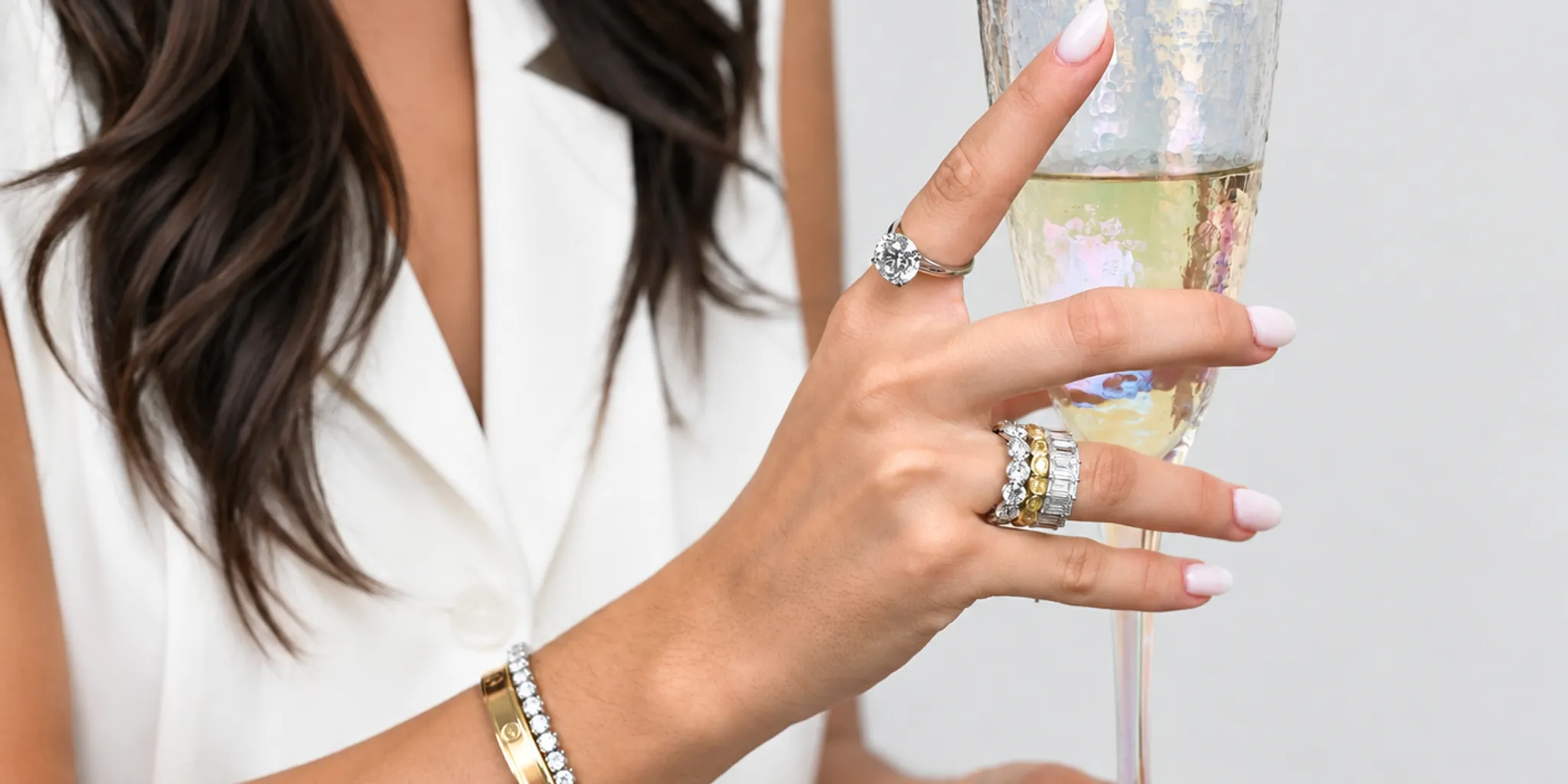
A beautiful piece should offer more than immediate appeal. The materials, construction, fit, and care requirements all shape how confidently you can choose jewelry for an important moment or an everyday collection.
Schedule an in-store, virtual, or phone consultation.
Fine jewelry generally combines precious metals with genuine gemstones or diamonds, and may include rings, earrings, necklaces, bracelets, or charms. The right choice depends on understanding the materials, examining the craftsmanship, and matching the piece to how you plan to wear and care for it.
With those basics in mind, the first step is to clarify what qualifies as fine jewelry and which details deserve your attention before you shop.
What Is Fine Jewelry?
Fine jewelry is made for lasting wear. It uses precious metals and genuine gemstones or diamonds rather than focusing only on a temporary fashion trend. The category includes the materials you can see, the way those materials are assembled, and the purpose the piece is meant to serve. A well-considered piece may mark a milestone, complete an everyday wardrobe, or become part of a personal collection.
Fine jewelry can take many forms, including rings, earrings, necklaces, bracelets, and charms. That range matters because a piece's intended use affects the details worth examining. An engagement ring, for example, needs a secure setting and comfortable proportions for frequent wear. A necklace may call for attention to chain construction, clasp design, and how its pendant hangs. The category is broad, but quality still depends on clear information about what a piece is made from and how it is finished.
Which materials define fine jewelry?
Precious metals are a central part of the definition. Gold and platinum are common examples, and the metal's identity and purity should be clearly described. Genuine gemstones and diamonds are another defining element. These stones may be selected for beauty, rarity, color, clarity, or personal significance. The description should identify them accurately. Natural and lab-created stones are distinct categories, so buyers should look for precise disclosure rather than rely on appearance alone.
Construction is equally important. Fine jewelry is not defined by a single style or silhouette. Look for a piece that brings its metal, stone, setting, closure, and finish together with care. Edges should feel intentional, surfaces should be finished cleanly, and stones should sit securely within their settings. These practical details influence how confidently a piece can be worn and maintained over time.
What should you learn before buying?
Jewelry terminology and markings can help you understand a piece before deciding whether it suits your needs. The Federal Trade Commission recommends learning the words and symbols used to describe the quality and purity of platinum, gold, and silver jewelry before shopping. Understanding jewelry markings gives you a stronger foundation for asking useful questions about metal, stones, construction, and care.
From there, consider when and how you expect to wear the piece, what materials feel right for you, and which design details carry personal meaning. You can shop Buchroeders fine jewelry as a starting point, then use the product details and guidance available to narrow your choices. Fine jewelry is ultimately less about fitting one rigid formula than about combining genuine materials, thoughtful construction, and a design you can enjoy for years.
How Do Fine Jewelry Materials Affect Quality and Wear?
Materials influence how a piece looks, feels, and responds to everyday wear. They also shape the terminology you will see in a product description. Separate metal purity, gemstone weight, stone dimensions, and gemstone origin. None of these details should be read in isolation. A well-considered piece balances the material with its design, setting, intended use, and the care it will receive.
| Material or term. | What it means. | Why it matters for wear. |
|---|---|---|
| Gold karat | The karat mark indicates how much pure gold a piece contains. Pure 24K gold is soft, so gold used for jewelry is commonly mixed with other metals. | Alloying can increase hardness and durability. Color and daily-wear characteristics can vary by the metals included in the alloy. |
| Platinum purity | Platinum described without qualification should contain at least 95 percent pure platinum. | Purity is an important part of understanding the material and comparing pieces accurately. Confirm the marking and description rather than relying on color alone. |
| Gemstone carat | Carat measures gemstone weight. It is different from karat, the term used for gold purity. | Carat weight does not describe the metal, and it does not by itself describe a stone's visible dimensions, cut, or appearance. |
| Millimeter dimensions | Gemstone size is often expressed in millimeters, such as 7 x 5 mm. | Dimensions help you understand how a stone may look in a setting and allow more useful comparisons than carat weight alone. |
| Natural gemstone | A natural gemstone forms naturally as a crystal or stone. Diamonds, rubies, and emeralds are examples. | Origin is part of the stone's identity and should be stated clearly in the description and supporting documentation. |
| Lab-created gemstone | A lab-created gemstone is manufactured but has the same chemical, physical, and visual properties as its natural counterpart. | Clear labeling lets you evaluate the stone based on accurate information rather than appearance alone. |
| Imitation gemstone | An imitation stone is made from another material and does not share the same chemical, physical, and visual properties as a natural gemstone. | Disclosure matters because appearance alone cannot establish what a stone is made of or how it should be cared for. |
Why gold alloying and measurements deserve attention
Gold alloying is not simply a quality label. It is part of the engineering of a wearable piece. Pure gold is relatively soft, so other metals are added to help jewelry withstand regular handling. The karat mark gives you a starting point for understanding the proportion of pure gold. The complete product description provides context about color and construction. For a closer look at the practical differences, you can compare gold purity and durability.
Gemstone measurements require a similar distinction. A larger carat number does not automatically mean a stone will look larger from above. Two stones with the same weight can have different proportions. Millimeter dimensions show the face-up footprint more directly, while the setting determines how much of that footprint is visible. When reviewing fine jewelry online, consider carat weight alongside dimensions, shape, cut information, and the way the stone is secured.
How should stone origin affect your decision?
Natural, lab-created, and imitation stones are distinct categories, and each should be identified plainly. The difference between natural and lab-created stones can be difficult to determine from appearance alone. So ask how origin is established and whether the description includes the relevant disclosure. Treatments also deserve attention when they are present. They may improve appearance or durability, but some effects can change over time and may require special care. Understanding these details helps you choose a piece that fits your expectations and maintenance habits, not merely one that looks appealing at first glance.
What Should You Inspect in Fine Jewelry Craftsmanship?
When you examine fine jewelry, look beyond the first impression. Craftsmanship appears in the small details that affect how a piece wears, feels, and holds its beauty over time. Use a loupe or a well-lit setting when possible, and ask questions whenever a construction detail or gemstone disclosure is unclear.
Is the setting secure and well proportioned?
Start with the gemstone setting. Prongs should look even and should meet the stone securely without appearing bulky or uneven. Check that the stone sits straight and that surrounding details, such as halos, bezels, or side stones, follow a consistent pattern. On a ring, inspect the underside as well as the top. A thoughtful gallery and a balanced shank can support the center stone while keeping the design comfortable on the hand.
Symmetry matters, but it does not mean every design must be perfectly formal. It means the proportions should look intentional. Compare the scale of the center stone, setting, band, and decorative elements. On earrings or a pair of matching pieces, look for visual consistency from one item to the other. Run a clean fingertip around edges and the back of the piece. Rough spots, sharp corners, or snagging details deserve a closer conversation before you decide.
How should the surface and fit feel?
Examine polished areas for an even finish and decorative areas for crisp, controlled detail. The surface should support the design rather than hide uneven construction. Try the piece on if you can. A ring should sit securely without pinching, while a bracelet or necklace should move naturally without creating uncomfortable pressure points. Consider how the item will interact with clothing, hair, or neighboring jewelry during ordinary wear. Comfort is part of quality because a beautiful piece is more useful when you enjoy wearing it.
What should you ask about gemstones and documentation?
Ask for clear documentation describing the metal, gemstone identity, and any relevant treatments. Treatments or enhancements may improve a gemstone's appearance or durability, or change its color. However, some treatment effects can lessen or change over time, and treated stones may require special care. Treatment information can also affect how you compare the piece with a similar untreated stone. For a broader framework for assessing diamond characteristics, see this guide to evaluate diamond quality.
Documentation should make the important details understandable, not leave you guessing. Ask how the stone should be cleaned, whether heat or chemicals present a concern, and which maintenance practices should be avoided. Those answers connect the initial inspection to responsible long-term care.
What does a CAD preview add to custom work?
For a custom piece, a 3D CAD rendering can show the proposed design before production begins. It gives you an opportunity to review proportions, profile, stone placement, and how the piece may sit on the body. Custom ring design can include 14K or 18K white, yellow, and rose gold, along with platinum. Material selection becomes part of the design conversation. Explore the custom ring design process to see how these decisions can be developed with a design team.
Related products

Experience the timeless elegance of this vintage Van Cleef & Arpels diamond bracelet, crafted in 950 platinum.
View product
Command attention with this exquisite 4.26ctw Emerald Sapphire + Diamond Cocktail Ring.
View product
Introducing the 1.87ctw Diamond Band in 14k White Gold, a stunning piece that adds brilliance to any collection.
View productHow Do You Choose Fine Jewelry for Your Lifestyle?
The best piece is not simply the one that catches your eye first. It is the one that fits the way you dress, move, work, celebrate, and care for the things you own. A deliberate process helps you narrow a broad selection without losing the personal qualities that make fine jewelry meaningful.
Start with the purpose. Decide what role the piece should play. Are you looking for an everyday ring, a necklace for special occasions, a meaningful gift, or a versatile addition to your jewelry wardrobe? Your answer will shape the scale, design, and level of practicality you need. Begin with shop Buchroeders fine jewelry when you want to review the current selection across categories, rather than limiting yourself to one style too early.
Consider your real wear pattern. Think through when and where you expect to wear the piece. Jewelry that stays on your hand or neck throughout the week may need a streamlined profile and a secure, comfortable construction. A piece reserved for evenings can be more expressive. Consider your work environment, hobbies, layering habits, and whether you prefer jewelry that quietly complements your wardrobe or creates a focal point.
Identify your metal and stone preferences. Note the colors you already wear most often, then compare how different metals and stones look beside your skin and existing pieces. If gold is part of your decision, review this guide to compare gold purity and durability before choosing a finish. For a ring-led search, the fine and designer rings collection can help you compare silhouettes and metal tones. You can also review stone arrangements in the current inventory.
Check proportion and fit. A beautiful design still needs to feel right in use. Look at the piece from more than one angle. Assess its scale against your hand or frame. Consider how it will sit beside jewelry you already own. For rings, pay attention to finger coverage, band width, and how easily the piece moves. For earrings and necklaces, consider weight, length, and how the closure functions.
Review the specifications and documentation. Online photographs are useful for seeing the overall design, but details help you compare accurately. Check the listed metal, stone information, dimensions, and other specifications. Buchroeders uses professional photography and detailed product information to support online decisions. Practical filters such as style, metal, and shape can make comparison more efficient. Save questions about anything that is unclear instead of making assumptions from a photograph.
Compare the current options, then ask for guidance. Selection changes, so compare the pieces available now and revisit your priorities before deciding. You can review options online, then arrange an in-store, virtual, or phone consultation if you want a closer look or a second perspective. A focused conversation can help you assess fit, styling, and how a piece works with your lifestyle without turning the process into guesswork.
How Can You Shop for Fine Jewelry With Confidence?
Confidence comes from knowing what you are buying, how it was evaluated, and what support is available after you choose it. You may compare pieces online or visit a showroom in Columbia, Missouri. In either setting, ask clear questions rather than relying on photography or first impressions alone.
What should you ask about materials and gemstones?
Start by confirming the metal, gemstone type, and any treatments or enhancements. Ask whether the piece is made with the metal described in its specifications and whether the gemstone is natural or lab-created. These categories should be disclosed clearly. A stone that looks like a natural diamond cannot be identified by appearance alone. So ask about its origin and whether testing equipment is used to distinguish natural from lab-created stones. The Federal Trade Commission recommends asking these questions before making a decision.
It is also reasonable to ask what documentation accompanies the piece. Depending on the jewelry, that may include a grading report, identifying details, treatment information, or care guidance. If a term is unfamiliar, ask the jeweler to explain it in plain language. A careful conversation should leave you understanding the piece's materials, construction, and care needs, not simply accepting a broad quality claim.
Which policies and details should you review?
Read refund and return policies before completing a purchase, and request the policy in writing. Also ask about any applicable inspection, resizing, repair, or service procedures. The FTC advises researching a seller beyond online or social-media impressions. Look for an established business, accessible contact information, and a process that makes it easy to get questions answered.
When shopping online, use professional photography and detailed specifications as starting points for comparison. Look closely at listed metal, stone, dimensions, and setting information, then contact the jeweler if an important detail is missing. Current selection changes, so browse the Buchroeders fine jewelry selection for live options rather than relying on an old article or saved image.
When is a consultation helpful?
A consultation can add useful context when you want to examine a piece closely, compare materials, discuss fit, or understand documentation. Buchroeders' Columbia showroom includes private consultation rooms and a design center with CAD capabilities. If visiting in person is not convenient, you can begin with an in-store, virtual, or phone appointment. A conversation with a knowledgeable jeweler gives you space to explain how you plan to wear the piece and receive guidance suited to that decision.
Buchroeders has served Columbia since 1896, bringing long-standing local experience together with online shopping convenience. To discuss a piece before you choose it, schedule an in-store, virtual, or phone consultation.
How Should You Care for Fine Jewelry?
Thoughtful care helps fine jewelry stay comfortable, secure, and beautiful through years of regular wear. The safest routine begins with one important principle: metals and gemstones do not all respond to cleaning in the same way. Before reaching for a familiar household product or machine, consider the materials, the setting, and any care instructions that came with the piece.
How should you store each piece?
Store jewelry in a clean, dry place away from direct contact with other pieces. Separate rings, necklaces, bracelets, and earrings so that metal surfaces and stone settings do not rub against one another. A lined compartment, individual pouch, or jewelry box with dividers can help prevent scratches and reduce tangling. Fasten necklace clasps before storage, and keep small pieces in a consistent location so they are less likely to be misplaced.
It is also wise to remove jewelry before activities that may expose it to unnecessary impact, residue, or chemicals. Set pieces aside before bathing, swimming, exercising, gardening, or applying beauty products. This simple habit reduces the amount of buildup that cleaning must remove and gives settings fewer opportunities to catch or bend.
What is the safest way to clean it?
Use a gentle approach unless you have confirmed that a particular piece can tolerate something more intensive. A soft, clean toothbrush reserved for jewelry can be useful for some pieces. Work carefully with lukewarm water and a mild cleaning solution when appropriate, then rinse thoroughly and pat the jewelry dry with a soft, lint-free cloth. Move slowly around prongs and other small areas rather than scrubbing with force. The Gemological Institute of America notes that a soft toothbrush may suit some jewelry. Fragile or older settings require caution because vigorous cleaning can loosen stones.
Do not assume that an ultrasonic cleaner is safe for every item. Many gemstones can be damaged by ultrasonic cleaning, and the vibration may create problems when a setting is already delicate. When you are unsure, pause and ask a qualified jewelry professional which method is appropriate. For more focused guidance, you can also care for fine jewelry using a material-conscious routine.
When should you arrange an inspection?
Look at your jewelry in good light from time to time. Stop wearing a piece if a stone moves or a prong feels sharp. Pause if it catches on fabric, a clasp does not close securely, or the metal appears bent. These signs call for evaluation rather than a stronger cleaning attempt. Fragile and older settings deserve extra care, even when a stone appears to be in place.
Professional help is appropriate when you cannot identify the metal or gemstone. Seek help when a setting is damaged or routine cleaning cannot remove buildup safely. A trained jeweler can assess the condition and recommend the least aggressive next step. If a piece needs hands-on attention, learn more about professional jewelry repair before attempting a repair at home. Care should preserve the piece, not create a new problem.
When Does Custom Design Make Sense?
Custom design can be the right path when you have a clear idea but cannot find the details working together in a finished piece. It is also useful when the piece needs to reflect a personal story. Custom work can accommodate a particular preference or bring several design decisions into one considered result. You are not limited to a fixed set of proportions and details. Instead, you can work through the elements that matter most to you with guidance along the way.
It may make sense to explore custom ring design when you want to refine a silhouette. You may also want to coordinate a ring with an existing piece or create a distinctive balance of scale and detail. Customization does not require having every answer before you begin. A conversation can help narrow the direction, identify practical priorities, and establish which choices should guide the design.
How does a CAD preview help?
A 3D CAD rendering can show the proposed design before production begins. This preview gives you an opportunity to consider the overall shape, proportions, profile. And relationship between the central design and its details while changes are still part of the planning process. It can be especially helpful if you think visually or want to evaluate how a concept will look from more than one angle.
The rendering is not a substitute for expert review, but it creates a useful point of reference for that discussion. You can ask focused questions, clarify what feels right, and identify adjustments before the piece moves forward. That makes the process more deliberate than trying to imagine every finished detail from a verbal description alone.
Which materials can you consider?
Material selection is part of the design conversation, not an afterthought. Available custom-design options include 14K and 18K white, yellow, and rose gold, as well as platinum. Each choice can influence the appearance and character of the finished piece. So it is worth comparing the options in the context of your design goals, preferred color, and everyday expectations.
Support is available in a showroom setting, where private consultation rooms and a design center with CAD capabilities can make it easier to review ideas in person. If visiting Columbia is not convenient at the beginning, you can start with an in-store, virtual, or phone consultation. Choose the format that lets you explain what you are envisioning and ask the questions you need answered.
Schedule an appointment to discuss your custom design.
Frequently Asked Questions
What qualifies as fine jewelry?
Fine jewelry generally combines precious metal with a genuine gemstone or diamond, then applies construction and finishing intended for meaningful, lasting wear. The category includes rings, earrings, necklaces, bracelets, and charms. Because materials and workmanship vary, review the metal marking, stone details, setting, and care requirements rather than relying on the category name alone.
What is the difference between gold karat and gemstone carat?
Gold karat describes the proportion of pure gold in the metal. Pure 24K gold is soft, so jewelry gold is commonly mixed with other metals for added hardness and durability. Gemstone carat is a weight measurement, not a purity rating. Gemstone dimensions may also be listed in millimeters, so compare both weight and measurements when assessing a piece. Learn more about gold markings and gemstone measurements.
How should natural and lab-created stones be disclosed?
Natural stones form in nature, while lab-created stones are manufactured and can have the same chemical, physical, and visual properties as their natural counterparts. The two categories should be clearly identified, and buyers should ask about a diamond's origin and the testing used to distinguish natural from lab-created material. Appearance alone does not establish origin. Review the FTC's guidance on gemstone disclosure.
How should I clean and care for fine jewelry?
Care depends on the metal, gemstone, setting, and any treatment. Different materials require different cleaning methods, and many gemstones can be damaged by ultrasonic cleaners. Use a gentle approach only when the piece is known to tolerate it, and ask a professional before cleaning an older, fragile, treated, or loose setting. See additional cleaning guidance from GIA.
What should I evaluate before buying a piece?
Confirm the metal and gemstone descriptions, inspect the setting and finish, ask about treatments and care, and request documentation when it is relevant to the stone. Review the seller's return policy in writing, and research the business beyond online impressions. Product specifications can support online comparison, while an in-person, virtual, or phone consultation can help clarify fit, wear, and construction questions before you decide.
Schedule a Fine Jewelry Consultation
Choosing fine jewelry is easier when you can discuss materials, craftsmanship, fit, and care with someone who understands your priorities. Buchroeders Jewelers can help you evaluate options thoughtfully, whether you are shopping in person or from a distance.
Schedule an in-store, virtual, or phone consultation with Buchroeders Jewelers.
