



The 4Cs of Diamonds Explained
The 4Cs of Diamonds Explained
The 4Cs of diamonds are cut, color, clarity, and carat weight. Together, these four characteristics give buyers a practical way to compare a diamond's light performance, visible appearance, natural features, physical size, and value. They are a framework for making a thoughtful choice, not a score that identifies one perfect diamond.
Explore custom engagement ring design
The 4Cs of diamonds describe cut quality, color grade, clarity grade, and carat weight. Reviewing them together helps you balance sparkle, face-up appearance, rarity, and budget instead of relying on one number.
A grading report gives you consistent information, while seeing the actual diamond shows how those details come together. The strongest buying decision uses both. It also considers the diamond's shape, setting, metal, and the qualities you notice first when the stone moves in light.
What Are the 4Cs of Diamonds, and Why Do They Matter?
The 4Cs of diamonds are cut, color, clarity, and carat weight. Cut describes how proportions and facets return light. Color describes the amount of body color in a white diamond. Clarity describes inclusions and blemishes. Carat weight describes physical weight. Together, these characteristics help a buyer compare a complete diamond rather than treating one grade as a final answer.
- Cut: Proportions, facet arrangement, symmetry, and finish that influence light performance.
- Color: The visible body color of a white diamond, commonly graded from D through Z.
- Clarity: The number, size, location, and visibility of inclusions and blemishes.
- Carat weight: The measured weight of the diamond. One metric carat equals 200 milligrams.
These categories matter because two diamonds with similar paperwork can look different in person. A larger stone may not look brighter. A higher clarity grade may not be visible without magnification. A small color difference may be more noticeable in one shape or setting than another. The 4Cs give you the vocabulary to ask precise questions about those tradeoffs.
For a broader foundation, explore Buchroeders' diamond education resources. The aim is not to maximize every grade. It is to choose a diamond whose appearance and characteristics fit the complete ring and your priorities.
Q: Which of the 4Cs is most important?
A: There is no universal order for every buyer. Cut often deserves close attention because it affects sparkle, while color, clarity, and carat weight may matter more depending on shape, setting, and personal preference. Compare the complete diamond rather than treating one characteristic as the answer for everyone.
How Does Diamond Cut Affect Sparkle and Beauty?
Diamond cut affects how effectively the stone's facets interact with light. A well-proportioned diamond can return light through its top, creating brightness and lively flashes as the stone or light source moves. A diamond with less effective proportions may allow light to escape, reducing visual performance even when its color, clarity, and carat grades look appealing on paper.
Diamond cut is different from diamond shape. Shape is the outline visible from above, such as round, oval, emerald, or pear. Cut refers to the quality of the proportions and facet arrangement within that shape. Two diamonds with the same shape and carat weight can look different because of depth, table, symmetry, polish, and overall craftsmanship.
When a diamond moves in light, three terms help describe what you may see:
- Brilliance is the return of white light that creates overall brightness.
- Fire is the separation of light into spectral colors, producing flashes of color.
- Scintillation is the pattern of light and dark areas and the flashes that appear with movement.
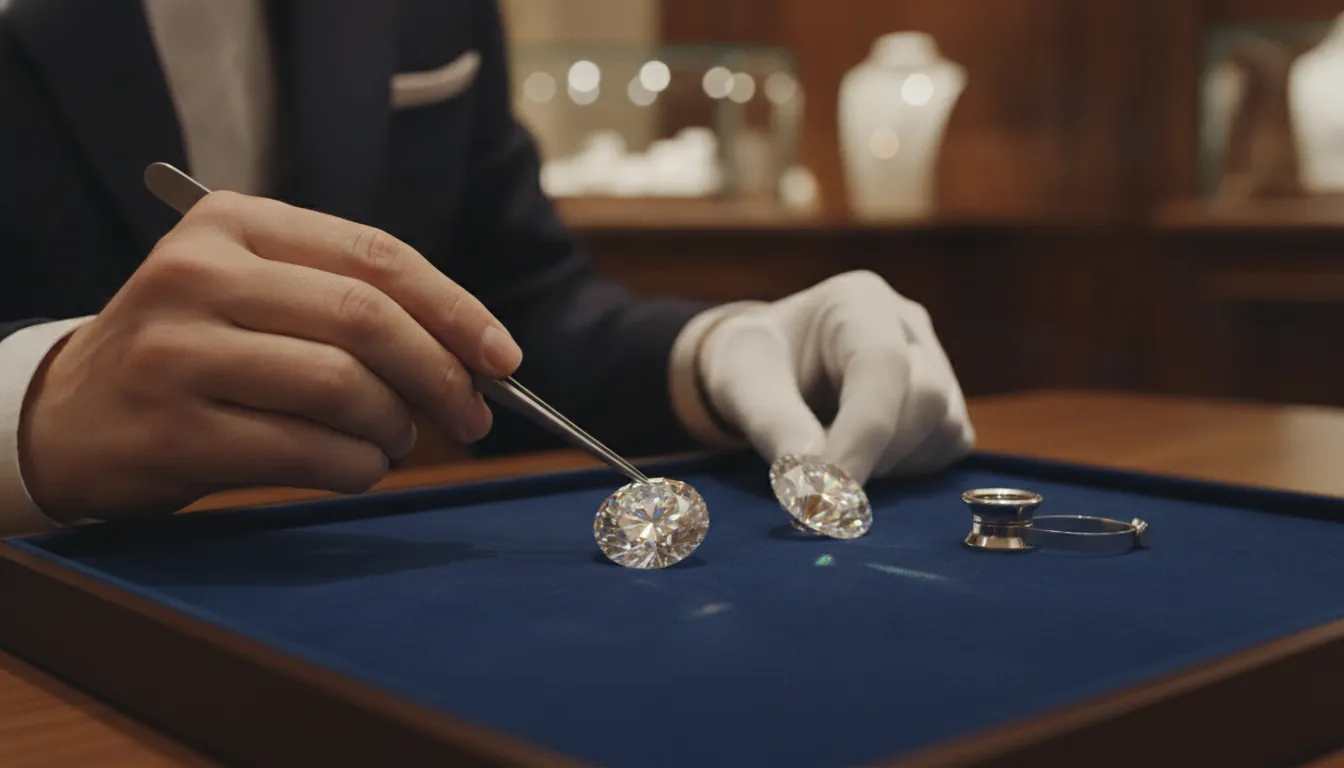
For round brilliant diamonds, a grading laboratory can assign an overall cut grade using several measurements and observations. Fancy-shaped diamonds are evaluated differently and do not receive the same standardized overall cut grade. A report is a useful starting point, but viewing the actual diamond remains important because lighting, movement, shape, and setting all influence the impression you take away.
The GIA guide to diamond cut offers technical background on proportions and light performance. Use that information to ask better questions, then compare stones in the setting and style you are considering.
How Does Diamond Color Grading Work?
Diamond color grading measures how much body color a white diamond shows. The D-to-Z scale begins at D, the colorless end, and moves toward increasingly visible yellow or brown tones. A color grade is a standardized description of color in the stone, not a rating of whether a diamond is attractive.
Because subtle differences are difficult to judge in ordinary surroundings, laboratory grading uses controlled conditions. A grader compares the diamond with reference stones under consistent lighting. This helps separate the stone's color from the influence of nearby jewelry, room lighting, clothing, or changing daylight.
Color should be considered with shape, size, cut, and metal. A larger diamond can make subtle warmth easier to notice. Some elongated shapes may show color differently from a round brilliant. The setting also affects the visual context around the center stone. These are useful considerations, not universal rules, so side-by-side viewing is valuable.
What Is Fluorescence?
Fluorescence is separate from the D-to-Z color grade. It describes a diamond's reaction to ultraviolet light. Blue fluorescence is the most common, although other colors can occur. It is one detail on a grading report and should be considered alongside the diamond's overall appearance rather than used as a shortcut for predicting how every stone will look.
When comparing color, look at stones under consistent lighting and focus on what you can see without magnification. If a slightly warmer stone looks appealing in the chosen setting, allocating more budget to another characteristic may create a better overall result. The highest color grade is not automatically the right goal.
For additional context, Buchroeders' natural and lab-grown diamond education explains how origin differs while the 4Cs remain a useful framework for discussing diamond characteristics.
What Does Clarity Mean in a Diamond?
Diamond clarity describes internal characteristics, called inclusions, and surface characteristics, called blemishes. A laboratory considers their type, size, number, location, and visibility when assigning a clarity grade. Every diamond has its own combination of characteristics, which is why a report and the stone itself should be reviewed together.
Common inclusions include crystals, clouds, needles, and feathers. Their effect depends on where they occur and how easily they can be seen. A characteristic near the edge may be less noticeable than one beneath the table. Some features are visible only under magnification, while others may affect transparency or visual performance.
How Does the Clarity Scale Work?
The GIA clarity scale has 11 grades in six groups:
- Flawless: No inclusions or blemishes are visible to a skilled grader under 10x magnification.
- Internally Flawless: No inclusions are visible under 10x magnification, though blemishes may be present.
- Very, Very Slightly Included: Inclusions are difficult for a skilled grader to see under 10x magnification.
- Very Slightly Included: Inclusions range from difficult to somewhat easy to see under 10x magnification.
- Slightly Included: Inclusions are noticeable under 10x magnification.
- Included: Inclusions are obvious and may affect transparency, brilliance, or durability.
A higher clarity grade does not automatically mean a diamond will look more beautiful to the unaided eye. An eye-clean diamond can appear clear during normal wear even when its report shows inclusions under magnification. Shape, cut, inclusion pattern, and personal preference all influence the right choice.
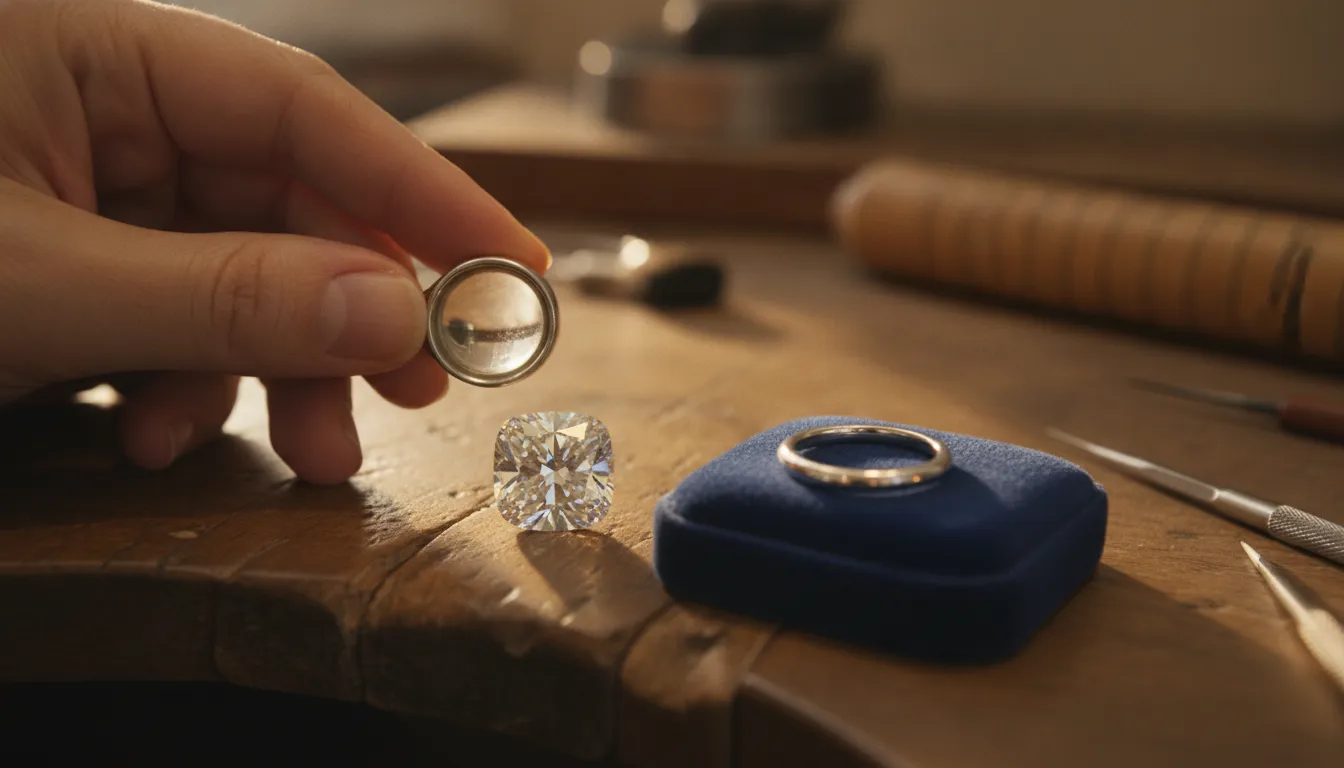
Reviewing a grading report gives you an objective reference, while viewing the diamond helps you understand the report in context. Buchroeders' guide on how to read a GIA diamond report can help you identify information recorded for a particular stone.
Q: Does a Higher Clarity Grade Always Look Better?
A: No. Many clarity characteristics are too small to see without magnification, so two diamonds with different grades may look similar during normal wear. Compare the actual inclusion pattern, face-up appearance, and your comfort with the stone instead of assuming the highest grade is necessary.
How Does Carat Weight Affect Diamond Size and Value?
Carat weight measures a diamond's physical weight, not its complete visible size. One metric carat equals 200 milligrams, and a carat is divided into 100 points. A 0.75-carat diamond may therefore be described as a 75-pointer. The number alone cannot tell you how large or lively a diamond will appear.
Face-up spread depends on shape and proportions. Two diamonds with the same carat weight can have different measurements when viewed from above. A deeper stone may carry more weight below the visible surface, while a well-proportioned stone may present a balanced face-up appearance. Measurements and the actual diamond deserve attention alongside carat weight.
| Term | What it measures | Why it matters |
|---|---|---|
| Carat weight | Physical weight | Provides a precise comparison but does not guarantee visible size. |
| Points | One point equals 0.01 carats | Describes smaller weight differences. |
| Face-up spread | Apparent size from above | Varies with shape and cut proportions. |
| Rarity | How uncommon a weight is | Larger stones can become increasingly rare, affecting value. |
Carat weight can influence value because larger diamonds are generally less common. Pricing does not always increase in a straight line as weight rises. The GIA explanation of carat weight provides additional context for understanding weight, size, and rarity.
If reaching a certain face-up size is important, compare measurements and proportions rather than focusing only on a carat threshold. A modest change in weight may create room for a cut, color, or clarity balance that better fits the finished ring.
Schedule an appointment to compare diamond proportions, grading details, and carat options with a Buchroeders expert.
Which of the 4Cs Should You Prioritize for Your Budget?
The right 4Cs balance depends on the diamond's shape, setting, metal, lifestyle, and the visual details you notice first. The 4Cs are a decision framework, not a requirement to maximize every grade. Start with the finished ring you want, then allocate attention and budget to the characteristics that will be most visible in that design.
- Start with the ring design. Decide whether you are drawn to a solitaire, halo, three-stone, or another setting. The design affects how the center diamond is framed and how size, color, and brilliance are perceived.
- Protect the qualities you can see. If sparkle is your priority, pay close attention to cut and compare the diamond in motion. A report can guide the comparison, but the stone's actual light performance matters.
- Set your color preference. Consider the diamond's shape, size, and metal. Compare neighboring grades under consistent lighting, then choose the level of color that looks right to you.
- Look for clarity that appears clean. Examine the diamond without magnification and under a loupe. A higher grade may not add visible benefit if a lower grade already appears clear during normal wear.
- Choose carat weight with measurements in view. If size is important, compare face-up dimensions and proportions. A carat number is useful, but it does not replace looking at the diamond.
- Review the complete ring together. During the custom engagement ring design process, the center stone and setting can be considered as one design. That makes tradeoffs easier to understand before you commit to a direction.
A thoughtful 4Cs decision balances what the report says with what your eyes see. The best diamond is not necessarily the one with the highest grade in every category. It is the one whose appearance, characteristics, and design work together within your priorities.
Explore Buchroeders' engagement ring collection to see how different shapes and settings bring diamond qualities to life.
Frequently Asked Questions
What Are the 4Cs of Diamonds?
The 4Cs are cut, color, clarity, and carat weight. Cut describes light performance and craftsmanship. Color describes body color in a white diamond. Clarity describes inclusions and blemishes. Carat weight describes physical weight. Reviewing all four together gives buyers a more complete comparison.
Is Cut More Important Than the Other 4Cs?
Cut often has a strong effect on sparkle and brightness, but it is not automatically more important for every buyer. Shape, color preference, clarity visibility, carat goal, setting, and budget all influence the right balance. Compare the complete diamond rather than following a universal formula.
Does Carat Weight Mean Diamond Size?
No. Carat weight measures physical weight, while visible size depends on the diamond's shape, measurements, and proportions. Two diamonds with the same carat weight may look different from above. Ask to review face-up measurements and the actual stone when size is a priority.
Can a Lower Clarity Grade Still Look Beautiful?
Yes. Many inclusions are visible only under magnification. A diamond with a lower clarity grade may still appear clean to the unaided eye, depending on its shape, inclusion pattern, and location. Examine the stone in normal viewing conditions and with magnification before deciding.
How Should I Begin Comparing Diamonds?
Begin with your ring design, preferred shape, budget, and the visual qualities you value most. Review the grading report, compare stones side by side, and ask how each characteristic affects the complete ring. Buchroeders' diamond education page is a helpful place to continue learning.
Schedule an appointment with Buchroeders Jewelers for help comparing the 4Cs and choosing a diamond that fits your vision.
