



Diamond Stud Earrings: Complete Buying Guide
Diamond stud earrings are one of the most versatile fine-jewelry purchases you can make, but the right pair depends on more than carat weight alone. Cut, setting, metal, backing, and how the earrings fit your existing jewelry all shape the finished look. This guide explains what to compare so you can choose diamond stud earrings with confidence.
Explore Buchroeders' diamond stud earrings collection
What should you look for when buying diamond stud earrings?
When buying diamond stud earrings, start with the look and wear experience you want, then compare the pair's total carat weight, cut quality, color, clarity, setting, metal, and backings. For most buyers, a lively cut and secure construction matter more day to day than choosing the highest grade in every category.
Because earrings sit on both sides of the face, shopping for a matching pair is especially important. Ask whether the listed carat weight is for one earring or the pair, and confirm that the stones are well matched in size, shape, color, and overall appearance. A pair that looks balanced on the ear will feel more polished than two stones selected independently.
How much carat weight do you need?
Carat weight measures a diamond's weight, not its visible diameter or sparkle. In earring listings, total carat weight, often written as ctw, usually refers to both earrings together. A 1 ct tw pair contains approximately 0.50 carat in each stud, although exact weights can vary.
Common diamond stud earring sizes
| Total carat weight | Typical impression | Good fit for |
|---|---|---|
| 0.5 ct tw | Subtle, refined, and easy for everyday wear | First fine-jewelry purchases, petite styling, or a quiet accent |
| 1 ct tw | Classic presence without overwhelming the ear | A versatile daily pair or a meaningful milestone gift |
| 2 ct tw | More noticeable sparkle and face-up presence | Statement everyday jewelry, anniversaries, or an established collection |
These size ranges are starting points, not rules. Ear shape, hairstyle, personal style, and the wearer's other jewelry can change how a pair looks. If you want a discreet stud for professional settings, a smaller total weight may be ideal. If the earrings will be a signature piece, a larger pair may better match the intended presence.
Remember that two pairs with the same total carat weight can look different. Diamond shape, table proportions, setting coverage, and how much metal surrounds the stone all affect the visible result. Compare the actual pair whenever possible instead of making the decision from carat weight alone.
Which 4Cs matter most for diamond studs?
For diamond studs, cut is often the first quality factor to evaluate because it controls how efficiently each stone returns light. Color and clarity influence the face-up appearance, while carat weight influences size. The best balance depends on the shape, setting, metal, viewing distance, and the wearer's priorities.
Cut: prioritize life and sparkle
A well-cut diamond can look bright and energetic across a range of carat weights. Look for strong light return, pleasing symmetry, and a face-up appearance that stays lively as the earrings move. Round brilliant diamonds are a familiar choice because their facet pattern is designed for sparkle, but other shapes can create a distinctive look.
Color: consider the metal and setting
Color describes how much body color a white diamond shows. White gold and platinum can emphasize a bright, crisp appearance, while yellow gold can create a warmer, more vintage-inspired contrast. The best choice is the one that looks harmonious with the setting and the rest of the wearer's jewelry.
Clarity: focus on what is visible
Clarity grades describe inclusions and blemishes, but a higher grade is not automatically more beautiful from normal earring-wearing distance. Examine each stone for eye-visible characteristics and compare the pair side by side. A balanced, lively match can be more important than maximizing a grade that is difficult to see once the earrings are worn.
Carat: choose presence, not just a number
Carat weight is useful for setting expectations about size, but it should be read alongside the stone's face-up measurements and proportions. A well-proportioned diamond may appear more attractive than a heavier stone with less effective light performance. Ask to compare actual options at the size you plan to wear.
For a broader explanation of the four quality factors, read Buchroeders' practical guide to the 4Cs of diamonds. The earring-specific decision is how those factors work together in a small matched pair worn close to the face.
Which setting is best for diamond stud earrings?
The best earring setting depends on how much diamond you want to see, how active the wearer is, and how much protection or low profile matters. Prong, bezel, and basket settings each create a different balance of visibility, security, maintenance, and style.
Prong settings
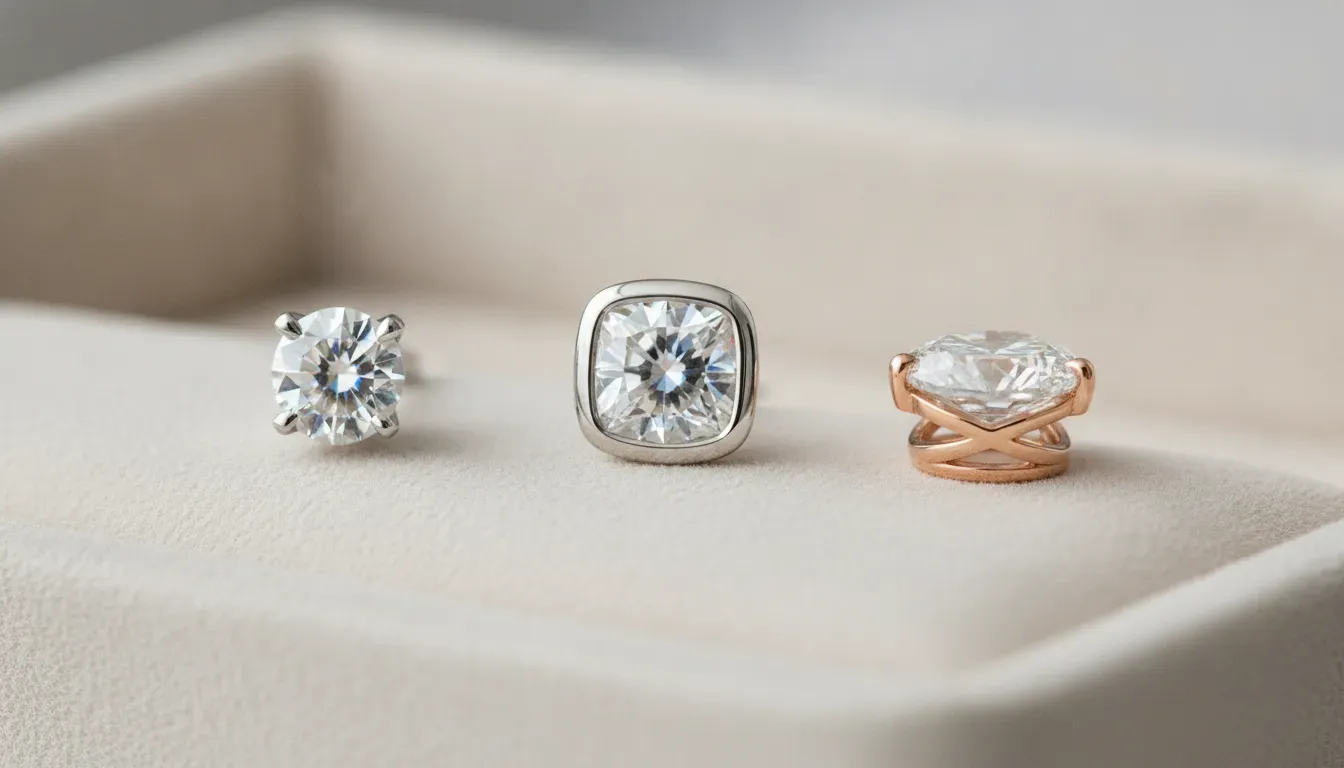
Prongs hold the diamond at several points around its edge, allowing more light to reach the stone and leaving more of the diamond visible. This is a strong choice for a classic, bright look. Because the prongs are exposed, inspect them periodically and have them checked if the earring catches on clothing or hair.
Related products

These beautiful 0.85ctw round diamond stud earrings feature 4-prong settings in stylish white gold for a timeless look.
View product
These 3.50ctw Round Diamond Stud Earrings are set in 14k white gold with a 3-prong setting.
View product
Discover our latest - 0.90ctw Round diamond stud earrings in White Gold.
View productBezel settings
A bezel surrounds the diamond with a rim of metal. It gives the stud a smooth outline and can protect the stone's edge, making it appealing for active wear or anyone who prefers a streamlined silhouette. The added metal creates a more defined frame, so the look is distinct from an open prong setting.
Basket settings
A basket setting supports the diamond with a low gallery beneath it, often combining a secure structure with a classic view of the stone. It can sit comfortably on the ear and provide a balanced look for daily wear. Compare the post length and profile to make sure the finished earring rests at the angle you prefer.
What about screw-back or push-back earrings?
The backing affects security and convenience rather than diamond quality. Screw backs thread onto the post and can be reassuring for valuable daily-wear earrings, although they take longer to put on and remove. Push backs are quick and familiar, while locking backs use a release mechanism designed to hold the earring in place. Choose the backing that matches the wearer's routine and comfort.
How do you choose the right metal?
Choose the metal for visual harmony, durability, and how it works with the jewelry already in the collection. White gold and platinum create a cool, bright backdrop that emphasizes diamond contrast. Yellow gold adds warmth and a classic or vintage feel, while rose gold introduces a softer blush tone.
Matching the metal to the wearer's everyday pieces can make the new studs feel intentional. If she or he wears a white-gold engagement ring, platinum band, or silver-tone watch, a cool metal may coordinate naturally. If yellow-gold hoops, chains, or a watch are worn most often, yellow gold can make the studs feel connected rather than isolated.
Mixed-metal styling is also a valid choice. A pair of white-metal studs can act as a neutral bridge between different jewelry tones, while a warm-metal setting can become a deliberate focal point. Consider the setting shape as well as the metal color, especially if the studs will be worn alongside other earrings in a curated ear stack.
How can you choose diamond studs as a gift?
Diamond studs are a thoughtful gift because they can mark a birthday, anniversary, graduation, wedding milestone, or personal achievement without depending on ring size. The safest gift decisions begin with observation: note the jewelry metal, preferred scale, earring style, and whether the recipient favors understated or noticeable pieces.
When should you shop as a surprise?
A surprise purchase can work well when you know the recipient's daily style and can select a versatile size and setting. Classic round studs, a secure backing, and a metal that matches existing jewelry are generally easy to wear. Keep the receipt and understand the seller's exchange or return terms before gifting so the recipient can participate in the final choice if needed.
When is shopping together better?
Shopping together is often the better experience when the recipient has a strong preference about size, shape, metal, or backing. It also gives both people a chance to compare matched pairs in person and see how the stones look against the ear. A Buchroeders specialist can help narrow the choices without taking the meaning out of the gift.
Schedule a personalized diamond jewelry consultation with Buchroeders
How should you care for diamond stud earrings?
Regular, gentle care keeps diamond studs bright and helps you notice loose stones or worn backings before a problem becomes serious. Store each pair in a soft, separate compartment, remove earrings before swimming or sleeping when practical, and keep them away from lotions, hairspray, and household chemicals.
- Wipe the posts and settings with a soft, lint-free cloth after wear.
- Clean at home with lukewarm water, mild soap, and a very soft brush when appropriate.
- Rinse over a bowl rather than an open drain, then dry the earrings completely.
- Check that the backings engage properly before wearing the studs outside the home.
- Have the prongs, bezels, posts, and backs professionally inspected when the earrings receive frequent wear.
- Use professional cleaning for a thorough inspection, especially before an important event.
Do not use abrasive cleaners or force a backing that is difficult to remove. If a diamond moves, a prong feels sharp, or a post appears bent, set the earring aside and arrange a professional evaluation. Jewelry repair specialists can determine whether the issue is limited to the backing or requires work on the setting itself.
Where should you buy diamond stud earrings?
A trusted jeweler should make it easy to compare matched stones, understand total carat weight, review the setting and backing, and ask questions about care. Look for clear product details, a knowledgeable team, and a buying experience that lets you evaluate the actual earrings rather than choosing from a number alone.
Buchroeders Jewelers offers both natural diamond stud earrings and lab-grown diamond stud earrings, with current inventory that can change as pieces are purchased. If you want to compare both options, the natural and lab-grown stud collection provides another starting point. Browsing online can narrow your preferences, while an in-person appointment helps you judge sparkle, scale, metal, and comfort together.
Book an appointment to compare diamond stud earrings with a Buchroeders specialist
Diamond stud earrings buying guide: frequently asked questions
What size diamond studs should you buy first?
A 1 ct tw pair is a versatile starting point for many buyers because it offers visible sparkle without feeling overly formal. A 0.5 ct tw pair can be more discreet, while a 2 ct tw pair creates stronger presence. Choose based on the wearer's style, existing jewelry, and intended frequency of wear.
Is cut or carat more important for diamond studs?
Cut is often more important for visible sparkle, while carat weight controls the general scale of the pair. A lively, well-matched pair can look more appealing than a heavier pair with weaker light performance. Compare both the face-up appearance and total carat weight before deciding.
Are screw-back earrings worth considering?
Screw backs are worth considering when security is a priority, especially for valuable studs worn often. They take more time to put on and remove than push backs, so the best choice depends on the wearer's routine, dexterity, and comfort. A jeweler can explain the differences between backing styles.
Should diamond studs match other jewelry?
They do not have to match exactly, but coordinating metal color and overall scale usually creates a more intentional look. White metals emphasize contrast, yellow gold adds warmth, and mixed metals can work as a deliberate styling choice. Consider the jewelry the recipient wears most often.
How often should diamond studs be professionally checked?
The timing depends on how often the earrings are worn and the condition of the settings. Have them checked if a stone moves, a prong catches, a post bends, or a backing no longer feels secure. Regular professional cleaning can also provide an opportunity to inspect the earrings.
Browse the current diamond stud earrings selection at Buchroeders Jewelers
