



Oval Engagement Rings: Why They're Trending and How to Choose One
Choosing an engagement ring is not only about carat weight. The diamond's outline, proportions, cut quality, and setting all shape how the finished ring looks and feels on the hand. An oval can offer a graceful, elongated silhouette while creating the visual impression of a larger stone. Making it an appealing choice for couples who want presence with a refined profile.
Oval engagement rings combine an elongated shape with versatile style, but the right choice depends on evaluating length-to-width ratio. Cut quality, bow-tie visibility, setting design, and whether a natural or lab-grown diamond best fits your priorities.
This guide explains what to look for at each decision point. From the proportions that create your preferred look to the settings and diamond origins worth comparing before you commit.
Why Oval Engagement Rings Are Trending
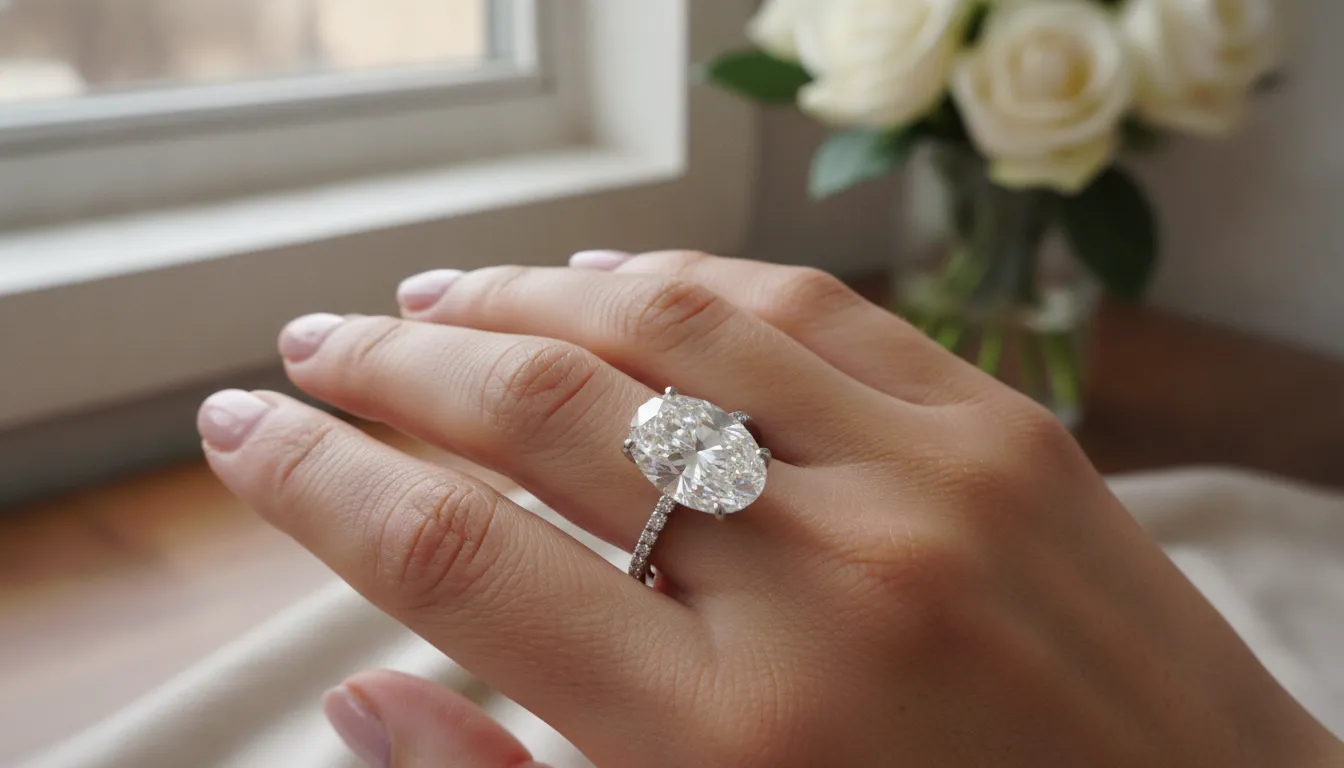
Oval diamonds have moved from a distinctive alternative to one of the most requested engagement ring shapes. Their appeal is easy to understand: an oval combines the lively brilliance associated with a round brilliant diamond with a longer, more graceful outline. The result feels familiar yet individual, giving couples a way to choose a classic center stone with a less expected silhouette.
One practical reason for the interest is visual presence. According to the Gemological Institute of America, an oval's elongated shape creates a larger-looking face-up appearance than a round diamond of the same carat weight. The broader visible surface can make the center stone feel especially substantial on the hand. While the shape draws the eye along the finger rather than concentrating attention at a single point. GIA's oval diamond guide explains this size illusion in more detail.
Ovals also offer a reassuring balance of beauty and wearability. Unlike cuts with sharp corners, an oval has smooth, rounded edges that are less prone to chipping, according to GIA. That does not make any diamond indestructible, and a secure setting still matters. But the absence of pointed corners is one reason the shape works well for an engagement ring worn every day.
Celebrity engagement rings have added another layer of momentum. When a well-known figure chooses an elongated oval, the shape receives immediate attention across bridal coverage and social media. That visibility has helped introduce more shoppers to an outline that may not have been their first consideration. The best choice, however, is still the diamond that suits the wearer's hand, style, and priorities rather than a celebrity's exact ring.
A common question behind this trend is whether an oval can sparkle as much as a round brilliant. Yes, a well-cut oval diamond produces lively brilliance comparable to a round brilliant. While the elongated shape can create a bow-tie effect that should be evaluated in person before purchasing. The defining character of the oval cut is energetic sparkle complemented by an elegant, elongated profile.
Oval Diamond Length-to-Width Ratios Explained
An oval diamond's length-to-width ratio describes how long it is compared with how wide it is. To calculate it, divide the stone's length by its width. A 1.40:1 ratio, for example, means the diamond is 1.40 times as long as it is wide. This measurement helps you predict the outline, but it should be used alongside the diamond's actual appearance, cut quality, and bow-tie effect.
1.20 to 1.29: A shorter, rounder oval
Ratios from 1.20 to 1.29 create a compact oval with a noticeably rounder outline. According to the Gemological Institute of America, these stones may resemble a rounded cushion or a slightly off-round shape. Choose this range if you like the softness of an oval but want a more traditional, substantial-looking silhouette. It can also work well in a vintage-inspired setting or a design with a halo, where the fuller outline complements the surrounding details.
1.30 to 1.39: Balanced and gently elongated
This middle range offers more length than a rounder oval without looking especially narrow. It is a practical choice for shoppers who want an oval shape that feels distinctive while remaining easy to pair with classic solitaire, three-stone, or pave settings. On the finger, the extra length can create a modest slimming effect without becoming the dominant feature of the ring.
1.40 to 1.50: The classic oval proportion
For a traditional oval appearance, GIA identifies 1.40 to 1.50 as the most popular range. These proportions balance graceful length with enough width to keep the outline elegant rather than slender. A ratio near 1.40 may feel slightly fuller, while one closer to 1.50 will look more elongated. This is a strong starting point for custom engagement ring design, especially when you want the center stone to look refined in a solitaire or understated setting.
Above 1.50: Dramatic length
Ratios above 1.50 are rarely seen and produce a longer, narrower silhouette. They may appeal to someone seeking a more dramatic look, and the added length can be flattering on shorter fingers by drawing the eye along the hand. However, elongated ovals in this range may show a more pronounced bow-tie, or dark shadow across the center. Inspect the stone in person or through a detailed video before committing.
Use ratio as a guide, not a pass-or-fail rule. Compare several oval engagement rings side by side, view them from multiple angles, and choose the proportion that looks balanced on your hand.
What Is the Bow-Tie Effect in Oval Diamonds?
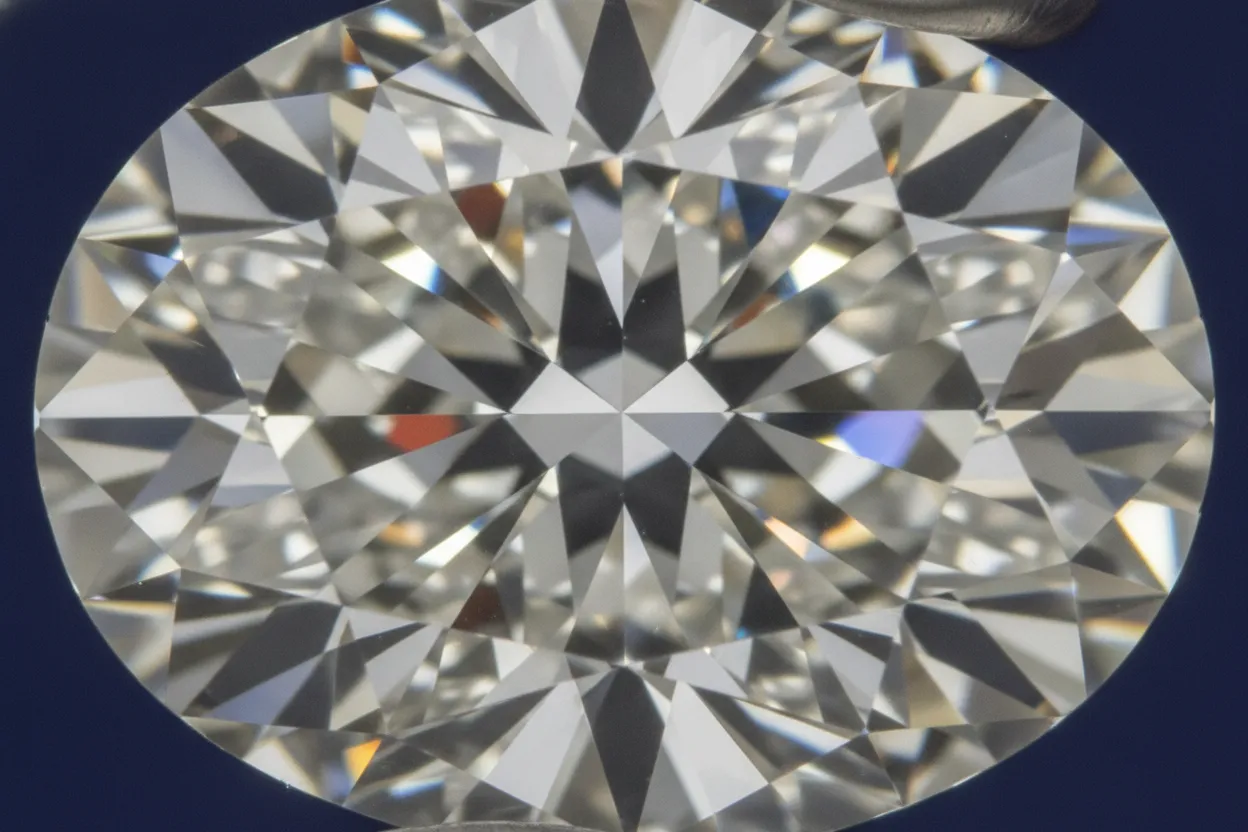
The bow-tie effect is a darker band or shadow that can appear across the center of an oval diamond. It is especially common in elongated fancy-cut diamonds because the stone's length changes how light reflects and returns to the viewer. Rather than being a separate feature or flaw, it is an optical effect created by the diamond's facet arrangement and proportions.
Every oval diamond can show some degree of bow-tie, but the appearance varies considerably from one stone to another. A subtle shadow may add contrast and help the facets look lively. Excessive darkness can make the center seem dull, particularly when the diamond is viewed face-up. The Gemological Institute of America notes that ovals with length-to-width ratios above 1.50:1 may show a more pronounced bow-tie effect. Although the ratio alone does not determine how attractive a particular stone will look. GIA's oval diamond guide provides additional context on shape and proportion.
How to inspect an oval diamond
When comparing stones, take time to view each diamond from several angles and distances. Look at it face-up, then tilt it gently as you would when wearing it. The center should not remain heavily dark as the stone moves. Ask to see the diamond in more than one lighting environment, such as bright jewelry-store lighting, softer indoor light, and natural daylight. A stone that looks balanced across those conditions is more likely to remain appealing in everyday wear.
Use proportions as a starting point
Consider the length-to-width ratio alongside the diamond itself. A more elongated oval may suit your preferred silhouette, but its longer shape can potentially make a bow-tie more noticeable. Ratios between 1.40 and 1.50 are commonly associated with a traditional oval outline, while very long, narrow proportions may require closer inspection. Do not reject a diamond based on a ratio alone. Some ovals with similar measurements perform differently because their individual cut patterns are not identical.
A bow-tie is natural in many oval diamonds and is not automatically a defect. The goal is to choose a stone whose contrast feels graceful rather than distracting. Reviewing it in varied lighting with a knowledgeable jeweler helps you make that distinction before purchasing.
Best Settings for Oval Engagement Rings
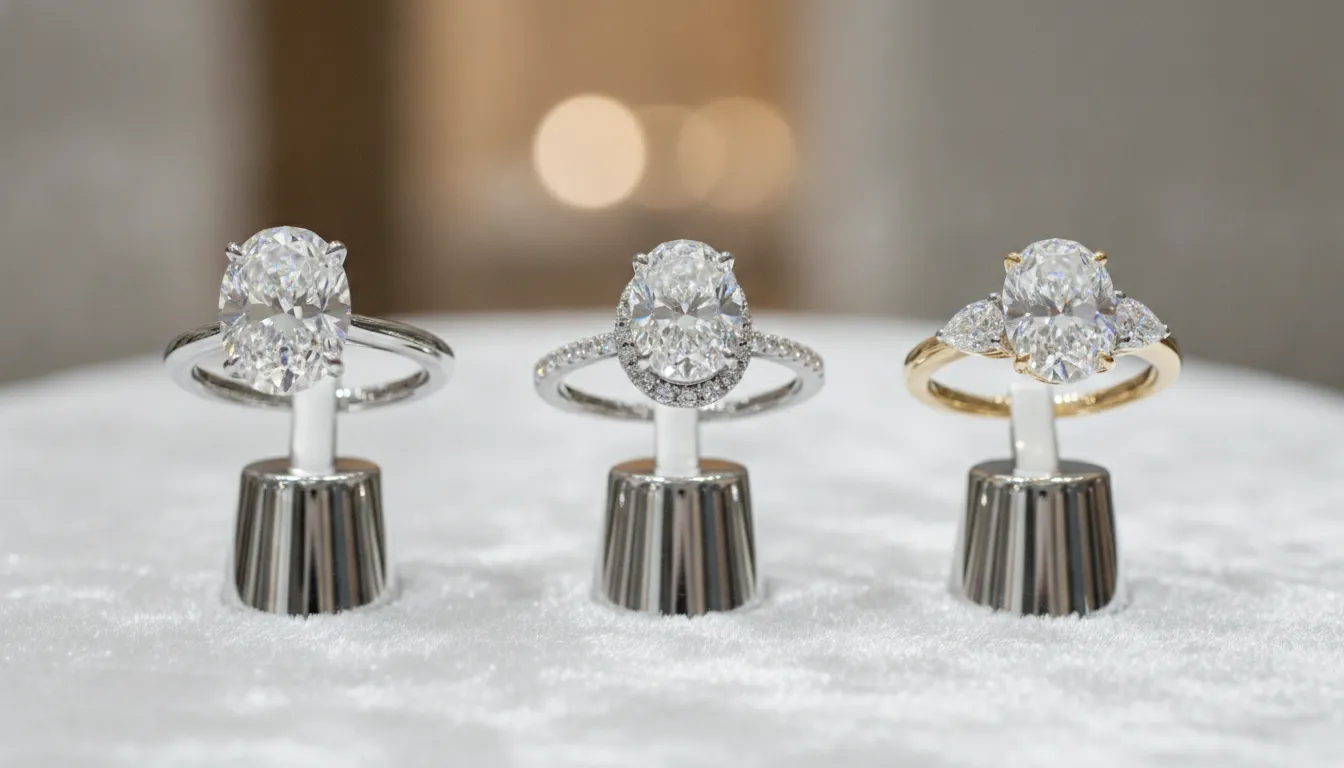
Oval diamonds have a graceful outline and softly rounded edges, so they pair naturally with many engagement ring settings. The right choice depends on how much you want the center stone to stand alone. How much sparkle you prefer around it, and how much protection the setting provides during everyday wear.
| Setting style | What it offers | Best for |
|---|---|---|
| Solitaire | A clean, classic design that keeps attention on the center diamond without competing details. | Someone who wants the oval's length and outline to be the focal point. |
| Hidden halo | A discreet circle of diamonds beneath the center stone adds sparkle from the side and can make the oval appear larger. | Someone who wants a traditional silhouette with an extra layer of brilliance. |
| Three-stone | Side stones frame the oval and can carry personal meaning, such as a couple's past, present, and future. | Someone who wants a more substantial profile or a symbolic design. |
| Bezel | Metal surrounds the diamond's perimeter, creating a modern look while helping hold the stone securely and protect its edges. | Someone who prefers a streamlined style and added protection for active daily wear. |
Match the setting to your priorities
A solitaire is often the most versatile starting point, while a hidden halo brings more visible sparkle without changing the oval's overall shape. Three-stone designs offer room to personalize the side diamonds, proportions, and meaning. A bezel can be especially appealing when a smooth profile and secure construction matter most.
At Buchroeders Jewelers, the custom design process makes it possible to refine those details before production. The team can create a 3D CAD rendering so you can review the setting's proportions, diamond placement, and overall profile before the ring is made. Explore our oval diamond engagement rings or learn more about creating a custom engagement ring tailored to your style.
Natural vs. Lab-Grown Oval Diamonds
Choosing between a natural and lab-grown diamond is a personal decision shaped by budget, rarity, certification preferences, and long-term plans. Buchroeders Jewelers offers both options in oval shapes across its collections, so you can compare them with an expert rather than choosing from an artificially limited selection.
| Consideration | Natural oval diamond | Lab-grown oval diamond |
|---|---|---|
| Price | Buchroeders natural diamonds are priced from $3,995 to $675,000, depending on the individual stone. | Typically 50% to 70% less expensive than a comparable natural diamond. Buchroeders also offers a 20% price match guarantee on identical IGI-certified lab diamonds. |
| Certification | Natural diamonds are accompanied by GIA or IGI certification, depending on the stone. | Lab-grown diamonds are accompanied by IGI certification. |
| Rarity | Formed naturally over billions of years, each stone reflects a finite geological origin. | Created through a controlled process, with availability that is not limited by geological formation. |
| Resale value | Future value depends on the diamond's quality, documentation, market conditions, and buyer demand. | Future value depends on the stone's quality, documentation, market conditions, and buyer demand. |
| Environmental impact | Considerations vary by the stone's origin, mining practices, and supply-chain documentation. | Considerations vary by the production process, energy sources, and supplier practices. |
Which option fits your priorities?
Natural diamonds appeal to buyers who value geological history, rarity, and the established tradition of a mined stone. Lab-grown diamonds appeal to buyers who want the same chemical composition as a natural diamond while allocating more of their budget to size, setting, or custom details. Neither choice is universally right. The best fit depends on what matters most to you and your partner.
At Buchroeders, our jewelry experts can walk you through the certification, proportions, craftsmanship, and pricing of both options. We will help you compare individual oval stones clearly, then select the diamond that aligns with your priorities and the ring you envision.
How to Choose the Perfect Oval Engagement Ring
A thoughtful selection process helps you balance appearance, craftsmanship, and budget without losing sight of personal style. Use these six steps as a practical starting point, then refine your choices with a Buchroeders specialist.
- Determine your budget. Set a comfortable range before comparing diamonds and settings. Buchroeders offers oval options from approximately $3,195 for a lab-grown diamond with a hidden halo to $9,995 and above for natural oval rings. A clear budget makes it easier to compare carat weight, color, clarity, and setting details on equal terms.
- Choose your length-to-width ratio. This ratio controls the outline of the stone. For a classic, balanced silhouette, the Gemological Institute of America identifies 1.40 to 1.50 as the most popular range. Lower ratios create a shorter, rounder appearance, while ratios above 1.50 can look longer and may show a more pronounced bow-tie effect. Review GIA's oval diamond guide as you compare proportions.
- Inspect the bow-tie effect. A darker band across the center is common in elongated fancy cuts, but its intensity varies from diamond to diamond. View each option in multiple lighting conditions and from several angles. The goal is not to find a stone with no visual variation, but one whose brilliance remains appealing as it moves.
- Select a setting. A solitaire keeps attention on the oval's outline, a hidden halo adds detail beneath the center stone, and a three-stone design creates a broader look with symbolic meaning. A bezel offers a sleek profile and additional edge protection. Consider how each style suits the wearer's lifestyle and preferred level of sparkle.
- Decide between natural and lab-grown. Both options can deliver beauty and meaningful design choices. Compare their origins, grading information, appearance, and pricing based on what matters most to you. The right decision is personal, not a universal verdict.
- Work with an expert. Bring your preferred ratio, setting ideas, and budget to a custom consultation. A Buchroeders professional can help you compare stones in person and build a ring that feels intentional. For more guidance, read our choosing the perfect oval engagement ring, then explore oval diamond engagement rings.
Frequently Asked Questions
Is an oval diamond good for an engagement ring?
Yes. An oval diamond offers a graceful silhouette, lively brilliance. And a larger face-up appearance than a round diamond of the same carat weight, according to the Gemological Institute of America (GIA). Its rounded edges also make it less prone to chipping than shapes with sharp corners, which supports comfortable everyday wear.
What are the pros and cons of oval engagement rings?
Ovals offer an elegant, elongated look, strong visual coverage, and a distinctive alternative to round diamonds. The main consideration is that elongated fancy cuts can show a bow-tie effect, a darker area across the center. Compare stones in person or review videos from multiple angles before choosing.
How does the length-to-width ratio affect an oval diamond?
The ratio controls whether the diamond looks slender, balanced, or rounder. GIA identifies 1.40 to 1.50 as a popular range for a traditional oval. Ratios from 1.20 to 1.29 appear shorter and rounder, while ratios above 1.50 can look more narrow and may show a stronger bow-tie effect.
Are oval diamonds more expensive than round diamonds?
Price depends on carat weight, cut quality, color, clarity, origin, and the individual stone. Oval diamonds can offer a larger-looking face-up presence for their weight, but two stones with similar specifications may still have different prices. Compare the complete grading details rather than shape alone.
What is the best setting for an oval engagement ring?
The best setting depends on your style and priorities. A solitaire emphasizes the oval outline, a hidden halo adds detail beneath the center stone, and a three-stone design creates a symbolic, substantial look. A bezel offers a smooth, protective profile. View each option beside your preferred wedding band before deciding.
Ready to Explore Oval Diamond Engagement Rings?
Choosing an oval diamond is a personal decision, from the proportions you prefer to the setting that complements your style. Buchroeders Jewelers can help you compare options and shape a ring that feels thoughtfully considered. Explore oval diamond engagement rings to get started, or contact us to discuss your vision with the Buchroeders team.
