



Old Mine Cut Diamond vs Round Brilliant: A Buyer Guide
Old mine cut diamond vs round brilliant is a personal design choice.
These two cut styles create different visual experiences.
In an old mine cut diamond vs round brilliant comparison, the right choice depends on the look you want. An old mine cut carries historic charm. A round brilliant reflects modern precision.
Explore Buchroeders' Custom Ring Builder
In an old mine cut diamond vs round brilliant comparison, an old mine cut typically offers a squarer outline, deeper proportions, and broad individual flashes. A round brilliant has a circular silhouette and a precise facet arrangement designed for crisp, lively brilliance. Carat weight, color, clarity, proportions, and the quality of the individual stone still matter in both choices. This guide connects the decision to Buchroeders' diamond education resources.
How Should You Compare an Old Mine Cut Diamond vs Round Brilliant?
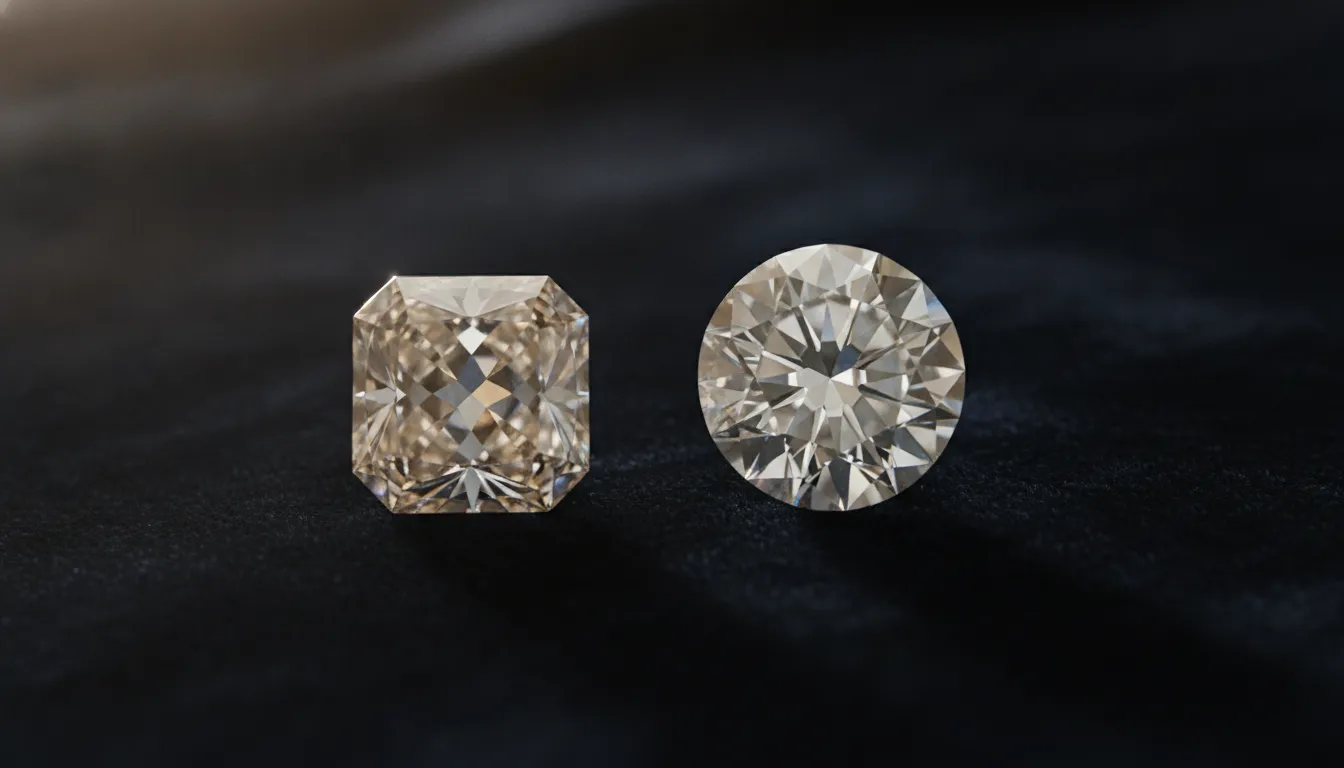
An old mine cut is an antique-style brilliant cut with a usually squarish or cushion-like outline, rounded corners, a tall crown, and a deep pavilion. A round brilliant has a symmetrical circular outline and a more standardized facet arrangement. The old mine cut emphasizes individuality and broad flashes, while the round brilliant emphasizes crisp, consistent brilliance.
Old mine cuts are associated primarily with the eighteenth and nineteenth centuries. Cutters shaped diamonds by hand and worked with the tools and lighting available at the time. They often retained more of the original rough crystal, which helps explain their depth and distinctive outlines. A period diamond may show small variations in symmetry or facet alignment that would be unusual in a modern precision-cut stone.
Those traits are not automatically defects. They are part of the reason an old mine cut can feel personal and historically connected. Still, each stone deserves individual examination. One old mine cut may show attractive broad flashes and balanced proportions. Another may appear too deep or less lively in the lighting where you expect to wear it.
Round brilliant diamonds developed as cutting technology made round outlines and repeatable angles easier to produce. Their circular shape, carefully arranged facets, and consistent symmetry suit buyers who want a clean, contemporary look. The important distinction is not old versus new as a value judgment. It is the experience you want from the finished ring.
How Does an Old Mine Cut Compare With a Round Brilliant in Sparkle?
An old mine cut creates broader, chunkier flashes in a slower, more individual rhythm. A round brilliant generally returns brighter, crisper flashes because its facets and proportions are arranged with greater uniformity. Neither look is inherently better. Choose the old mine cut for a softer glow, the round brilliant for lively precision, or a stone that balances both.
The visual difference begins with facet design. Historic old mine cuts often have fewer, larger facets and a visible culet, the small facet at the bottom of the pavilion. Their taller crowns and deeper pavilions influence how light enters and returns through the stone. When the proportions are pleasing, the result can be a warm glow with flashes that feel substantial and distinctive.
A modern round brilliant typically has 57 or 58 facets arranged around a symmetrical round outline. The relationship among its table, crown, pavilion, girdle, and angles is more standardized. This precision supports the lively contrast and bright brilliance many engagement-ring buyers expect from a round diamond.
| Feature | Old mine cut | Round brilliant |
|---|---|---|
| Facet approach | Often fewer, broader hand-cut facets with an individual pattern. | Usually 57 or 58 facets arranged for consistent modern light performance. |
| Typical visual effect | Broad, chunky flashes with a softer, more varied glow. | Crisp brilliance with frequent smaller flashes and strong contrast. |
| Proportion character | Often a taller crown, deeper pavilion, and possible open culet. | More standardized proportions and a symmetrical circular outline. |
Judge either style in motion and under more than one lighting condition. A still photograph can emphasize one facet or reflection while hiding how the diamond performs as your hand moves. If you are comparing stones in person, tilt each one slowly and look for attractive contrast, brightness, and flashes across the face.
Review Diamond Education Before Comparing Stones
Which Diamond Cut Looks Larger for the Same Carat Weight?
Carat weight measures how much a diamond weighs, not exactly how large it looks from above. Face-up spread describes visible surface area. Two diamonds with the same carat weight can make different impressions because depth, outline, table, and proportions distribute weight differently. Compare measurements and appearance, not carat weight alone, when evaluating size.
Old mine cuts are often deeper than modern round brilliants. More of the stone's weight may sit below the girdle instead of contributing to its visible diameter. As a result, an old mine cut can look smaller across the top than a round brilliant with the same carat weight. That is a tendency, not a rule. Individual measurements and the stone's outline always deserve attention.
What should you compare beyond carat weight?
Start with the listed length and width measurements. For an old mine cut, note whether the outline looks cushion-like, softly rectangular, or gently oval. For a round brilliant, compare the diameter and symmetry from several angles. Then consider how the diamond will sit in the intended setting, because prongs, bezels, halos, and surrounding stones can change the finished ring's visual scale.
Depth percentage can help explain why two stones of equal weight look different, but it should not be used as an automatic pass-or-fail rule for antique cuts. Old mine diamonds were not made to the same modern standards as round brilliants. Their appeal often comes from the combination of proportions, facet rhythm, and outline that makes each stone distinct.
When deciding between an old mine cut diamond vs round brilliant, compare face-up presence with light performance. A diamond that looks slightly larger may not be the one you prefer once it moves. Review measurements, examine the side profile, and choose the stone whose balance feels right for your hand and ring design.
Related products

Measuring 7.5 inches, it offers classic elegance and brilliant sparkle.
View product
Presenting the 7.27ctw Round Brilliant Diamond Pavé Engagement Ring, crafted in luxurious platinum.
View product
Shop diamond rings in-store or online at Buchroeders Jewelers.
View productWhat Should You Know About an Old Mine Cut in a Vintage or Heirloom Ring?
An old mine cut can give a vintage or heirloom ring a sense of individuality that is difficult to reproduce with a precisely standardized modern stone. Gentle asymmetry, rounded corners, a visible culet, and broad flashes can make the diamond feel connected to another era. These details are often the point, not imperfections to hide, when the design calls for history and character.
Examine the complete ring, not only the center stone. A deeper old mine cut can influence how high the diamond sits and how much of its face is visible. The setting must support the stone while protecting vulnerable edges. Prongs, bezels, galleries, and the condition of the metal all affect security, comfort, and the way light reaches the diamond.
How can you inspect condition and documentation?
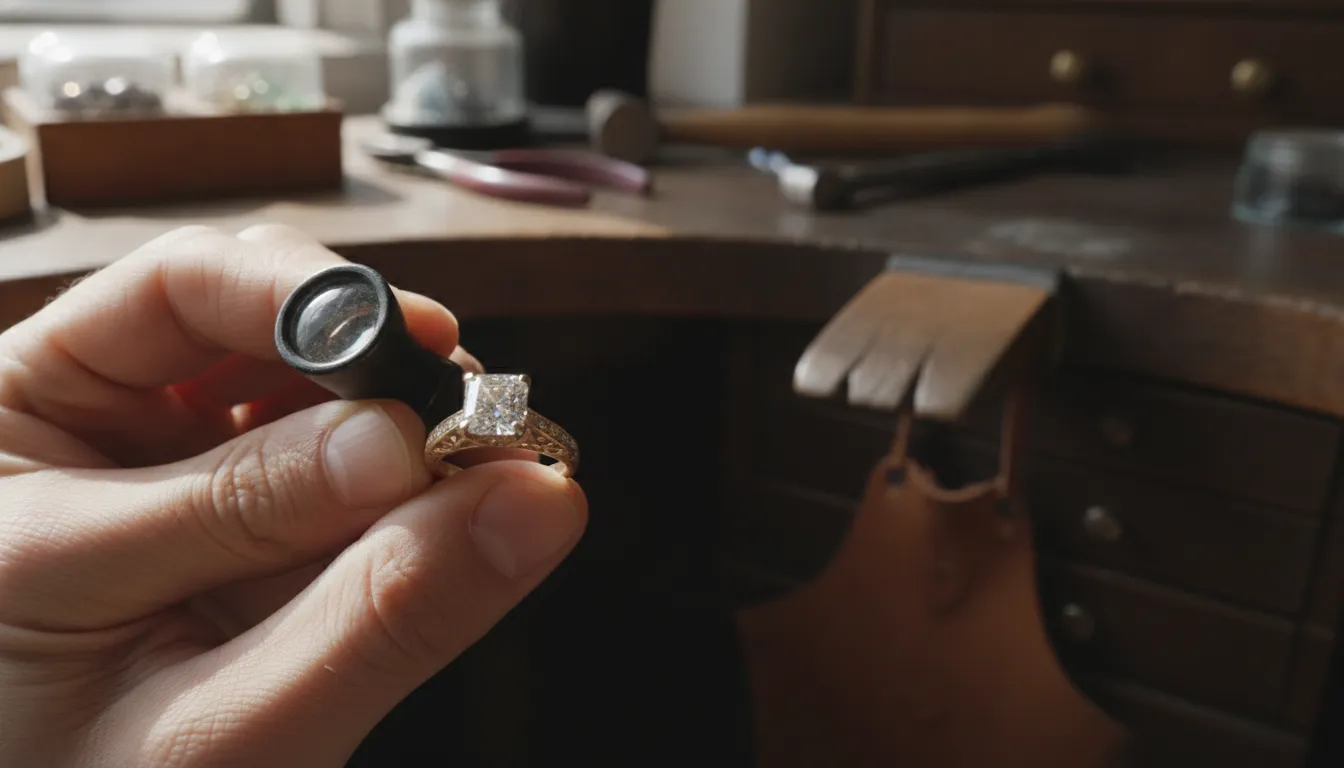
Begin with a careful face-up inspection in more than one lighting condition. Look for chips, abrasions, loose settings, or wear around the girdle and culet. Diamond is exceptionally hard, but hardness does not make a vintage ring immune to impact or damage. A qualified jewelry professional can inspect areas that are difficult to assess from a listing photograph.
Ask what documentation accompanies the piece. Depending on the diamond and ring, that may include a laboratory report, appraisal, provenance information, measurements, or repair history. Documentation can support a confident purchase, but it does not replace viewing the actual diamond. A report describes important characteristics. It cannot tell you whether the sparkle pattern feels right for your taste.
Because old mine cuts vary widely, comparisons based only on carat weight or a modern cut grade can be incomplete. Consider the outline, visual balance, facet pattern, condition, and interaction with the setting together. Our guide to vintage versus modern engagement rings can help place those aesthetic differences in the broader design decision.
Estate inventory rotates, so the exact combination of old mine cut, condition, and setting may not remain available indefinitely. If you love the character but want a particular proportion or mounting. Custom design can provide a thoughtful way to pair an antique-inspired cut with a setting suited to the diamond's measurements. Explore Buchroeders' Custom Ring Builder for the design path.
How Can You Evaluate a High-Quality Old Mine Cut Diamond?
Finding a high-quality old mine cut requires more than checking whether the outline looks square or slightly oval. Evaluate how the diamond performs, how its proportions affect appearance, and whether its condition suits the ring you have in mind. Use the checklist below as a starting point, then ask a jewelry professional to explain the stone's strengths and limitations.
- Study the cut's appearance. Look for broad, individual flashes and the gentle glow that give an old mine cut its character. Do not expect the precise, uniform pattern associated with a modern round brilliant. A pleasing stone should still return light attractively, even if its pattern is less symmetrical.
- View it face-up in more than one setting. Examine the diamond in natural daylight, indoor lighting, and a shaded area. Turn it slowly and look for lively contrast rather than judging it from a single photograph. If possible, view the stone without its setting so the mounting does not hide its shape.
- Consider the 4 Cs together. Cut, clarity, color, and carat remain fundamental to diamond selection. With an antique-style diamond, weigh these factors alongside the stone's visible personality. A higher grade on paper does not automatically make one old mine cut more appealing than another.
- Inspect condition and proportions. Pay close attention to chips, abrasions, girdle wear, and damage around the culet. Diamond ranks 10 on the Mohs Scale, but hardness does not make a stone immune to impact or wear. An expert should assess the proportions rather than applying modern round-brilliant expectations.
- Match the setting to the diamond. Choose a mounting that protects vulnerable edges and supports the silhouette. Custom design can unite the cut you love with a setting that reflects your personal style. Explore a Custom Engagement Ring approach when an existing mounting does not provide the right balance.
- Request documentation and an expert review. Review any available laboratory report, measurements, condition notes, and provenance details. Then have a qualified jewelry professional examine the diamond under magnification and explain what the documentation does and does not establish. The most important distinction may be visible performance, not a single grade.
There is no universal winner in an old mine cut diamond vs round brilliant decision. Choose an old mine cut when its history, softer glow, and one-of-a-kind outline speak to you. Choose a round brilliant when you prefer a symmetrical silhouette and crisp, consistent brilliance. If both qualities appeal to you, let the individual diamond and setting guide the final decision.
Which Option Best Fits Your Engagement Ring Style?
The best choice depends on the visual language and daily experience you want from your engagement ring. An old mine cut suits buyers drawn to history, gentle asymmetry, broad flashes, and a one-of-a-kind presence. A round brilliant suits buyers who prefer a circular outline, precise symmetry, and energetic modern brilliance. Both can be beautiful when matched to the setting.
Consider your setting before deciding. A solitaire can make either cut the clear focal point. A halo may emphasize the outline of an old mine cut, while a classic round setting can highlight the symmetry of a round brilliant. Side stones and band proportions also affect how the center diamond reads on the hand.
Think about how you respond to movement and light. If you enjoy changing, broad flashes and small variations, the old mine cut may feel more personal. If you want a bright pattern that looks familiar from many angles, the round brilliant may feel more natural. Viewing both in person can make this preference easier to identify.
Budget decisions should be made around the complete ring, not just the cut name. Compare the center diamond's measurements, color, clarity, condition, documentation, and setting requirements. Buchroeders' engagement ring collection provides a starting point for understanding the range of styles, while the custom engagement ring experience can help when an existing setting does not express your vision.
Schedule an Appointment to Compare Diamond Cuts
Frequently Asked Questions
What is the main difference between an old mine cut and a round brilliant cut?
An old mine cut usually has a squarish or gently oval outline, a deeper crown and pavilion, broader facets, and the individual character of historic hand cutting. A modern round brilliant has a circular outline and carefully arranged proportions designed to return light with crisp brilliance. The better choice depends on whether you value antique personality, modern sparkle, or a balance of both.
Are old mine cuts more expensive than modern round brilliant diamonds?
Not necessarily. Value depends on the individual diamond's quality, carat weight, color, clarity, light performance, condition, documentation, and overall desirability. Compare the complete stone and setting rather than the cut name alone.
Which diamond cut is more popular for engagement rings today?
The round brilliant remains a familiar and widely chosen option for modern engagement rings. Old mine cuts appeal to buyers who want a less uniform silhouette, broader flashes, and a distinctive heirloom feel. Popularity is less important than choosing a diamond that fits your style.
What historical era do old mine cut diamonds come from?
Old mine cuts are associated primarily with the eighteenth and nineteenth centuries, when diamond cutting was performed by hand. Their deeper proportions, rounded corners, and often cushion-like outlines reflect that earlier process.
Is an old mine cut the earliest version of the modern round brilliant diamond?
It is better understood as an important early predecessor of the brilliant-cut tradition rather than an identical version of today's round brilliant. Later tools and angle standards enabled the round outline and more consistent light performance associated with modern brilliant diamonds.
Explore the Custom Engagement Ring design experience
Ready to Explore Your Custom Engagement Ring?
Choosing between an old mine cut and a round brilliant is one part of creating a ring that feels distinctly yours. The right setting can highlight the character, proportions, and light performance you value most. Explore Buchroeders' Custom Engagement Ring design experience to bring your preferred diamond cut and overall vision together.
