Jewelry Stores in Columbia, MO: How to Choose the Right One
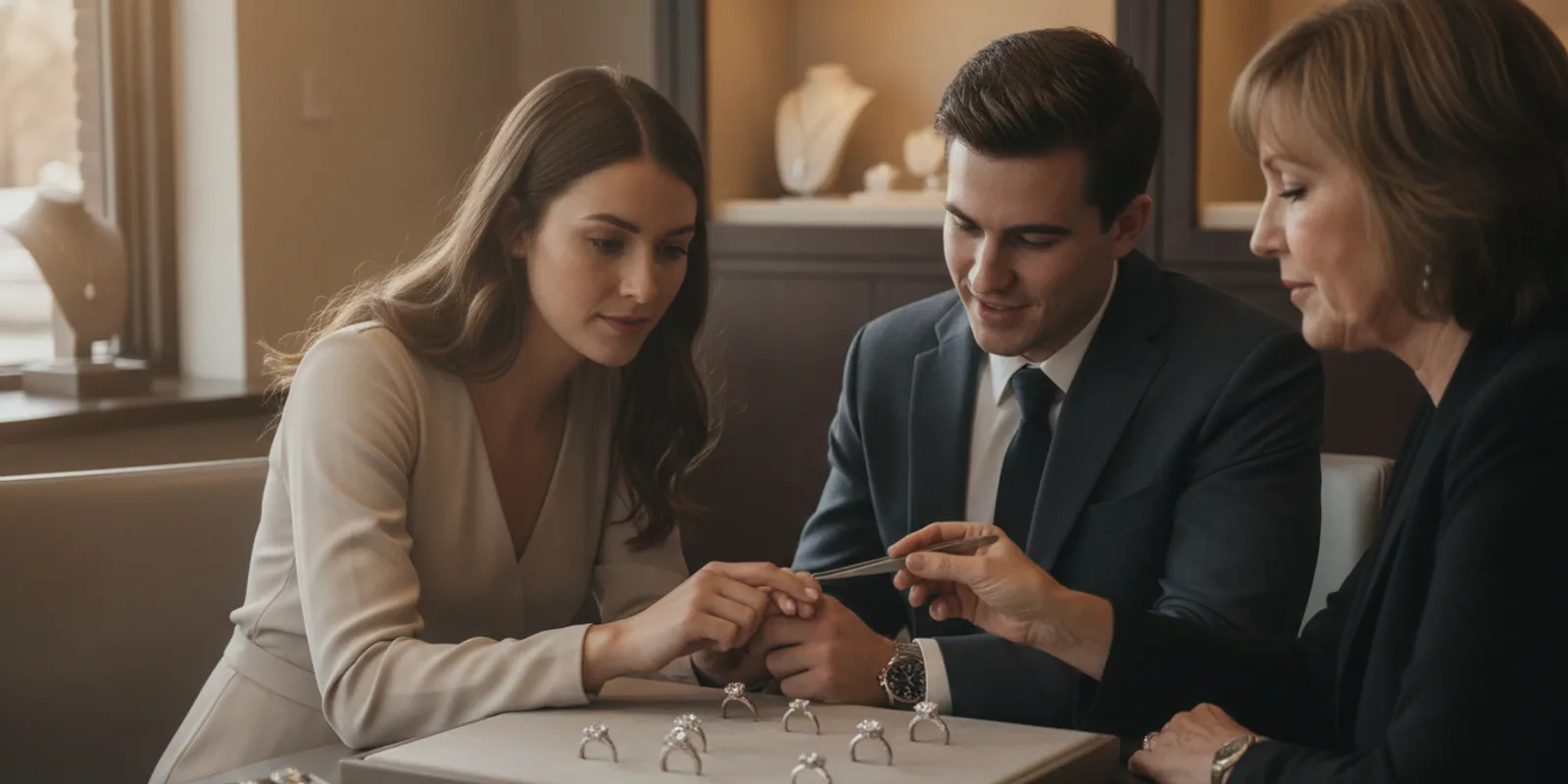
When you search for jewelry stores in Columbia, MO, you may be looking for much more than a place to browse a display case. You may want help comparing diamonds, finding a wedding band that fits an engagement ring, or turning a personal idea into a ring you can wear every day. The right store for you is one that listens carefully, explains your options clearly, and can support the kind of purchase you have in mind.
Schedule a jewelry appointment
For a significant jewelry purchase, a useful comparison goes beyond the number of products on display. Consider the experience you need, the questions the staff can answer, how you can evaluate a diamond or design, and what happens after you make a decision. This guide focuses on those practical factors, especially for engagement rings and wedding bands. It is not a directory or ranking of local retailers; it is a way to decide what kind of jeweler and buying process fit your needs.
What should you look for in jewelry stores in Columbia, MO?
Start with your purpose. A store that is a good fit for a quick gift purchase may not be the right place to develop a custom engagement ring. If you are buying bridal jewelry, look for a jeweler who can explain both the design and the diamond, help you compare alternatives, and give you a clear next step.
Use these questions to make an initial shortlist:
- Does the store handle the kind of jewelry you want? Ask whether the team works with engagement rings, wedding bands, natural diamonds, lab-grown diamonds, or custom design if those are important to you.
- Can you see and compare options? A helpful appointment should let you discuss differences in shape, setting, proportions, and overall appearance rather than leaving you to guess from a product name.
- Will someone explain the details in plain language? You should feel comfortable asking what a grading document means, how a setting is constructed, or how a band may sit next to a ring.
- Is there a defined process? For custom work, ask how ideas become a design, when you review it, and how the finished ring is created.
- What support is available after purchase? Ask about care, inspection, cleaning, resizing, and the specific terms of any protection or exchange program before relying on it.
These questions help you compare the experience, not just the merchandise. A thoughtful consultation should leave you with a better understanding of your options even if you need time to decide. Notice whether the answers are specific to your questions. If you ask how a wedding band might fit a low-profile ring, for instance, a useful response should address the actual profile rather than simply showing a popular band.
It also helps to distinguish what you can decide now from what needs another step. You may know you prefer an oval center stone but still need to compare several examples. You may like a pavé band but not yet know whether it will feel comfortable for daily wear. A good buying conversation can identify those open questions without pressuring you to settle them immediately.
How do you compare a jewelry store’s buying experience?
Think about the steps you will take from first conversation to final decision. A clear process can make a complex purchase feel manageable. For a custom ring, for example, the conversation should begin with your preferences and priorities, move into selecting a center stone and shaping a design, and then proceed to making the ring after the design has been reviewed.
At Buchroeders Jewelers, the custom process is described as We Listen First → Selection & Design → Ring Creation. That order matters: the discussion starts with what you want, then moves into the available choices and design. The company has served customers since 1896 and is based in Columbia. If you are exploring a custom design, review the engagement ring collection to get a sense of different looks before an appointment.
When speaking with any jeweler, ask how the process works for the particular ring you are considering. Find out whether you can review a design rendering before production, what changes can be made at that stage, and what information the store needs from you. Custom ring construction typically takes approximately five to six weeks, so bring up your proposal date early and ask how the timeline applies to your design.
For an in-stock ring, the questions may be different. Ask whether the piece is ready to try on, what measurements or sizing details matter, and how the ring looks from the side as well as from above. For a wedding band, bring the engagement ring if you have it, or take clear photographs of its profile and dimensions. A band can look appealing on its own but fit differently beside a particular setting.
Map the process on paper if you are comparing more than one option. Write down what happens at each stage, who needs to make a decision, and what you should receive or review before proceeding. For a custom design, that could mean listing the initial consultation, stone selection, design review, approval, and construction. For a ready-to-wear ring, it might be trying on the piece, confirming size, reviewing the purchase terms, and arranging any needed adjustment. The exact sequence varies by item, so ask the jeweler to clarify what applies to your choice.
Timeline planning deserves its own conversation. Work backward from the date you need the ring, then leave room to consider alternatives if a design or size needs attention. If the ring is part of a proposal plan, share the date early rather than assuming that a typical construction window is a guaranteed delivery date. Ask which steps are already included in the estimate of time and what could change it. This practical check can help you decide whether to focus on a custom piece or an option that is available to try on sooner.
What should you compare when choosing a diamond or ring?
Keep the comparison focused on what you can observe and verify. For a center diamond, consider its shape, face-up appearance, proportions, and the grading information available for that stone. A grading report gives you details to discuss, but it does not tell you which diamond you will personally prefer. For general background on diamond grading, see the Gemological Institute of America’s educational resources. Compare candidates side by side when possible and note what stands out to your eye.
Natural and lab-grown diamonds are two options to consider. Neither is automatically the right choice for every buyer. Ask the jeweler to explain the documentation for the particular stone: natural diamonds should be paired with GIA certification, and lab-grown diamonds with IGI certification, when making a quality claim. Compare the stones themselves and the ring design rather than assuming that one category will suit everyone.
When looking at two stones, give yourself a repeatable way to compare them. First look at each from the same viewing distance and orientation. Then ask to see the report details for the exact stone in front of you, and make sure you understand which characteristics are being described. If one stone looks brighter to you or its shape feels more balanced, note that alongside the report information. This separates your visual preference from the document details without treating either as a substitute for the other.
Next, consider how the setting supports your priorities. A solitaire gives the center stone a clear visual focus. Pavé accents add small diamonds along parts of the band. A halo frames the center with a border of smaller stones. Each design has a different profile and visual effect, so try styles on if you can. You can use examples such as a solitaire ring or a solitaire with pavé to describe the details you like, while remembering that the exact options may vary.
Finally, assess the full ring rather than the center stone alone. The setting, metal, band width, and overall proportions shape the way a ring looks and feels. Think about your daily activities and whether you prefer a lower profile or a more prominent design. If you are unsure, explain what you do with your hands throughout the day and ask the jeweler to help you consider practical design trade-offs.
A simple try-on can help surface preferences that are hard to name from photographs. Notice whether the band feels balanced on your finger, whether the setting catches on clothing, and whether the center stone looks the way you expected from above and from the side. You do not have to turn comfort into a checklist of rules; use it to describe what feels natural to you. If you are between two styles, ask to compare them one after the other rather than relying on memory.
Related products

Presenting the 1.42tw moissanite and diamond engagement ring, crafted in 14k white gold.
View product
Expertly crafted in 14K yellow gold.
View product
Introducing the 0.76ctw pear diamond engagement ring in yellow gold.
View productWhich details should you compare at an appointment?
Use a simple comparison table to keep the conversation organized. It is not a scoring system; it is a reminder to ask the same kinds of questions about each option so that you can make a considered choice.
| Comparison | What to ask and note |
|---|---|
| Center diamond |
Ask: What shape is it, and what grading documentation accompanies this stone? Note: Appearance in person, proportions, report details, and your preference. |
| Diamond origin |
Ask: Is this a natural or lab-grown diamond, and which grading organization issued its report? Note: GIA documentation for natural diamonds, and IGI documentation for lab-grown diamonds. |
| Setting style |
Ask: How does the setting hold the center stone, and what does it look like from the side? Note: Profile, visual balance, comfort, and how it suits your routine. |
| Wedding band fit |
Ask: Does a straight band sit flush, or is a contour needed for this ring? Note: Try-on fit, gap, alignment, and preferred stack. |
| Custom design |
Ask: When do I review the design, and how long does creation typically take? Note: Design approval steps, requested changes, and timing against your date. |
| Ongoing care |
Ask: What care and program terms apply? Note: Included services, conditions, and where to find the written details. |
Write down the answers rather than relying on memory. If you are comparing more than one stone or design, label your notes clearly. Take photos only when the store permits it, and ask for copies of relevant documentation so you can review details later. The goal is to understand the particular options in front of you, not to collect the largest possible number of specifications.
For a useful side-by-side record, add a date and a short identifier for each stone or ring to your notes. Record the questions you still have, not just your first impression. For example, you might write: “Oval, low profile, ask whether band sits flush,” or “Prefer the simple setting, check sizing and custom timing.” These short descriptions make it easier to return to the conversation later and avoid confusing one design with another.
Do not treat the table as a scorecard where every category has equal weight. Someone who values a particular diamond shape may prioritize it over a close-fitting band; another shopper may place daily comfort first. Mark your two or three most important factors, then compare how each option addresses those priorities. If an answer is unclear, ask for clarification before using it to make a decision.
How can you choose a wedding band that works with an engagement ring?
Begin with the ring’s shape and profile. A straight wedding band may sit close to some engagement rings, while another setting may leave a visible gap or need a contoured band. Neither arrangement is inherently wrong. Some people like a close, continuous stack; others prefer a small space or a band that creates contrast.
When possible, try several band widths and profiles next to the engagement ring. Pay attention to whether the rings tilt, rub, or feel crowded on your finger. If the engagement ring has side details or a low setting, ask how a band will meet those features. You can explore examples in the diamond wedding band collection and the eternity band collection, then use the designs you like to guide an in-person conversation.
Also discuss how you expect to wear the pieces. Some buyers wear both rings together every day; others alternate or prefer a simpler band for certain activities. This is a personal choice. A jeweler can explain the fit and construction of the options, but your comfort and preferred look should guide the final decision.
Try the set with your hand relaxed and while moving your fingers naturally. A band that looks aligned while your hand is still may shift as you move. Check whether the rings stack in the order you prefer and whether their edges meet comfortably. If a gap remains, decide whether you like that look before pursuing a contour that minimizes it. A visible space is not automatically a fit problem; it can be a deliberate style preference.
Metal color and surface detail can change the overall effect, too. A plain band creates a quieter pairing beside a detailed engagement ring, while diamond accents can create a more continuous line of sparkle. A wider band may feel more substantial and occupy more space on the finger. Ask to compare proportions in person, since a product image alone may not convey how a particular width will look beside your ring.
How should you prepare before visiting a jeweler?
A little preparation makes your appointment more useful without locking you into a decision. You do not need to arrive with a finished design. Bring a few priorities and examples, then use the conversation to refine them.
- Agree on a comfortable spending range. Share a realistic range with the jeweler so recommendations stay relevant. You do not need to share more personal financial detail than you are comfortable discussing.
- Collect visual references. Save a few images of ring shapes, settings, and bands you like. Include examples you do not like, too, and note what feels wrong about them.
- Decide what matters most. You might care most about a particular diamond shape, a simple setting, a certain band profile, or a specific proposal date. Rank your priorities before comparing options.
- Bring practical information. If you know the wearer’s ring size, share it, but ask how sizing will be confirmed. Bring an existing ring or photos if you are selecting a band to pair with it.
- Ask about timing and written terms. Confirm expected steps and timing for a custom piece. For any service, guarantee, or protection plan, read the terms rather than relying on a general description.
If you are shopping with a partner, agree beforehand on which decisions you want to make together and which elements should remain a surprise. If you are planning a proposal, discuss the timing with the jeweler at the start. A realistic schedule helps you choose between in-stock and custom possibilities without assuming that every design follows the same timeline.
It can be useful to divide your inspiration into three groups: elements you definitely want, details you might consider, and features you want to avoid. For example, “oval center stone” may be a firm preference, “pavé accents” a possibility, and “high setting” something you would rather not wear. That distinction gives the jeweler room to suggest a design while preserving the choices that matter most to you.
If you are shopping as a surprise, bring the information you can gather without guessing too much. A ring already worn on the intended finger may help, but ask how its size can be used and confirmed. A photograph can communicate style but may not show the setting’s height or exact band width. Be clear about what you know and what remains uncertain so the jeweler can explain what can reasonably be decided at the appointment.
Before you leave, summarize the next step in your own words. It might be reviewing a design, looking at additional stones, confirming a size, or taking time to compare your notes. Ask what information you should keep and whom to contact with a follow-up question. A clear close to the appointment helps you continue thoughtfully rather than feeling that you need to decide before you understand the options.
Why does after-purchase support matter?
Jewelry is worn, handled, and exposed to everyday conditions. Before buying, ask what inspection and care options are available and what the store recommends for the specific piece. Ask how to arrange service, what is covered, and whether any program has exclusions or conditions. Get the applicable details in writing.
Buchroeders describes a Buchroeders Assurance Program that protects against loss, theft, and mysterious disappearance and covers repairs except for ring soldering. Ask for the current written terms and confirm how they apply to the particular purchase. Understanding the scope in advance helps you compare support accurately rather than relying on a broad label.
Care guidance should also be specific to your jewelry. A diamond ring with delicate details may need different handling from a plain band. Ask what cleaning methods are appropriate, what to avoid, and when the piece should be inspected. A jeweler should be able to tell you where to go with questions after the purchase, not only during the sale.
When reviewing a care or protection offer, separate included services from optional services and ask whether there are conditions for receiving them. Find out how you would arrange an inspection, what to bring, and whether the written terms specify a schedule. Keep purchase records and any program documents together so that you can refer to the exact terms instead of relying on what you remember from a conversation.
Support is part of the buying experience, but it should not replace practical questions about the ring itself. Ask how the design is intended to be worn, what areas may need attention over time, and how to get advice if you notice a change. Specific guidance helps you understand the care routine that makes sense for your own piece.
Book an appointment to compare ring and band options
Frequently Asked Questions
How do I choose among jewelry stores in Columbia, MO?
Start with the type of jewelry you want and look for a store that can explain the relevant options, documentation, design process, and after-purchase support. Ask the same questions at each appointment and compare the clarity of the answers as well as the pieces themselves.
Should I choose a natural or lab-grown diamond?
There is no universal choice that suits every buyer. Compare the specific stones, their appearance and documentation, and how each option fits your priorities. Ask for GIA certification for a natural diamond and IGI certification for a lab-grown diamond when discussing a quality claim.
How long does a custom engagement ring take?
Custom ring construction typically takes approximately five to six weeks. Timing can depend on the design and process, so discuss your proposal date and confirm the expected schedule with the jeweler before moving ahead.
Can I choose a wedding band before I have the engagement ring?
You can explore styles and identify preferences, but the final fit is easier to assess with the engagement ring present. If you do not have it with you, bring clear photos of its profile and ask whether the band can be tried alongside a comparable setting.
What should I bring to a jewelry appointment?
Bring a few inspiration images, your priorities, a comfortable spending range, and any existing ring you want to match. If you have a proposal date or other timing need, mention it early so the jeweler can explain which options fit the schedule.
Ready to explore your options in person?
Choosing a jeweler is easier when you can ask direct questions, compare designs, and leave with a clear understanding of the next steps. If you are considering an engagement ring or wedding band, schedule a consultation with Buchroeders Jewelers to talk through your preferences and explore the options that fit your plans.