



Jewelers Columbia MO: A Guide to Finding Your Bridal Jeweler
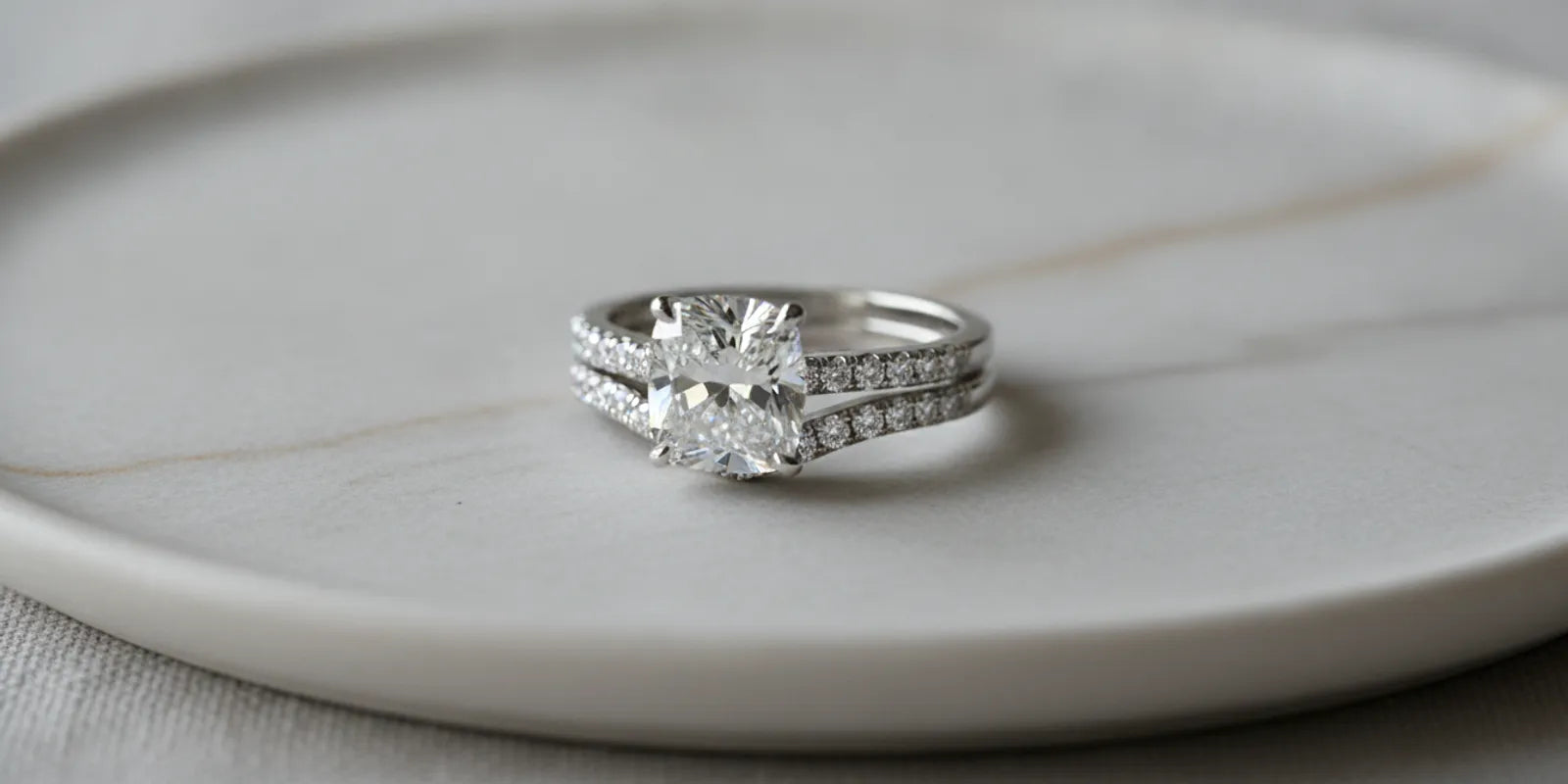
When you search for jewelers Columbia MO, you may be looking for more than a nearby address. For an engagement ring or wedding band, the right visit should help you compare diamond choices, understand design options, and leave with a clear next step. Here is how to prepare for a bridal jewelry appointment in Columbia and make the conversation useful, whether you are exploring a ready-to-wear ring or considering a custom design.
Schedule a bridal jewelry appointment
What should you expect from a bridal jeweler in Columbia, MO?
A useful bridal appointment is a guided conversation, not a test of how much jewelry terminology you already know. You should be able to explain what matters to you: shape, style, wearability, timing, or a general budget, and get help translating those preferences into options you can compare.
For a custom ring, ask how ideas move from conversation to finished piece. Buchroeders describes its process in three stages: We Listen First, Selection & Design, and Ring Creation. That sequence lets you start with what you have in mind, review a center stone and design direction, and move into making the ring after the design is settled. Learn more about the custom engagement ring design process before your visit if you want to see how a bespoke project can take shape.
A jeweler’s work can involve designing, fabricating, adjusting, repairing, or appraising jewelry, as summarized by the U.S. Bureau of Labor Statistics in its overview of jewelers and precious stone and metal workers. For your own purchase, focus the conversation on the services relevant to your decision: diamond selection, ring design, construction, and how the finished ring will fit into daily wear.
How can you prepare for an engagement ring appointment?
You do not need a finished design before you meet with a jeweler. A few notes can make it easier to compare possibilities without locking you into a single look too early.
- Save examples that show what you like. Notice whether the appeal is the center shape, a simple silhouette, side stones, a detailed band, or the overall scale. A handful of examples is more useful than a long list of trends.
- Think about everyday wear. Consider work, hobbies, gloves, and how often the ring will be worn. These details can inform choices about setting height, band shape, and how much detail feels practical.
- Decide what you want to compare. You might want to see natural and lab-grown diamond options, compare a few shapes, or focus on designs that leave room for a wedding band.
- Set a comfortable spending range. Sharing a range helps narrow the selection to options that make sense for you. Ask what is included in a quoted total and which design or diamond choices change it.
- Bring useful information, not pressure. If you are shopping with a partner, share preferences together. If the ring is a surprise, bring any reliable ring-size or style clues you have and say where you are uncertain.
If you are not sure what you want, begin with the feeling you hope the ring will have. Words such as clean, delicate, bold, classic, or detailed give a jeweler a starting point. Then react to actual examples: what feels right, what feels too ornate, and what would you change? That response often reveals more than trying to name a style from memory.
It can also help to decide how you will compare the choices during the visit. If you try on several rings, jot down a few consistent details for each one: the center shape, setting height, band width, and your first reaction when you look at it on your hand. For a diamond selection, note the report information and measurements alongside the appearance. This small record makes it easier to distinguish a design you liked in the moment from one that still fits your priorities after you leave.
If you are planning a surprise proposal, consider what information can be gathered without turning the appointment into a guessing game. A trusted partner or family member may be able to help with ring-size clues or examples of jewelry the recipient already wears. If the size is uncertain, say so before choosing a finished ring and ask how sizing questions should be handled for the option under consideration. You can still focus on shape and style while leaving room to resolve details carefully.
How should you compare natural and lab-grown diamonds?
Natural and lab-grown diamonds are two options to consider; neither is automatically the right choice for every buyer. Decide what matters most to you, then compare stones using the same criteria and a clear description of each diamond.
Ask to review the diamond’s shape, measurements, cut appearance, color, clarity, and the documentation supplied with it. Buchroeders offers natural diamonds with GIA certification and lab-grown diamonds with IGI certification. Keep the grading organization attached to the particular stone you are considering, and ask the jeweler to explain any report details that are unclear.
Looking at stones side by side can make the differences easier to understand. Pay attention to how a diamond appears in person, not only to its specifications. A useful comparison includes the stone’s face-up look, how it performs in the chosen setting, and how it fits your priorities. If you want to explore lab-grown options ahead of time, browse the lab-grown diamond ring collection or the lab-grown engagement ring selection, then bring questions about specific styles to your appointment.
| What to compare | Natural and lab-grown diamond guidance |
|---|---|
| Origin |
Natural diamond: Formed naturally in the earth Lab-grown diamond: Created in a controlled laboratory process Question to ask: Which origin do I prefer for this ring? |
| Documentation |
Natural diamond: Look for the grading report associated with the stone; Buchroeders' natural diamonds are GIA-certified Lab-grown diamond: Review the grading report associated with the stone; Buchroeders' lab-grown diamonds are IGI-certified Question to ask: Can I review the report and match it to this diamond? |
| Appearance |
Natural diamond: Evaluate the individual diamond in person and in its proposed setting Lab-grown diamond: Evaluate the individual diamond in person and in its proposed setting Question to ask: How do the options compare in shape, measurements, and visual character? |
| Decision priorities |
Natural diamond: Consider your preferences for origin, design, and the individual stone Lab-grown diamond: Consider your preferences for origin, design, and the individual stone Question to ask: Which option best fits my priorities and spending range? |
The table is a conversation guide, not a substitute for comparing actual diamonds. Two stones of the same origin and shape can look different. Ask to see the options you are considering in suitable lighting and in the kind of setting you have in mind.
For a fair comparison, avoid switching several variables at once. If you are comparing two center stones, first look at stones with a similar shape and approximate size, then notice where their appearance or documentation differs. If you are comparing two ring designs, try to keep the center stone comparable so you can focus on the setting. This does not mean every choice has to be identical; it simply makes it easier to understand what is driving your preference.
Ask how the diamond’s measurements relate to its face-up appearance and how its shape will interact with the chosen setting. A grading report helps identify and describe an individual stone, but your own view matters too. Take a moment to look at the diamond from different angles and ask to see it both loose and in a comparable mounting when that is possible. The goal is to connect the facts on the report with the visual character you respond to.
Related products

Presenting the 1.42tw moissanite and diamond engagement ring, crafted in 14k white gold.
View product
Presenting a 6.06CTW Round natural diamond engagement ring.
View product
Expertly crafted in 14K yellow gold.
View productWhich ring details matter most for everyday wear?
Start with the center stone shape and the way it sits in the setting. A high-profile design may have a more prominent presence, while a lower profile may feel less exposed in daily routines. The right choice depends on personal taste and how the ring will be worn, so use your own habits as part of the design conversation.
Next, consider the band. A plain band keeps attention on the center stone. Pavé or other diamond accents add detail along the shank. A setting with a distinctive profile can create visual interest from the side as well as from above. Rather than choosing each element in isolation, look at the whole ring and ask how its proportions work together.
Diamond shape is another useful way to narrow the field. Compare the outline of each shape, how much of the finger it covers, and whether you prefer a symmetrical or elongated look. Try to view more than one option rather than assuming a shape will look the same on every hand. The setting can change the overall impression, too: a simple solitaire keeps the design focused on the center, while accent details create another layer of pattern. If two choices appeal to you, ask to see them in comparable settings so the comparison is fair. The point is not to select a shape because it is currently popular, but to find proportions and details you will enjoy wearing.
For daily comfort, pay attention to how the ring feels as well as how it looks. Notice whether the band width feels balanced on your hand and whether the setting catches on clothing when you move naturally. If you work with your hands or remove rings for certain activities, explain that routine rather than relying on a general idea of what is practical. A jeweler can talk through how the design’s profile and details relate to the way you expect to wear it.
If you are interested in a custom design, ask how the proposed proportions will look before the ring is made. Buchroeders' process includes selection and design before ring creation. Bring reference images and ask what can be adapted, which details affect the overall silhouette, and what you will be able to review at the design stage. A custom ring is most successful when the preferences that matter to you are clear before production begins.
How do you choose a wedding band that pairs well?
Think about the engagement ring and wedding band as a set, even if you plan to buy them at different times. A straight band may sit flush against some engagement ring settings, while another ring may leave a gap or need a shaped contour. Neither arrangement is inherently better; it comes down to the look and fit you prefer.
When possible, bring the engagement ring or a clear photo of its profile to a band appointment. Try bands alongside it and view the pair from the top and side. Check whether the rings sit comfortably together, whether the band feels balanced in width, and whether the finished stack is easy to wear. If the engagement ring is still being designed, mention that a wedding band will be added so the jeweler can discuss the pairing early.
Compare the set from more than one angle. From above, look at how the widths and diamond details relate. From the side, notice any gap and whether the band follows the engagement ring’s outline. Then wear the pair together for a moment and see whether the combination feels comfortable and stable to you. If you prefer a small gap or a more sculptural pairing, that is a design preference to discuss, not automatically a problem that needs correction.
You can review examples in the diamond wedding bands collection, including styles with diamond accents. For a continuous line of diamonds around the band, browse eternity bands. Use online examples to identify details you like, then ask how a specific band will sit with your engagement ring.
What questions should you ask before choosing a ring?
Clear questions make it easier to understand your choices and avoid assuming two rings are alike when they are not. Consider asking:
- What are the main differences between these diamond options?
- Which grading report belongs to each center stone, and can I review it?
- How will the setting affect the diamond’s appearance and the ring’s profile?
- Can this design be adjusted to suit my preferences?
- What is the expected design and creation timeline for a custom ring?
- What is included in the quoted total, and what choices could change it?
- How will this ring work with the wedding band I have in mind?
- What care, inspection, or protection information should I understand before I decide?
For custom work, Buchroeders' FAQ states that ring construction typically takes approximately five to six weeks. Treat that as a planning reference and confirm the current timeline for your particular design, especially if you are working toward a proposal or wedding date. Design decisions, approvals, and the specific project can affect when a finished ring is ready.
It is useful to separate questions about the design from questions about the process. For the design, ask what can be adjusted and how the changes may affect the look of the finished ring. For the process, ask what decisions need to be made before creation begins, what you will review along the way, and when to expect updates. If timing matters, share the date you are planning around early, then confirm what is realistic for the specific ring rather than assuming a general estimate applies exactly.
How can you make your visit to a Columbia jeweler productive?
Plan to compare a manageable number of options rather than trying to settle every detail in one glance. At the start of the appointment, tell the jeweler what you already know and what remains open. For example: “We like oval shapes, but we are still deciding between natural and lab-grown diamonds,” or “We have an engagement ring and want a band that sits close to it.” A clear starting point lets the conversation focus on your real decision.
Take notes or ask permission to photograph options, where appropriate. Record the details that distinguish one ring from another: center shape, setting style, band width, diamond accents, documentation, and quoted total. If you need time to think, ask for the details in writing so you can review them calmly later. You can also explore the broader lab-grown ring selection or wedding band options online before returning with more focused questions.
A simple way to keep the appointment focused is to identify one decision to make first. You might start by choosing between a ready-to-wear design and a custom direction, or by narrowing the center-stone shape before comparing settings. Once that first choice is clearer, revisit the remaining details in order: how the ring should look, how it should feel, how the band may pair with it, and which diamond options fit your preferences. This sequence helps keep several attractive possibilities from becoming one confusing list.
Before you leave, repeat back the details you want to remember. Confirm which ring or stone you were discussing, what questions remain, and whether there is a next step you want to take. If you are comparing options with someone who could not attend, written notes about the differences are more helpful than trying to recall each one from memory. There is no need to force a decision during the visit; a useful appointment can simply leave you with a clearer, more manageable set of choices.
For customers coming from elsewhere in Mid-Missouri, confirm appointment details and allow enough time to compare choices without rushing. Buchroeders Jewelers is based in Columbia and has served families since 1896. Its bridal focus includes custom engagement rings and wedding bands, with in-person guidance for customers who want to discuss options directly.
Book an appointment to explore bridal options
Frequently Asked Questions
Do I need to know exactly what ring I want before an appointment?
No. Bring a few examples or describe what you like, and use the appointment to compare shapes, settings, and diamond options. It is fine to arrive with questions instead of a final design.
Can I compare natural and lab-grown diamonds during the same visit?
You can ask to compare both types and review the documentation associated with each stone. Buchroeders offers natural diamonds with GIA certification and lab-grown diamonds with IGI certification. The choice depends on your own preferences and priorities.
How long does a custom engagement ring take?
Buchroeders' custom-ring FAQ gives an approximate construction time of five to six weeks. Confirm the current schedule for your design and leave extra time for selecting a stone, reviewing the design, and any needed decisions.
Should I choose the wedding band at the same time as the engagement ring?
You do not have to, but it helps to discuss the future pairing while choosing the engagement ring. A jeweler can consider the setting profile and band fit early. If you shop for the band later, bring the engagement ring or a clear view of its side profile.
Ready to explore bridal jewelry in Columbia?
A good appointment gives you room to compare, ask direct questions, and decide at your own pace. Whether you are choosing a diamond or planning a custom engagement ring and wedding band, start with the details that matter most to you and build the design from there.
