



Do Men Wear Engagement Rings? A Guide to Choosing One
Yes, men wear engagement rings, and a couple can choose whether one or both partners wear a ring during their engagement. There is no single required style or rule. If you are considering a ring for yourself or your partner, start with comfort, personal taste, and how you want it to work with a wedding band later.
Schedule an appointment to explore ring options
The phrase do men wear engagement rings often comes up when couples are planning a proposal or deciding what engagement should look like for them. The practical answer is yes. Some men choose a ring for the engagement period, some wait until the wedding, and some couples prefer to wear matching or complementary rings from the start. The right choice is the one that fits the people wearing them.
This guide focuses on the buyer question: whether a man might wear an engagement ring, and how to choose one if he does. It covers the difference between an engagement ring and a wedding band, styles and materials, fit and daily wear, and ways to coordinate two rings without making them identical.
Why do some men choose to wear an engagement ring?
For many couples, an engagement ring is a visible reminder of a commitment. Either partner may wear one. Some couples choose two engagement rings to mark a shared milestone. Others want one ring for the person who received a proposal and decide together whether the other partner wants a ring too. There is no requirement that both rings look the same or cost the same.
Practical reasons can matter as much as symbolism. A ring may be a meaningful piece of jewelry, a daily reminder of the relationship, or a way to share the engagement experience. A man who already wears jewelry may find a ring natural. Someone who rarely wears accessories may prefer a simple band, a low-profile setting, or no engagement ring at all.
It helps to ask directly rather than guessing. You might ask whether your partner would enjoy wearing a ring before the wedding, what styles feel comfortable, and whether he has preferences about metal, width, or a center diamond. If the ring is meant to be a surprise, notice the jewelry he already wears and consider an exchangeable design or a later appointment to refine the choice.
Is an engagement ring different from a wedding band?
The distinction is about timing and meaning, not a strict design rule. An engagement ring is usually chosen to mark the decision to marry and may be worn during the engagement. A wedding band is exchanged during the wedding ceremony and worn afterward. A person can wear only one, wear both, or use the same ring for both purposes if that is what the couple prefers.
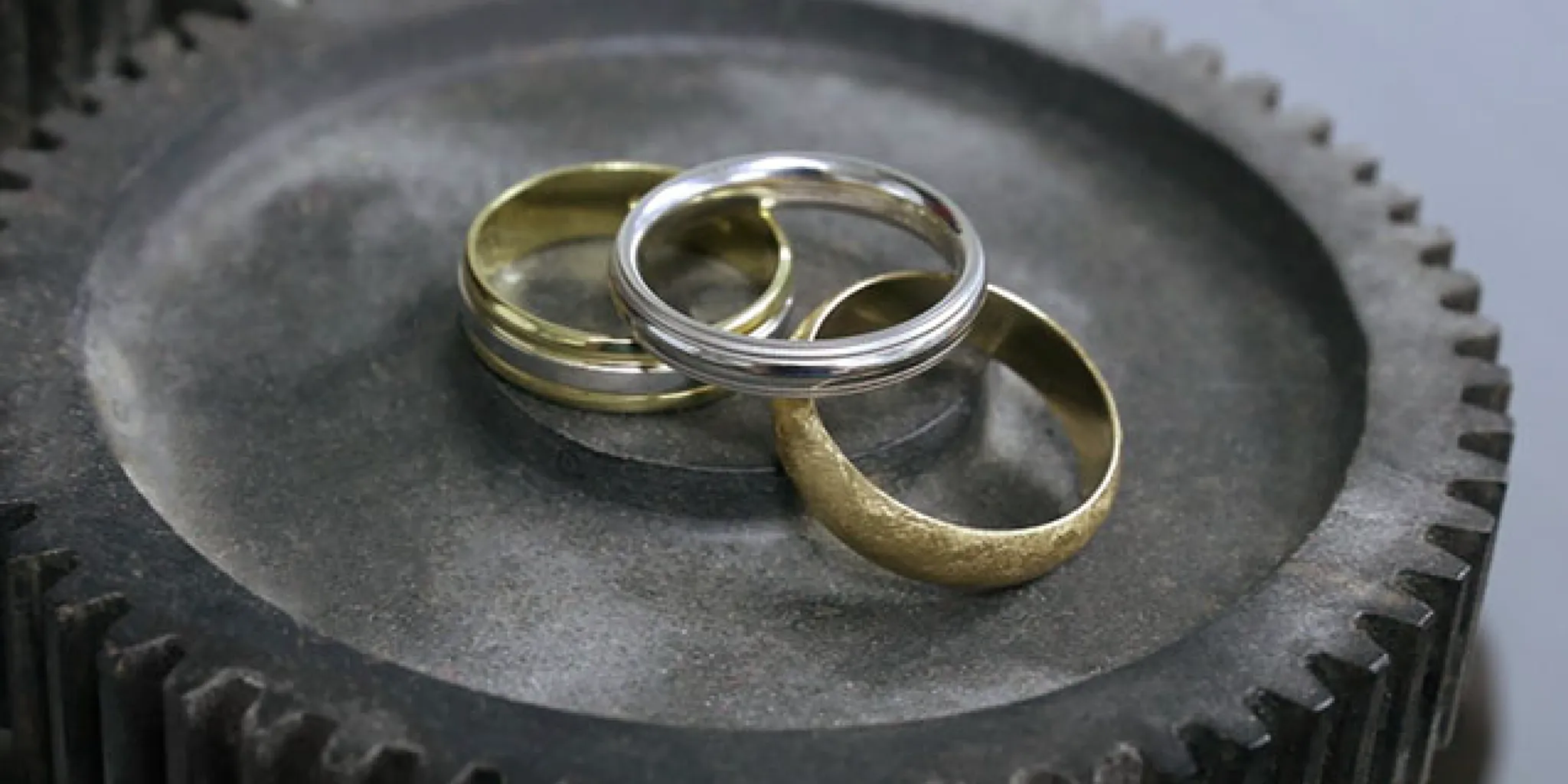
Men's engagement rings often take the form of a band, but they do not have to be plain. A band can have a polished or brushed finish, a distinctive profile, or diamond details. A ring with a center stone is another option. Consider whether the person wants the ring to look clearly different from a wedding band, or whether a single design that can serve both roles makes more sense.
Engagement ring only
When it is worn: During the engagement; it may continue after the wedding
What to consider: Choose a design the wearer wants to keep using, and decide whether a wedding band will be added later.
Wedding band only
When it is worn: Starting at the wedding
What to consider: This can suit someone who does not want to wear a ring before the ceremony.
Engagement ring and wedding band
When it is worn: The engagement ring comes first; the band joins it at the wedding
What to consider: Check the fit and profile together so the two rings feel comfortable side by side.
One ring for both occasions
When it is worn: Worn during the engagement and after the wedding
What to consider: Choose a durable, versatile design that feels right for everyday wear.
These are options, not rules. If two rings are planned, it is useful to consider the future pairing before buying the first one. A straight band may sit flush beside another ring, while a contoured band can follow a setting with a projecting center stone. Explore diamond wedding band styles and eternity bands for examples of different looks.
Which engagement ring styles work for men?
There is no style reserved for men. The wearer's taste is the best starting point. Some prefer a straightforward band with no center stone. Others like a diamond accent, a larger center diamond, or a more detailed design. Try to describe the look in terms that matter to the wearer: subtle or noticeable, smooth or textured, narrow or wide, classic or distinctive.
Could a simple band be the right choice?
A simple band is a useful option for someone who wants a ring with a clean outline and few details. Width and profile change how a band looks and feels. A wider band can feel more substantial, while a narrower band may feel less prominent. A flat profile can look crisp; a rounded interior may feel smoother against the finger. These details are worth trying on rather than judging only from a photograph.
Can a man's engagement ring include a diamond?
Yes. A diamond may sit in the center or appear as a smaller accent in the band. The wearer can choose a design where the stone is prominent, protected by the setting, or integrated more quietly into the ring. For daily wear, discuss how the stone is held and how much it rises above the band. A low-profile design can be a practical preference for someone who uses their hands often, though comfort and protection depend on the complete design and the wearer's activities.
When comparing a diamond, consider its shape, appearance, and documented grading information, along with how it looks in the chosen setting. Buchroeders offers lab-grown diamond ring options and lab-grown engagement ring designs. The company's natural diamonds are GIA-certified and its lab-grown diamonds are IGI-certified. For general diamond education, consult the Gemological Institute of America. A certification report can help you understand the grading information associated with a diamond, but it cannot decide which design feels right to you.
What if he wants something distinctive?
A distinctive ring does not need to be ornate. A different band width, a contrasting finish, a shaped edge, or a carefully placed accent can make a design feel personal. If you want a ring created around specific preferences, a custom engagement ring design offers a way to discuss the shape, setting, and overall proportions together. Bring references if you have them, but use them to explain what you like rather than assuming every detail must be copied.
How should you choose a metal and finish?
Start with the jewelry the wearer already enjoys. If he wears a watch or other rings, notice the metal color, surface finish, and whether those pieces are polished or subdued. Matching everything is not necessary, but existing preferences can be a helpful guide. Ask whether he wants the new ring to blend in or stand apart.
Next, think about how the ring will be used. A ring worn every day should feel comfortable during ordinary routines, not just look appealing in a display. Consider whether the wearer prefers a smooth surface, a rounded edge, or a lower profile. A textured finish may have a different visual character than a mirror-like polish. The appropriate metal and finish depend on the design, lifestyle, care preferences, and budget, so discuss those points with a jeweler before deciding.
Do not choose a ring size based on a guess if there is an opportunity to measure. Finger size can change with temperature and other everyday conditions. A professional fitting can help identify a comfortable size and explain how band width affects fit. If the ring is a surprise, borrow a ring the person wears on the same finger as a reference only if it is known to fit well; a ring worn on a different finger may not provide a useful comparison.
How can you tell whether a ring will feel comfortable day to day?
Comfort is easier to assess by wearing a ring for a few minutes than by looking at it. During a try-on, make a relaxed fist, open the hand, and bend the fingers. Notice whether the band presses into neighboring fingers, rotates easily, or catches when you move. A ring should feel secure without pinching. If it is unusually wide or has a substantial profile, ask to compare a nearby width as well; a small change can affect the sensation more than the photograph suggests.
Think through a normal week, not only the wedding day. Does the wearer spend time typing, cooking, lifting, working with tools, playing an instrument, or participating in sports? These activities can affect whether a raised setting or textured surface feels convenient. Some people remove a ring for certain tasks; others prefer a design that sits closer to the finger. There is no need to wear a ring during every activity, and the wearer should follow the care guidance for the specific design.
Ask how the ring will feel in more than one situation. A sample can feel comfortable while the hand is still, yet different when the fingers swell slightly or grip an object. Try it at a natural fit rather than choosing a size that is loose simply because it slips on easily. A jeweler can help assess fit and explain whether the width or shape changes the sizing recommendation. If the ring is a surprise, make an appointment for sizing soon after the proposal instead of relying on a guess for a permanent fit.
How can you coordinate an engagement ring with a wedding band?
Coordination can mean matching, complementary, or intentionally different. Couples do not need identical rings. They can connect the designs through metal color, finish, one shared detail, or simply the fact that each ring reflects its wearer's taste.
- Match the metal: Choose the same metal color if a unified pair is important to you.
- Repeat a detail: Use a similar edge, surface finish, or subtle design element without making the rings identical.
- Prioritize fit: If two rings will be worn together, try them on as a pair and check whether the edges sit comfortably.
- Plan around the setting: A raised stone or unusual ring profile may affect how a wedding band sits beside it.
- Let each person choose: One partner may prefer a plain band while the other chooses a diamond ring.
Browse lab-grown diamond wedding bands and diamond eternity bands if you are considering diamond details. For another example of how a ring can be styled, look at the wide band solitaire. A particular product is only a reference point; the best fit depends on the person who will wear it and the rings it may be paired with.
What should you discuss before buying a man's engagement ring?
A short conversation can prevent avoidable uncertainty. If you are choosing together, set aside time to answer the basic questions before comparing specific rings. If the ring is a surprise, use what you know about the wearer and leave room to adjust details afterward.
- Will he wear a ring before the wedding? Decide whether the engagement ring is wanted now, whether he prefers to wait for a wedding band, or whether you want to choose together.
- What style feels comfortable? Discuss band width, profile, finish, stone presence, and how noticeable the ring should be.
- Will it be worn every day? Consider work, hobbies, and situations where a ring may be inconvenient. There is no need to wear a ring during every activity.
- Will another ring be added later? If yes, bring the first ring to a fitting or discuss how a wedding band can sit beside it.
- What does the budget need to cover? Set a comfortable total before looking, then compare designs and materials within it. Avoid assuming that two engagement rings need to match in cost.
- What information should accompany a diamond? Ask which grading documentation is available and what it explains about the specific stone.
How can you compare ring options without getting overwhelmed?
Rather than starting with every available design, narrow the field in a few deliberate rounds. First agree on the main decision: a band, a diamond-accented ring, or a ring with a center stone. Then compare a small group of options that fit the wearer's daily routine and preferred level of detail. This makes it easier to notice meaningful differences in profile, width, and finish.
- Round one: overall look: Compare plain, textured, and diamond-set examples. Ask which feels most like the person who will wear it.
- Round two: proportions: Try neighboring widths and profiles. Compare the ring on the hand rather than judging the dimensions alone.
- Round three: wearability: Consider how the setting or surface might interact with regular tasks and whether the ring will be worn with another band.
- Round four: diamond details: If a stone is included, review its shape, placement, setting, and grading documentation together.
- Final check: future use: Confirm whether the ring is intended for the engagement only, to continue after the wedding, or to pair with a second ring.
Make a short note after trying each option: what feels comfortable, what stands out, and what you would change. A clear preference such as "smooth edge, moderate width, and no raised stone" gives a jeweler more useful direction than a vague request for something traditional. If two partners are shopping together, each can rank the options independently before discussing them. That keeps the process centered on the future wearer's comfort and taste, while still letting the couple decide together how the rings relate.
For a custom design, Buchroeders describes its process as listening first, then selection and design, followed by ring creation. Custom construction typically takes approximately five to six weeks, so allow time if you are working toward a particular date. You can review the custom engagement ring process before deciding what details to bring to a conversation.
Book an appointment to compare ring styles
Frequently Asked Questions
Do men wear engagement rings on a particular hand?
There is no universal hand or finger rule for every couple. Customs and individual preferences vary. Choose the hand and finger that feel meaningful and comfortable, and ask a jeweler about fit if you are unsure which size to order.
Does a man's engagement ring need to match his partner's?
No. A couple may choose matching rings, complementary designs, or completely different styles. The important thing is that each wearer likes the ring and is comfortable wearing it.
Can an engagement ring become a wedding band?
Yes. Someone can keep wearing the engagement ring after the wedding, add a separate wedding band, or choose one ring to represent both milestones. Think about the intended use before selecting the design.
What if he is not used to wearing jewelry?
Start by asking whether he wants a ring at all. If he does, trying on several widths and profiles can help identify a comfortable option. A straightforward band may be a good starting point, but personal preference should guide the choice.
Should both partners receive an engagement ring?
That is a decision for the couple. Some couples choose rings for both partners, while others choose one engagement ring or wait until the wedding to exchange bands. Discuss what feels meaningful rather than following a rule that does not fit you.
Schedule a ring appointment if you would like to compare designs in person and talk through fit, diamond options, and how an engagement ring could pair with a wedding band.
